THRIVING IN TIMES OF COVID19 – 3

I live on the third floor of our building. Most of the houses in the neighborhood are either G+1 floor or G+2 floors. As a result, I can get visibility of far more buildings and terraces than if I were living on the first floor. One the results of the COVID19 lockdown is that the terraces of the buildings in my neighborhood have become relaxation/ socialization spots for people in the evenings. I live in a densely crowded part of the city and going for a walk on the streets is not advisable. Since its peak summer here and staying indoors for an extended period of time is extremely suffocating, a stroll in the terrace is a welcome break or rather an unusual luxury during these extraordinary times.


The terrace of the apartment complex immediately behind my house gets converted into a cricket field @ 5.20 pm almost everyday. A guy in his fifties comes to play with his two sons, one probably in his late teens and another in his preteens. They look like Tamilians but the boys talk only in Hindi. As is usually the case with boys of this age and age gap, they keep quarreling a lot about a potential catch, wrong delivery, bad shot and on and on. The dad is an extreme contrast to his sons, he rarely speaks and the look on his face resembles that of a Zen monk. After the match and on days when his sons don’t come to play cricket he goes for a brisk walk on the terrace. I think the elder son goes for cricket coaching and I have seen him do exercises (similar to the ones done perform cricket coaching sessions) on the terrace. 

I have seen a couple of ladies go for walking or do warm-up exercises in the evening. But they never interact and one of them is always wearing a earphone connected to her mobile. Around 8 to 8.30 PM a couple of college guys come to the terrace to talk on mobiles. Sometimes they also do group study on the terrace. The terrace of the building beyond this one gets converted into a playground for less than 10 year olds. They are mostly accompanied by their grand parents. Sometimes I see these kids lean on the parapet wall and talk to kids in the next terrace or kids standing in their balconies in the next building. 

On the terrace of the house immediately to the left of my house an elderly man and an elderly lady (most likely a couple) go for a walk in the evenings. The lady goes for a very brisk walk while chatting on mobile phone; Abishek Bachan would be proud that she is following his maxim: Walk & Talk. The guy generally strolls slowly with the look of reluctance in his face. The house and the apartments next to this building also  have someone or the other in walk & talk mode. The family in the house immediately in front of my house never venture to their terrace or their balconies in the evenings. However one of the persons who lives in the house aging about sixty comes to his balcony in the mornings and chants come mantra while holding a little bit of water on his right palm. 

On the terrace diagonally in front of my house, there is a very small roof garden with flowering plants. Every evening a guy in his forties or a lady in her sixties are either watering the plant or doing some sort of attending to the plants. There is a railway line of Elevated Metro Train Service very near my house. In normal days you could see and hear the sound of the trains. With the lockdown in place, the trains have gone silent. Despite all these people that I have described doing some activity or the other, a vast majority of the people still do not venture out to the terraces. Not sure, what do they do keep themselves occupied and remain sane. 

Thriving in times of COVID19 – 2

There are a bunch of trees near my house, a rarity in my city these days. As a result I get to see a bunch of birds every time I step into my house terrace. Ever since shifting to this house I have made it a point to feed the crows that live in the nearby trees. Since the lock-down feeding the crows has become a ritual. I feed them twice a day, once around 10.30 AM and once around 4 PM. It’s a fascinating sight to see the crows flying towards my house as I start placing food on the parapet wall of our terrace. 

As the days have passed I have noticed a few smaller things that I have not paid much attention to in the past.  The crows do seem to have their favorite foods: Chapathis are their favorite, bread comes next and they like savories like Ompodi & Mixture. The have a particular liking for Medu Vadai. They are ok with biscuits, water melon & musk melon but do not seem to like bananas. They don’t like Sundal either. Crows also exhibit different personality traits: some of them descend down on the wall pick up their share of food and fly back to the trees, some sit on the wall and eat uneasily, while others rather than eating, shout on top of their voice to broadcast to others that food is available.

I get to see other birds too. There are a bunch of pigeons that live in the neighborhood. My immediate next house neighbor places water in mud plates on his terrace for the pigeons, so they have kind of made his terrace their home. Two of the pigeons come to eat if I place scraps of fruits for the crows. Ditto for a couple of squirrels. The pigeons and squirrels come to eat only after most of the crows have left. A couple of times I have seen a solitary Myna too eating on our terrace. However all these creatures make a quick exit if I even get near the door of our terrace. 

There are about 4 parrots living in a hole on the side walls of apartments two building from my house. I can see them only in the morning around 8 AM but they seem to vanish from sight after that. In the evening they will be flying at high-speed from one tree to another. Guess they have the same attitude of adolescent guys indulging in bike racing in East-coast Road. I have never seen these parrots coming to eat at my house or drink at my neighbors house. May be once of the days, I need to wake up at daybreak and see what these parrots are up to. 

I also get to see cranes flying in the sky; guess they are moving towards Foreshore Estate where there is creek / backwaters. I get to see eagles gliding  high in the sky over a nearby hotel, the most that I have seen is six of them. I guess a crows have made nest on the terrace of the hotel. From time to time, I see a couple of crows trying to chase a solitary eagle; it’s like watching fighter planes indulging in dogfight. Most of the times, the crows seem to be successful; happy ending… for the crows and hungry tummy for the eagles. 

Around 6 PM, the villains of the current season, Bats start making their appearance in the sky. It’s quite a scary sight to see a constant stream of bats flying from south-east to the north-west direction. I guess they are coming from somewhere near Foreshore Estate where there are a couple of water-bodies and a lot of trees, but I am not sure. Once the bats start gracing the sky with their appearance, I shut the terrace door and get back into the house.  The sun by this time would be beating a hasty retreat and in no time mosquitoes would be busy making everybody’s life uncomfortable.

It’s my deepest wish or daydream that on one of the days when I open my terrace door to feed the crows there should be bunch of Scarlet Macaw Parrots or a couple of Indian Peafowls sitting on my terrace’s parapet wall. 

Thriving in Times of COVID19 – 1

  It’s been a long time since I wrote something or blogged. Have been thinking seriously about starting to write on a regular basis. COVID19 has turned our life upside down. The only way to maintain sanity is to focus on the positives in life and stay away from the negatives. As a result I have drastically cut down on daily news intake and cut down completely on arguing online (on WhatsApp) with friends & acquaintances. It been nearly two months since I started working from home. With the the lock-down and curfews, its become very difficult to go out and meet friends & family members too. While it did not strike me until this point, that blogging about useful activities that I and family members indulge in would be a good way to start writing once again. 
       

My eight year old daughter is having her summer holidays, without her usual summer classes, etc. She has not been able to step outside to play, go and meet her friends on their birthdays, visit malls & play areas; needless to say it’s been a very boring summer vacation for her. As a result, like most parents, I and my wife have been trying to keep her occupied with some usual activity or the other. My year old son is still using the entire day for playing and throwing things around as he like. One of the things that my daughter likes is drawing. She used to go for drawing classes for the past three years or so. My wife also draws from time to time. Since I am working from home, I have made it a point to encourage them to draw/ paint as much as possible. Just before the lock-down started I went to Odyssey and bought some drawing & painting related stuff. In hindsight it turned out to be a very good decision. 
     

  I keep finding  instructional videos for painting for my wife & daughter. A friend who knows about my wife’s interest in painting sent an Instagram link about Live painting instruction sessions conducted by Hindustan Trading Company @ 5 PM everyday during this lock-down. So, I created an Instagram account.   Yesterday my wife and daughter attended the live art sessions for the first time. Due to bandwidth issues, the video kept pausing quite a number of times. So, they decided to follow instructions from the recording of an earlier session about making bookmarks. I have posted the pictures of the bookmarks that they made. I read a lot of books, so they made the book marks as a gift for me. It was about an hour and half well spent for my daughter and wife. 

Painting by my Daughter
Painting by my Wife

There’s a Circus in Town

There’s a circus in town
Election circus is in town
Selling us Utopia
Cashing on our Myopia
Begging for our votes
Enticing us with notes
There’s a circus in town
Election circus is in town
Bottles mask the potholes
Money masks the assholes
The trivial trumps the actual
The troll trumps the factual
There’s a circus in town
Election circus is in town
Clowns pose as knights
As defaulters board flights
Caste & cult, a heady combo
Leaving the nation in a Limbo
There’s a circus in town
Election circus is in town
Devotion to them is delusion
Choice is but an illusion
Election day is quite an occasion
Leading to five years of suffocation
There’s a circus in town
Election circus is in town
All of us yearn for the pinnacle
All we get is election spectacle
Money and power are in bed
Leaving our democracy in red
There’s a circus in town
Election circus is in town
The crooks get the crowns
And make us all clowns
It’s been quite a long night
There’s no dawn still in sight
There’s a circus in town
Election circus is in town

Amusing Ourselves to Death by Neil Postman

Amusing Ourselves To Death

Around the time of First Gulf War, on Fridays I used to stay awake at night longer than usual to view my favorite program, ‘World This Week,’ the international news show by NDTV. The topics covered, the visuals and the presentation were completely different from what Doordarshan’s other news programs had to offer. In those days Doordarshan was the only TV Channel available. On Friday evenings when ‘Oliyum Oliyum’ (a program from DD Chennai featuring Tamil Movie songs) was telecast the streets used to be empty. In those days I, like a lot of boys of my age used to bunk school to watch Indian Cricket Team Play, on TV.

Cut to today, January 14, 2018, the day of Pongal, the most auspicious and important of Tamil Festivals. All Tamil Satellite and Free-to-Air TV channels are drowning viewers in Pongal Special Programs (read movies and programs featuring Movie Actors and Technicians). As I write this post Indian Cricket Team is playing against South Africa in their second Test Match somewhere in South Africa; India is actually batting. Countless news channels are blaring about the day’s happenings. Yet instead of getting glued to one of the three TV sets at home, I am sitting and writing this blog post about a book that talks about the ill-effects of Television. From yearning for more TV content to TV addiction to weaning myself of TV, my world has come full circle.

From being deprived of TV channels and TV content to literally drowning in TV programs, India has come a long way. All this started with liberalization in the early nineties. Today my DTH subscription offers me hundreds of channels from all corners of the world. For each category there are a dozen channels. I could have a dozen clones of myself but still may not be able to cover all the TV programs in my favorite channels in a single day.

I always used to think of TV as a source of general knowledge. When I think of TV programs like ‘Turning Point,’ ‘Surabhi,’ and ‘World This Week’ come to my mind. Not to mention the various news telecasts that helped me to be update with the happenings in the world. But somewhere after my MBA days, I started realizing that a lot of incidents not worthy of being covered were getting unusually disproportionate amount of airtime. Consider the news flash telecast by a popular news channel, ‘Police Commissioner’s lost pet dog has been found.’ How about manufactured for TV sporting events like IPL, ISL, PBL, etc. The worst type programs on TV are the reality shows (think of ‘Rakhi Ka Swyamwar’ and its close cousins). How about Radia Tapes which nearly destroyed the credibility of TV News Channels? Also I realized that while random acts of crime/ hatred will find airtime, random acts of kindness never got a mention; TVs Channels have and obsessive compulsion to focus and telecast negative news.

For some time now I had been thinking of reading a book that deals with the ill-effects of viewing too much Television. Thanks to Amazon’s recommendation system, I stumbled uponAmusing Ourselves to Deathby Neil Postman. The book was written in 1985, and deals with the ill-effects of too much TV on American society. I wish every Indian reads this book for what TV viewing patterns did to Americans in the seventies and eighties, they are doing to Indians in the second decade of this millennium.

Some of the key points discussed in the book are:

  • Between the dystopian futures prophesized by George Orwell, ‘People will be overcome by externally imposed oppression. Truth will be concealed from people’ and Aldous Huxley, ‘People will come to love their oppression, to adore the technologies that undo their capacities to think. Truth would be drowned in a sea of irrelevance,’ Huxley’s Prophesy has come true.
  • The most significant American Cultural fact of the second half of the twentieth century is the decline of the Age of Typography and the ascendancy of the Age of Television.
  • The news of the day is a figment of our technological imagination. Most of our daily news is inert, consisting of information that gives us something to talk about but cannot lead to any meaningful action.
  • In every tool that we create, an idea is embedded that goes beyond the function of the thing itself.
  • Every new technology for thinking involves trade-off. It giveth and taketh away, although not quite in equal measure. Media change does not necessarily result in equilibrium.
  • The form in which ideas are expressed affects what those ideas will be.
  • There is a difference between thinking in a word-centered culture and thinking in an image-centered culture.
  • Each of the media that entered the electronic conversation in the late nineteenth and early twentieth centuries followed the lead of telegraph and the photograph, and amplified their biases.
  • Television does not extend or amplify literate culture. It attacks it.
  • The problem is not that TV presents us with entertaining subject matter but all subject matter is presented as entertaining. Entertainment is the supra-ideology of all discourse on television.
  • Television is our culture’s principal mode of knowing about itself. Therefore, how television stages the world becomes the model for how the world is properly staged.
  • Television serves us most usefully when presenting junk entertainment; it serves us most ill when it co-opts serious modes of discourse – news, politics, science, education, commerce, religion – and turns them into entertainment packages.
  • To be unaware that a technology comes equipped with a program for social change, to maintain that technology is neutral, to make the assumption that technology is a friend to culture, is stupidity.
  • Introduce the alphabet to a culture and you change its cognitive habits, its social relations, its notion of community, history and religion. Introduce the printing press with movable type, and you do the same. Introduce speed-of-light transmission of images and you make a cultural revolution. Without a vote. Without polemics. Without guerilla resistance. Here is ideology, pure if not serene.


The book is divided into two parts: the first part deals with historical context on how America transitioned from the Age of Typography to the Age of Television. The second part deals with the effects (on the American society) of television transforming key aspects of American society (News, Politics, Religion and Education) into entertainment packages. The book is short but thought provoking. The author’s observations and choice of words are spot-on and make for an interesting and absorbing read.

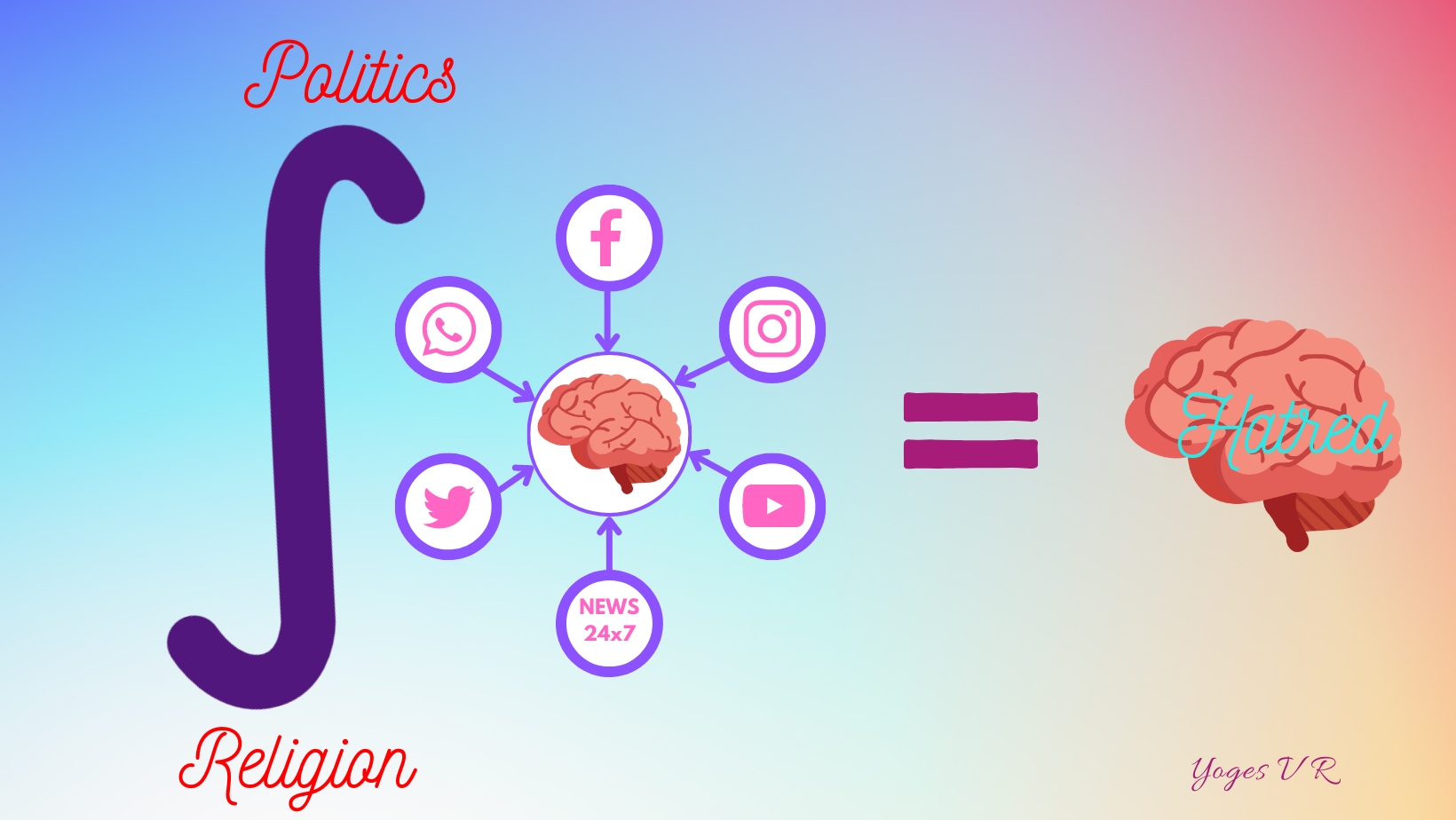
Though written about thirty years back the book is still relevant and its importance only increases when we consider the fact that we have augmented the age of TV with the age of internet, the age of social media and the age of mobile. As technology become ever pervasive in our lives it is very important to pause and think if every change introduced by technology in our lives is for our betterment and if every change promised by technology is necessary in the first place. Reading this book and following it with some contemplation is a welcome first step in that process.

Below are the two part interviews by Neil Postman on the Book given in December 1985 and January 1986.


The Master Switch by Tim Wu

Master Switch

I chose to read ‘The Master Switch’ by Tim Wu due to its tagline, ‘the rise and fall of information empires.’ The main theme of the book is how each one of the information technologies have gone through a cycle: From openness to closed control by monopoly/ cartel followed by disruption from new/ different information technology.

The book traces each one the major information technologies such as telephone, AM radio, FM Radio, Television, Digital television, Cable Television, Motion picture, etc. from their tech cradles to their baby steps as tinker toys of hobbyists, to a new source of gold rush for entrepreneurs and finally ending as the ‘goose that lays the golden eggs’ caged by monopolists/ cartels. A recurring theme of the book is how the originals ideals of inventers, innovators and entrepreneurs and the full potential of a new information technologies get strangled in legal and regulatory cobwebs and crushed under the economic juggernaut of entrenched players (read monopolists and cartels controlling old information technologies which were ripe for disruption).

Through various vignettes across five sections, the book traces the sad saga of how the egalitarian ideals of inventors get crushed by economic-empire building ambitions of people like Theodre Vail, Adolf Zukor, etc. Along the way author also lays in great details the dangers of important industries being controlled by a handful of players including the ‘Production Code’ imposed on Hollywood from mid 1930s to 1960s, the role of telecom players in surveillance regimes, etc.

The book is an interesting read as it takes us on a time travel to the very cross-roads where the crusades to keep important information technologies open were lost. On the lines of the famous poem ‘The Road Not Taken’ by Robert Frost, this book is about the technological road not taken and the economic model not embraced. Needless to say in these different historic moments the seeds of change for modern life were sown.

One keeps wondering from time to time on how history would have been different: had Julius Cesar not been assassinated, had Dara Sikoh prevailed over Auranzeeb, had Abraham Lincoln not been assassinated or more recently had Bernie Sanders won the nomination instead of Hillary Clinton. In a similar vein the author also rues from time to time on how what could have been oases of technology openness have instead turned into walled castles under the siege of monopolists and cartels.

The main aim of the author is not to take us through a journey of suspended disbelief but to drive home the point that the openness of internet is under constant attack. While we are thankful to these information technologies for making our lives better, easier and richer the author wants us to reflect about an alternate universe in which: open model had prevailed over closed model, the vision of innovators had prevailed over the ambitions of capitalists, the larger good of the society had prevailed over the economic interests of entrenched players. The author’s warning is not to take the openness of the internet for granted and to understand that powerful forces are at play to convert the internet also into another walled garden. At stake is not only the economic model embedded in the internet but the very basis of our future for while humans shape technologies in the short run, technologies shape humans in the long run.

Some interesting Quotes from the Book:

  • History shows a typical progression of information technologies: from somebody’s hobby to somebody’s industry; from jury-rigged contraption to slick production marvel; from a freely accessible channel to one strictly controlled by a single corporation or cartel—from open to closed system.
  • It is an under-acknowledged truism that, just as you are what you eat, how and what you think depends on what information you are exposed to.
  • From AT&T’s first meeting with Justice, we see for the first time something that will occur again and again in the history of communications, the state’s calculated exercise of discretion over whether to bless or destroy the monopoly power, deciding in effect what industry it will allow to be dominated.
  • In the course of a single decade, film went from one of the most open industries in the United States to one of the most controlled. The flip shows how abruptly industrial structure can change when the underlying commodity is information.
  • In the language of innovation theory, the output of the Bell Labs was practically restricted to sustaining inventions; disruptive technologies, those that might even cast a shadow of uncertainty over the business model, were simply out of the question.
  • The best antidote to the disruptive power of innovation is overregulation. That is to say, the industry learned how to secure the enactment of seemingly innocuous and sensible regulations that nonetheless spelled doom for any rival.
  • Three important waves of innovation followed the great consolidation of broadcasting in the 1920s: mechanical television, electronic television, and FM radio transmission. And despite the importance of each technology, what is so striking is that none managed to produce an independent industry capable of challenging the dominant Radio Trust, comprising primarily RCA, NBC, and NBC’s industrial allies, CBS, General Electric, and Westinghouse.
  • We fancy having in the United States the most open of markets for innovation, in contrast to the more controlled economies of other nations. In truth, however, the record is decidedly uneven, even given to excesses that would shame a socialist, with the federal government, at the behest of an entrenched industry, putting itself in charge of the future.
  • Industry structure, as I have suggested, is what determines the freedom of expression in the underlying medium.
  • While television is supposed to be free, it has in fact become the creature, the servant, and indeed the prostitute, of merchandising
  • Cable was born commercial, while the Internet was born with no revenue model, or any need of one. Its funding came in research grants, making it, for a long time, the information media equivalent of a public park.
  • There is no understanding communications, or the American and global culture industry, without understanding the conglomerate.
  • In fact, the combination of Apple, AT&T, and Hollywood now held out an extremely appealing prospect: Hollywood’s content, AT&T’s lines, and Apple’s gorgeous machines—an information paradise of sorts, succeeding where AOL–Time Warner had failed.
  • Google is the Internet’s switch. In fact, it’s the world’s most popular Internet switch, and as such, it might even be described as the current custodian of the Master Switch.
  • Google is not a switch of necessity, such as the telephone company was, but rather a switch of choice.
  • Those industries that supply the means of trade in information, goods, or cash are more obviously vital even than, say, a country’s sole producer of sugar. Practically, this focus has led to four basic industries being identified as “public callings”: telecommunications, banking, energy, and transportation.
  • For it is the switch that transforms mere communications into networking—that ultimately decides who reaches what or whom. It is the Master Switch, as Fred Friendly reminds us, that will decide who is to be heard.
  • If one allows that the Internet is our key means of conveyance, the “common medium” of our national life and economy, net neutrality is the twenty-first century’s version of common carriage.
  • Put most simply, net neutrality is what prevents the telephone and cable industry from killing Google, Amazon, Wikipedia, blogs, or anything else that might incur their displeasure.
  • The owner of an iPod or iPad is in a fundamentally different position: his machine may have far more computational power than a PC of a decade ago, but it is designed for consumption, not creation.
  • Technology has reached a point where the inventive spirit has a capacity for translating inspiration into commerce virtually overnight, creating major players with astonishing speed, where once it took years of patient chess moves to become one, assuming one wasn’t devoured.
  • The Internet with its uniquely open design has led to a moment when all other information networks have converged upon it as the one “superhighway,” to use the 1990s term.
  • There is no escaping the reality that we have evolved into a society in which electronic information represents the substrate of much of daily life. It is a natural outcome of our having advanced past the mechanical age.
  • Romance of the Three Kingdoms: An empire long united, must divide; an empire long divided, must unite. Thus it has ever been, and thus it will always be.
  • Leopold Kohr: “there seems to be only one cause behind all forms of social misery: bigness.”
  • For what he (Friedrich Hayek) found dangerous about the centralizing tendencies of socialism applies equally well to the overbearing powers of the corporate monopolist.
  • “It’s the same old story,” he (Milton Mueller) would say, years later; “the inventor gets the experience, and the capitalist gets the invention.”
  • The Kronos Effect: the efforts undertaken by a dominant company to consume its potential successors in their infancy.


My Thoughts on the ongoing Pro-Jallikattu Protests

Three Famous Protestors.png


My thoughts on the ongoing protests to lift the ban on Jallikattu:

  1. In India thousands of people die in road and train accidents every year. Would the court ask for stringent implementation of regulations and better regulations or would it ban road and train transport altogether?
  2. India is the largest exporter of beef, 7th largest exporter of goat and sheep meat and the 2nd largest producer of footwear and leather garments in the world. Shouldn’t the animal right activists first target these industries before targeting an ancient sport? Isn’t killing animals, de-skinning them and cutting them to pieces more cruel than bull-taming?
  3. Under UNESCO’s Convention for the Safeguarding of the Intangible Cultural Heritage, article 13 specifically calls for national governments to a) adopt a general policy aimed at promoting the function of the intangible cultural heritage in society, and at integrating the safeguarding of such heritage into planning programs and b) designate or establish one or more competent bodies for the safeguarding of the intangible cultural heritage present in its territory. ‘Social practices, rituals and festive events’ is one of the domains under ICH. Shouldn’t India (and its highest court) as a member of the UN protect Jallikattu, a festive event, rather than ban it?
  4. In its observation in January 2016, the Supreme Court observed, ‘in this modern world of computers, it is better to play Jallikattu on computer.’ Shouldn’t the judges of the Supreme Court be value-neutral? Why mock at a tradition?
  5. The Youth of Tamil Nadu protesting peacefully across the state are not questioning the authority of the Supreme Court, but questioning the logic of putting the values of one group (the animal right activists) above the values of another group (people who want to ensure in the continuity of their tradition). People who think that Tamil Youths’ stand is wrong should bear in mind that they are following in the footsteps of Mahatma Gandhi and Jayaprakash Narayan.
  6. Human Beings are like Trees; just like trees we need strong roots (nationality, religion, language and culture, etc.) and strong branches and leaves (education, experience and appreciation of diversity, etc.). In the end the choice between where to strike a balance between tradition and modernity is each individual’s right and no one has to the right to infringe on it. PETA is at best a Ponzi scheme of the Animal Rights World and no true animal lover should believe in them.
  7. People still don’t get the fact that India is not a Homogenous Nation but a mosaic of cultures and nation of immense diversity. In the way the former British colonies came together to form a new country, India is similar to USA. In terms of a huge population of people, India is similar to China. In terms of the sheer diversity of languages, ethnic groups, religions and group identities, India is similar to the European Union. In terms of the way politicians and rich people embrace each other, India is similar to dictator ruled countries. In short India is a first of its kind POLITICAL and SOCIAL EXPERIEMENT in history. Any individual or institution that is going to treat India as a homogenous nation/ entity and enact/ implement laws based on this assumption is going to create more frictions like the Jallikattu-ban issue. Any such attempt is an attempt to trample the dreams of the founding fathers of this nation, an assault on the foundation of our constitution and an assault on the very idea of INDIA itself.


#Jallikattu #Jallikattuprotest #AmendPCA

The Art of Creative Thinking by Rod Judkins

The Art of Creative Thinking

A couple of days back I finished reading ‘The Art of Creative Thinking’ by Rod Judkins. It’s a short and crisp book. The book does not have a table of contents and the chapters are not grouped together by broad topics either. In fact at the end of each chapter the authors suggest two chapters from the book for further reading, one about a related idea discussed in the chapter and another about a slightly contrarian idea.

The book is light on exercises on how to increase our creativity. What caught my attention were the inspiring stories and whole lot of powerful one liners. I liked the story about Nobel Prize winning astrophysicist Subramanyan Chandrasekhar and his two Nobel Prize winning students (the only two students to sign up for one of his classes!). The other inspiring story was about Craig Good, who joined Pixar as a janitor but through his efforts and training from the company became a camera artist for such successful films like Toy Story, Finding Nemo and Monsters, Inc.

The book is filled with a lot of good one liners. A few of them:

  • The most common decision at a meeting is to have another meeting.
  • It is more important to be the best version of yourself than a bad copy of someone else
  • Put your personality before practicality and your individuality into everything
  • Doubt is the key to unlocking new ideas
  • Think of nature not as a source of materials to use but as a library of ideas
  • Most are born geniuses and are de-geniused by education and convention
  • Your present circumstances don’t determine your destination, they only determine your departure point
  • The real currency of our time is not money; it’s attention
  • Hierarchies maintain the quo after it’s lost its status
  • Work is a dangerous form of procrastination
  • The history of art is inseparable from the history of money
  • The first spark of inspiration always needs reworking and revision
  • Growth is painful and change is painful, but nothing is more painful than staying in the wrong place

Overall the book is good on the inspiration front but rather shallow on techniques to improve and nurture creativity. However a good book to read just for the countless inspiring stories that it covers.

STEPPS TO MAKE ANY IDEA CONTAGIOUS

Contagious

In the book ‘The Tipping Point’ published in 2000, Malcolm Gladwell popularized the idea of ‘The Law of the Few,’ and stated that, ‘The success of any kind of social epidemic is heavily dependent on the involvement of people with a particular and rare set of social gifts.’ Essentially what this means is that when messages or ideas spread in a society through word of mouth, rapidly like an epidemic, it is due to special influential people. Identifying these influential people and getting them on board to support our idea or cause would mean that our idea or cause would spread through the society like unhindered forest fire. However there has been a lot of criticism for ‘the law of the few’ most notably from Duncan Watts, author of ‘Six Degrees.’

In ‘Contagious,’ Wharton Professor Jonah Berger argues that irrespective of who originates or passes along a message, it can be contagious if it has six key attributes. The author has devoted a chapter each for these six attributes.

  • Social Currency – The basic premise of this chapter is ‘We share things that make us look good
  • Triggers – This chapter is built on the central idea, ‘Top of the mind, tip of the tongue
  • Emotion – In this chapter the authors illustrates several cases to drive home the point, ‘When we care, we share
  • Public – This chapter is built on the central idea, ‘Built to show, built to grow
  • Practical Value – The key message from this chapter can be boiled down to, ‘News you can use
  • Stories – The core of this chapter is built around, ‘Information travels under the guise of idle chatter

In the words of Jonah Berger, ‘Harnessing the power of word of mouth, online or offline, requires understanding why people talk and why some things get talked about and shared more than others. The psychology of sharing. The science of social transmission.’  The author uses a number of psychological studies and real world examples to drive home the point that the inherent attractiveness of any message/ idea can be enhanced so as to make it worth sharing in the minds of its recipients.

Just to ensure that Virality is not an end in itself, but a means to an end, the author has this piece of advice for anyone trying to implement his methodology, ‘When trying to generate word of mouth, many people forget one important detail. They focus so much to make people to talk that they ignore the part that really matters: what people are talking about.’

The most important consideration as per the author is that, ‘ensuring the idea not only goes viral but also to make it valuable to the sponsoring company. Virality is most valuable when the brand or product benefit is integral to the story. When it’s woven so deeply into the narrative that people can’t tell the story without mentioning the brand or the product or the company.’

Even if we are not a marketer, ‘Contagious’ by Jonah Berger is a book worth reading just to understand why we hit the ‘share’ or the ‘retweet’ or the ‘forward’ buttons for some messages while ignoring a vast majority of the messages that we receive.