The Routers of the Pre-Internet Age

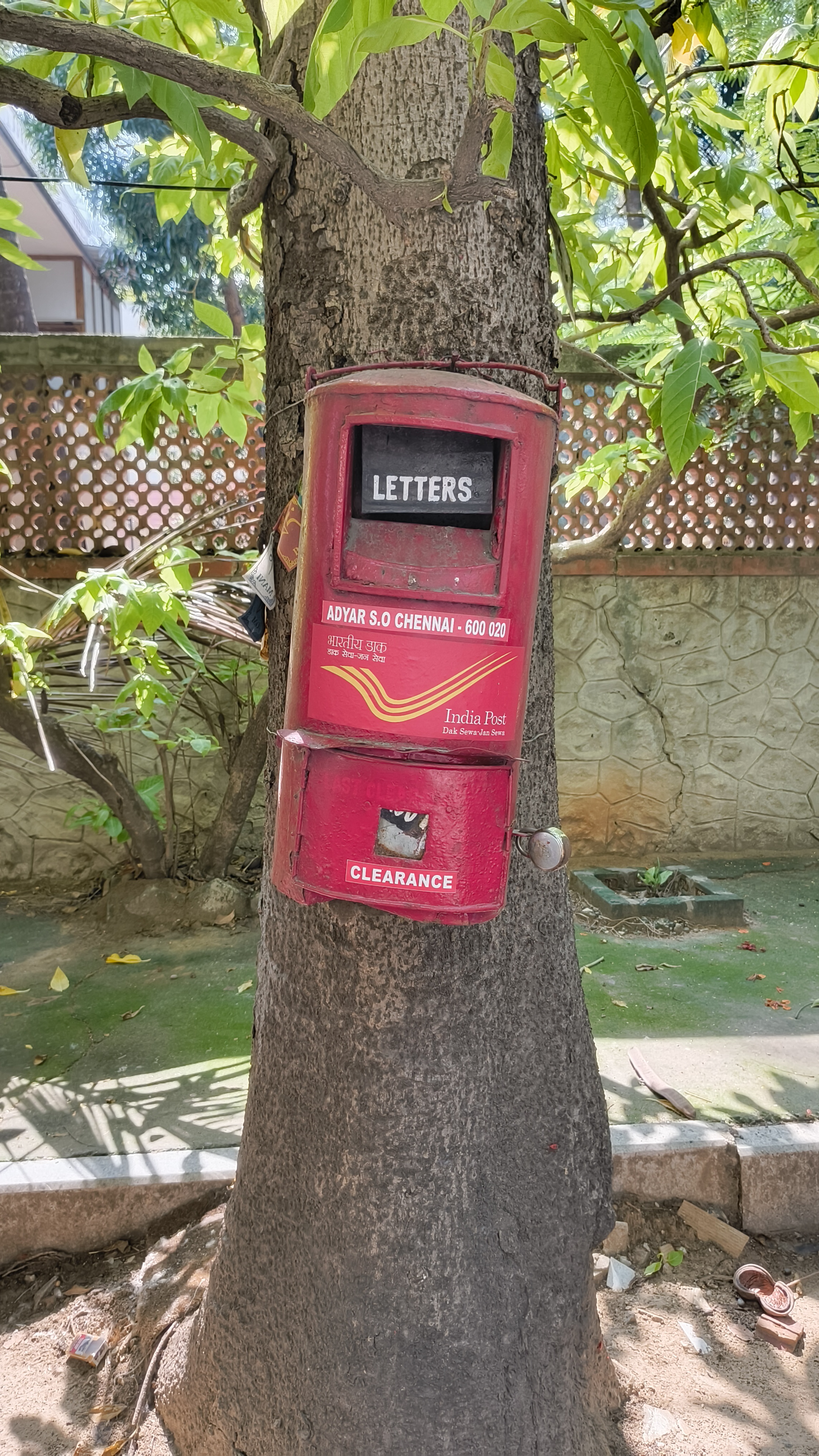
Today I met a friend for lunch. While returning home I spotted something that used to be very common during my childhood days but rare to find these days. Worse even when they are present hardly anyone pays attention to them. I spotted a post-box tied to a tree.

Post boxes were the routers of the pre-internet age. The post-box and the postal system were integral part of the childhood days of my generation. There was a time when the sight of the postman opening the gates of their house would make the kids jump in joy. Among the several well-known brands in India, India Post was one. Almost everyone could instantly recognize the deep red and bright yellow colours of India Post.

Before our household got a landline telephone, the only way to receive any message from relatives who lived in another town was through a post card or inland letter. One of the simple joys of my childhood days were those occasions when my dad or mom would allow me to drop a post-card or letter into a post-box. Receiving greeting cards for festivals or birthday cards made those occasions even more special. The most recent birthday card that I sent was the one that my kids sent my nephew a few months ago.

Post-stamps were one of the most cherished collectibles of my childhood days. The post-stamps that were collected were mostly the old post-stamps with seal that were carefully removed from the letter that the household received. Kids in those days were practitioners of Zen and the Art of Retrieving Postal-Stamps. To remove a stamp from a letter completely in tact was a fine art form – it tested patience, perseverance and skill. And if the letter would have a unique stamp and not one of the usual ones, my joy would be boundless.

Post-cards had a special place during my childhood days. During my schooldays around April just before our annual exams started, each of us had to submit a self-addressed post-card to our respective class teacher. The school will use the post-card to inform each student and his/ her family if the student has been promoted or not. So, towards the end of summer vacation, we would all be eagerly waiting to hear these words: “Sir, Post.” The last post-card that I have managed to retain/ save is the one that my college friend, Prabhu wrote me while I was pursuing masters in Delhi.

When I was doing masters (2002 – 2004), mobile phones started gaining traction. Then came smartphones and social media. With their rise the habit of sending letters, post-cards and greeting cards began to wane. Then came WhatsApp as the primary mode of communication. Now messages are hardly two sentences long. Most responses are just emojis or internet slang like LOL, ROFL, etc.  

What happened to the custom/habit of sending greeting cards for festivals? In the world of WhatsApp each one of us is like a hippie scavenging for valuables in a dustbin. We forward a greeting message from school group to college group, forward greeting message from office group to family group and so on. The habit of coming up with an original, thoughtful greetings message has been degraded by mass-ritual of ‘Forwarding.’

In the 80s and 90s the process of wishing family members and friends living in another town for Deepavali or Pongal would start at least two weeks in advance. With pocket-money being limited, we had to short-list the people to whom we would send greeting cards. Then we had to go to a nearby bookshop or stationery-shop and buy greeting cards with messages that most resonate with us. Then we will write a personalized message as well in each card. For cards that were meant for grandparents every grandchild will write a line or two. Then with the right post-stamp affixed, we will post the cards a few days before the festival to avoid the cards getting delivered after the festival. Even after all these, we can only know whether the card got delivered and in time for the festival only when we meet the addressee in person the next time. That was an era in which the virtue of patience as embedded in everyday life by default.   

With smartphones and digital platforms, our conversations are near instantaneous. With GenAI tools and native AI capabilities of digital platforms we don’t even have to bother our neurons to come up with anything original. The art of thoughtful conversation is fast vanishing. Sometimes one has to wonder net-net whether we have gained or lost by embracing free and instant digital communication. We are digitally connected but emotionally detached. Most people message us because the platform is free and most importantly the effort involved is minimal – just a couple of swipes of the thumb or index finger across a glass surface. We are always online but always distracted as well. Today every act is convenient, but nothing is conscious and thoughtful anymore. In the age of GenAI, most of our messages are statistically predicted digital vomit devoid of emotion & life.

The digital world has made communication easier and convenient but has reduced our treasured moments into trivial ones. As communication has become digital, not only are post-boxes becoming fossilized, but connections are also becoming superficial. There is no more eagerness to send a message to family or friend as I know that I can reach them any time with a couple of taps and swipes on my smartphone. There is no more anticipation for responses too as most responses are some variants of the digital platform’s auto suggestions. In our pursuit of convenience at industrial scale, we have turned our unique human experiences pedestrian and lifeless. In the short run these digital platforms offer us convenience but in the long-run they eviscerate our experience of being human – a devil’s bargain.

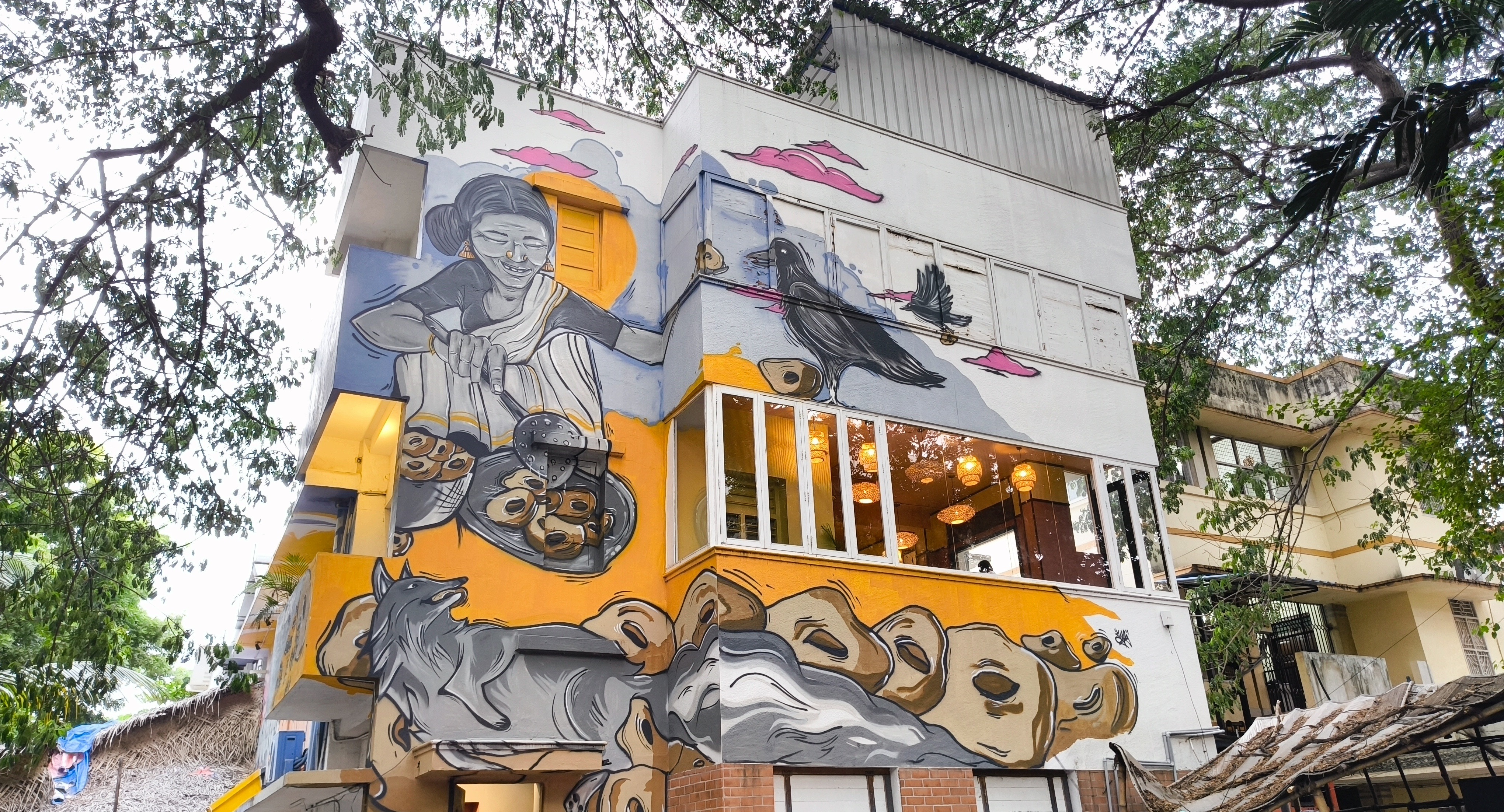
The Crow, The Fox and Grandma’s Vadai

A mural on the outer wall of Kaylir Canteen depicted “Paati Vadai Sutta Kadhai” – a classic short story for the kids. This is probably one of the first stories that I had heard as a kid apart from stories from Ramayana & Mahabharata.

Apparently, this story is adapted from the Aesop’s fables. You can read the story here. Looks like this is a popular kid’s story (with minor variations) in multiple countries including India, Afghanistan, Iran and Greece.

The mural depicts a slight variation of the story with the grandma feeding her vadai to a crow and the fox having an excess vadai problem. Wonder what advise Dr. Pal Manickam would offer the fox.

One of the blogs that I landed on while searching for this story, made the following observation: “Whenever they say a single old women in a story, they make sure that she looks like a widow!!! Most of the animations / illustrations depict single old women in white saree without pottu (red dot on the forehead) and without flowers on her hair. In olden days widows were not allowed to wear colorful cloths, nor allowed to wear pottu, bangles and flowers! Even though am not exactly encouraging to wear pottu, bangles, flowers…etc! Here, as a feminist it is important for me to address this!“

After reading this observation, I went and looked at the photo of the mural once again. Sure enough, the woman is of a slightly older age, she is wearing a white saree, doesn’t have pottu in her forehead and doesn’t have flowers on her hair. It’s amazing to note that even a story meant for kids could end up passing along stereotypes through it. With all the jewels that the woman is wearing, could it be that it’s a woman from Kerala (women in Kerala wear half-white sarees in golden zari border for festive occasions)?

Wonder what changes this story would undergo in the years to come. Would it be a granddad or a dad making vadais? And if such a change is incorporated would some sections of the population find the story too woke?

As for me, I was happy to find one of the beloved stories from my childhood depicted as a mural.

Location: CIT Colony, Chennai

Date: 12th September 2025

The Need to Read the Fine Print

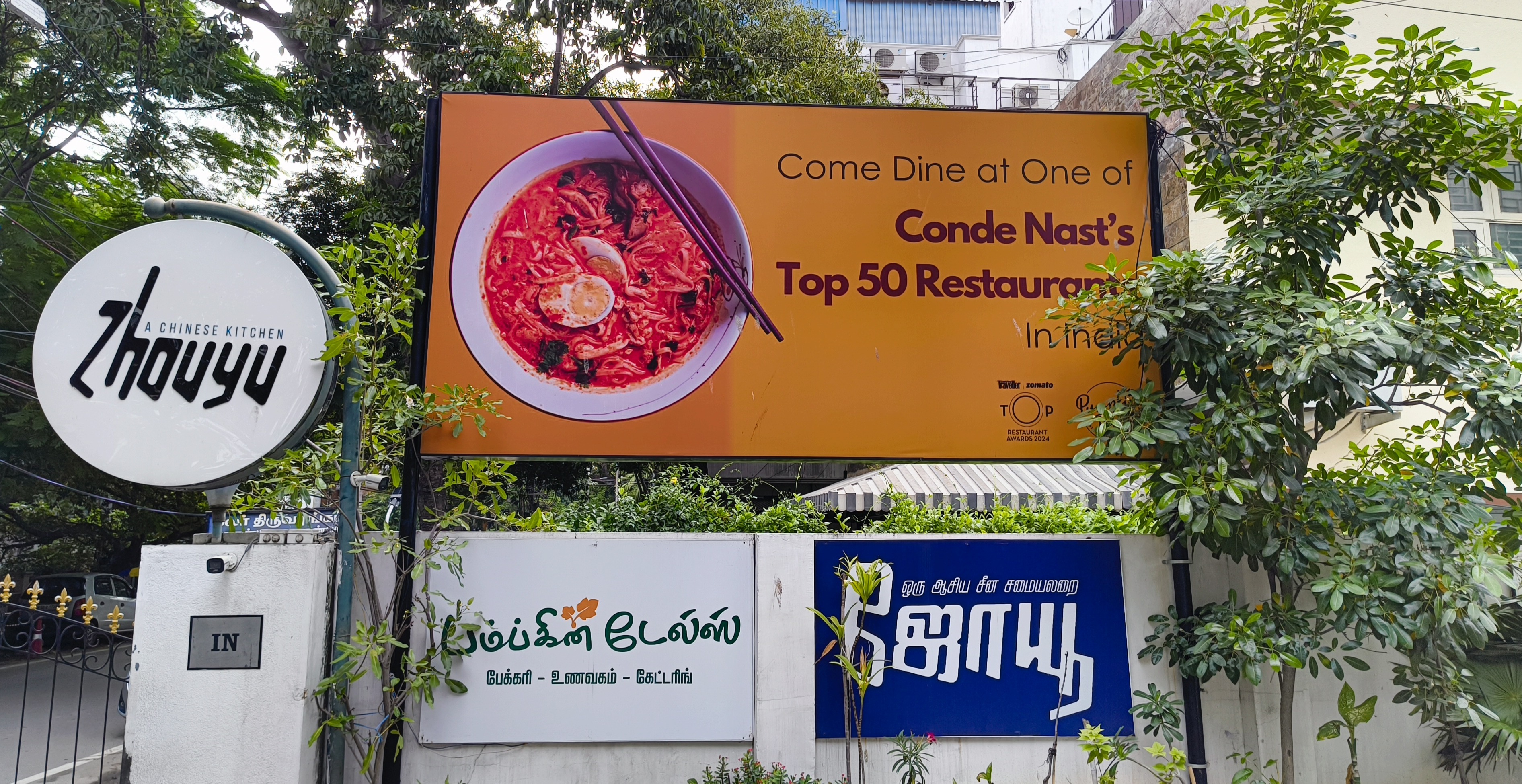
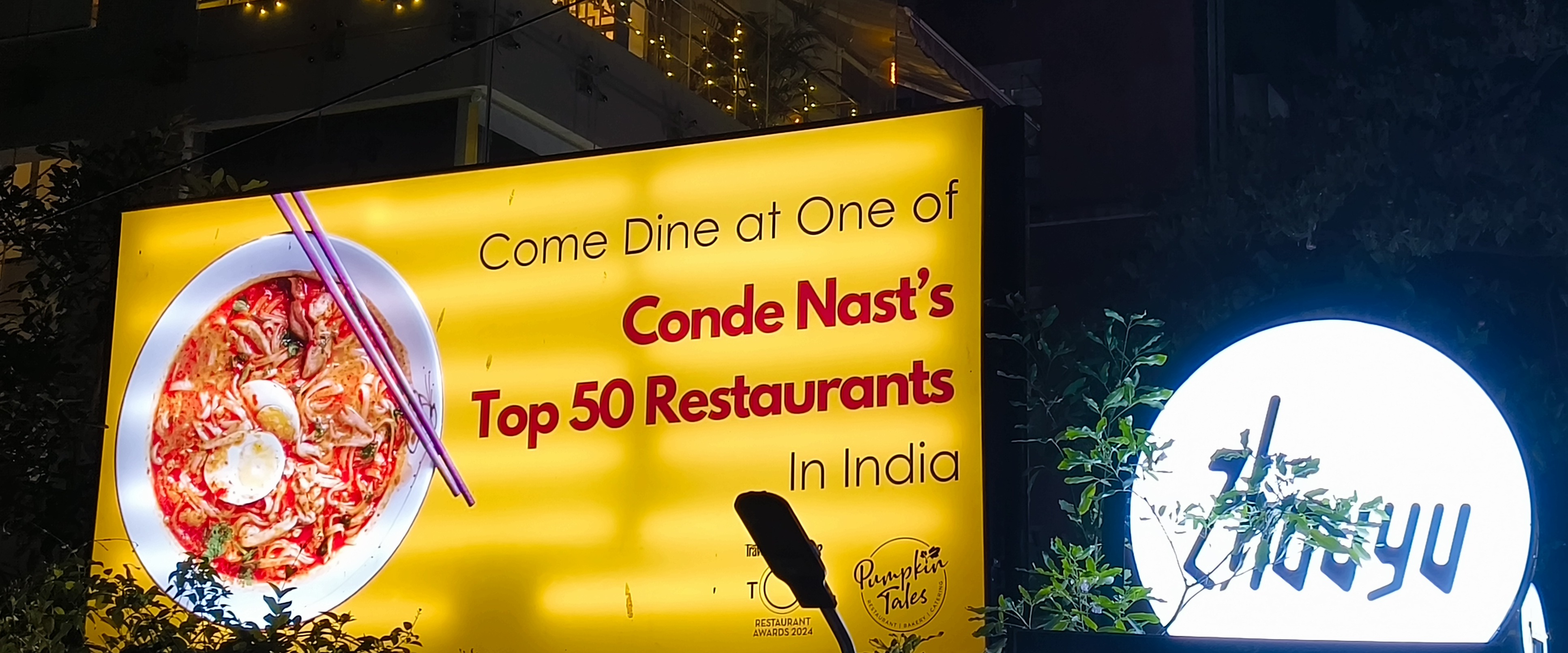
I have been wanting to write a blog post about the yellow-colored billboard in the above photograph for some time now. The billboard announces that a restaurant has been featured in the Conde Nast’s Top 50 Restaurants in India in 2024. However, the name of the actual restaurant that made it to the list, Pumpkin Tales is not featured prominently in the billboard. The name/logo of Pumpkin Tales is featured in smaller size on the bottom right-hand side of the billboard and is almost completely hidden behind the leaves of a small plant!

The name/logo of the Chinese restaurant in the same building, Zhouyu is featured next to the billboard in an outdoor advertising lightbox. If one doesn’t bother to read the fine print associated with the yellow billboard or to go online and check at the Conde Nast list, there is a possibility of assuming that Zhouyu is the one that has made it to the Conde Nast list. This is exactly what happened with me a couple of months ago, and I ended up for a dinner at Zhouyu.

I have been wondering why a restaurant would commission and install a billboard in which its name is not featured prominently or could lead to confusion about another restaurant having won the award in its place. Unless if the other restaurant (Zhouyu) belongs to the same group/ management. I tried searching online.

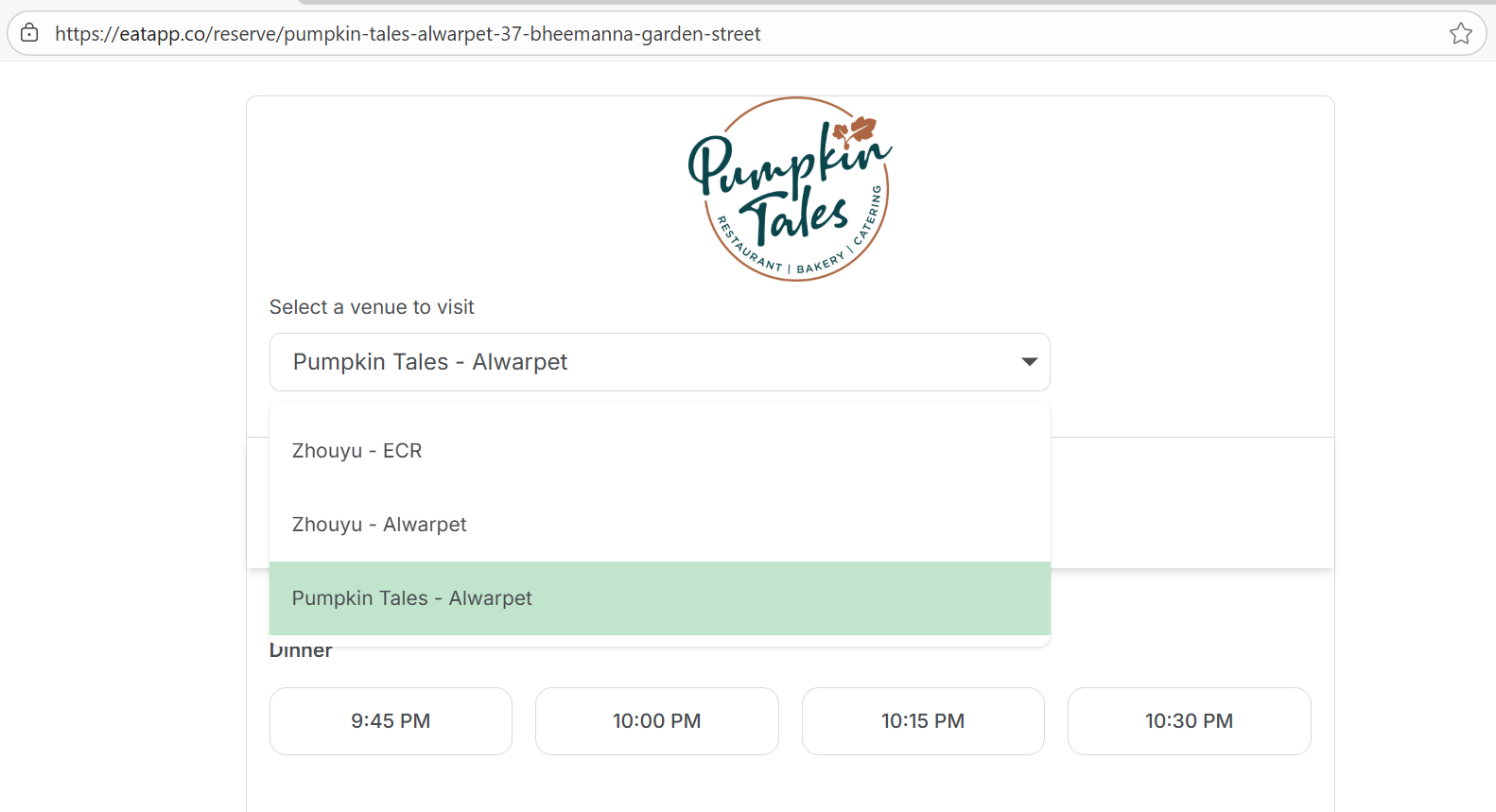
Pumpkin Tales’ website does not list Zhouyu as one of the associated/ sister-concern restaurants in its locations section. Ditto for Zhouyu’s locations section as well which did not list Pumpkin Tales as one of the associated/ sister-concern restaurants. However, the Book a Table section on Pumpkin Tales website which led to Eatapp listed Zhouyu as one of the options in the dropdown list. I searched online and landed on a September 2020 article in the Mylapore Times with the headline, “Pumpkin Tales launches its Chinese restaurant ‘Zhouyu’ at Alwarpet.”

Is it genuine oversight from the restaurant management? I looked at the photo one more time. The prominent food image on the yellow billboard about Conde Nast list caught my attention this time. The food item resembles a Chinese/ South-east Asian dish in a white ceramic bowl with a couple of chopsticks placed on top of the bowl.

The combination of the image of what looks like a Chinese food item in the yellow billboard as well as the tagline, “A Chinese Kitchen” on top of Zhouyu in the outdoor advertising lightbox placed close to it could trip someone into making the wrong association between Zhouyu and the Conde Nast list, as happened with me.

To be fair when viewed from the other side, the food item on the yellow billboard and the Zhouyu outdoor advertising lightbox are spaced apart. So, the scope for confusion is lesser. Plus, there is nothing obstructing the Pumpkin Tales name.

This billboard placement and different sized fonts used in the billboard, reminds me of the need to always read the fine print and/ or footnotes.

Odd Tree

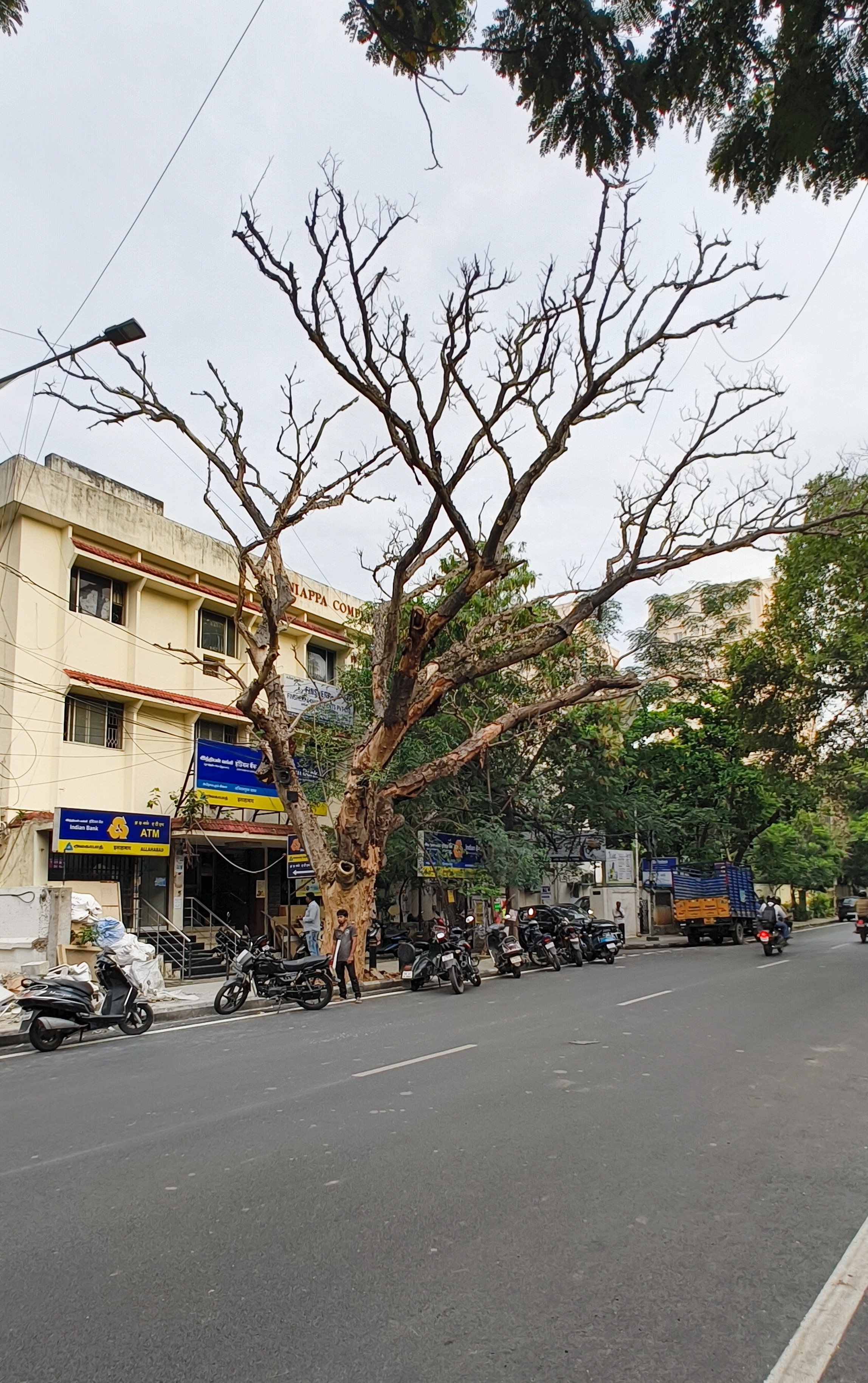
Stumbled upon this tree on C P Ramaswamy Road during my evening walk today. I might have seen this tree so many times but have never looked at it or observed it until today. I came to the road through a different street than the one that I usually take. The moment I entered the road and turned towards my right this tree caught my attention. What a strange sight and an odd tree!

Every other tree in the vicinity is lush with green leaves. And yet, this tree almost had no leaves. I was wondering what could be the reason that this tree is devoid of leaves – pest infection, seasonal pattern or is the tree about to die.

After coming home, I searched online. One of the articles mentioned that tropical deciduous tree shed leaves due to drought stress. Still very strange that only this tree would face drought stress but trees around it on the same road look normal. Wondering if this tree is not native to India but somehow its seeds or sapling ended up on this road years ago.

Had this tree been in an open field or in the woods it would have been spooky. But since it’s on a busy road, it doesn’t attract much attention.

Location: C P Ramaswamy Road, Chennai

Date: 3rd September 2025

Central Avenue Park

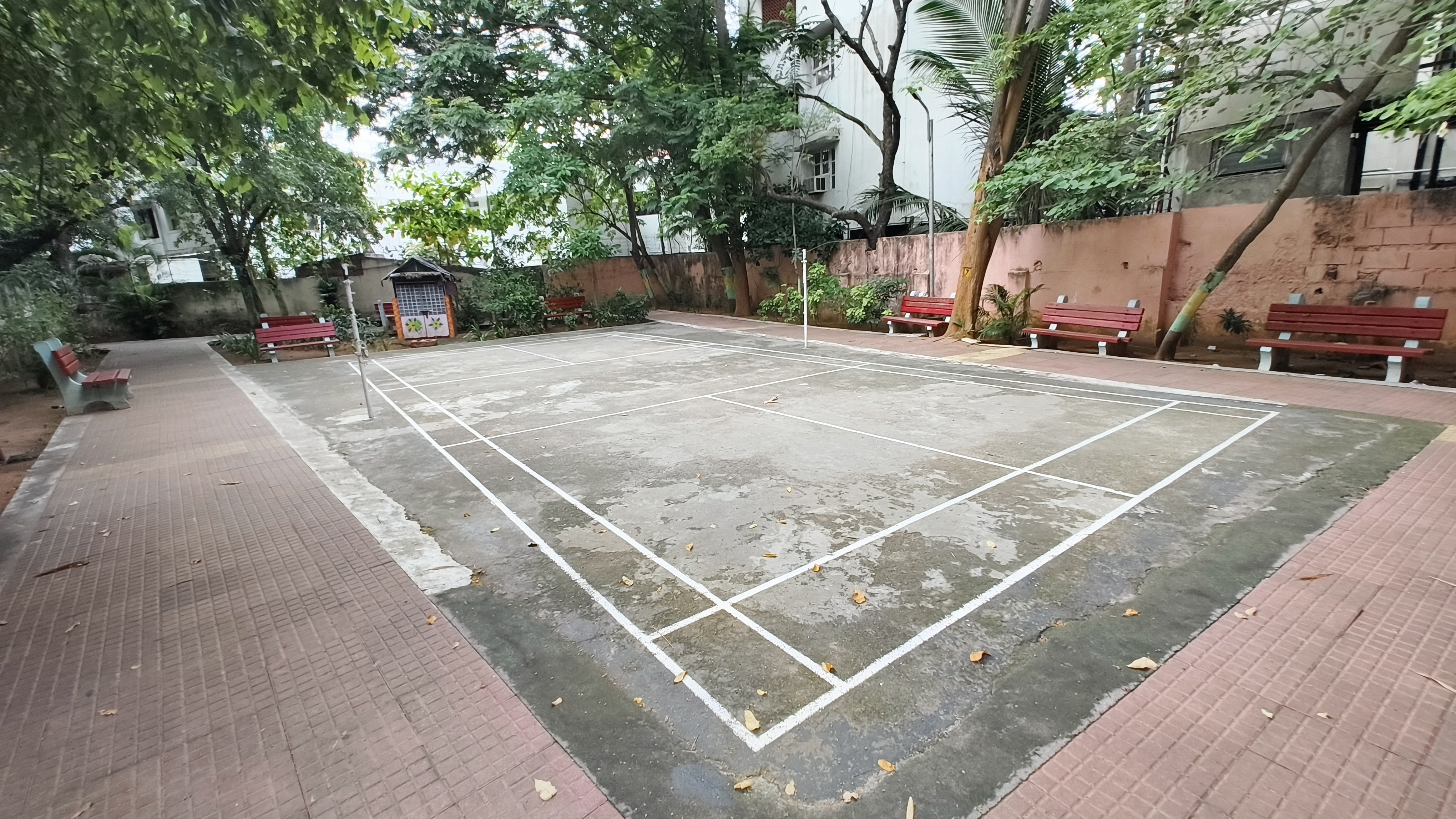
Stumbled upon Central Avenue Park on Greenways Road during my evening walk today. It had an open badminton court with a walkway and benches for sitting around it. This is probably one of the smallest parks that I have ever come across. This park also had a small temple on one end of the court. The badminton court occupied nearly 80 – 85% of the park’s area. Happy to find the park very clean.

Location: Greenways Road, Chennai

Date: 2nd September 2025