I was pleasantly surprised to spot a flock of geese just outside a restaurant at 9 AM today. A refreshing change compared to the vehicle infested roads that we come across everyday.
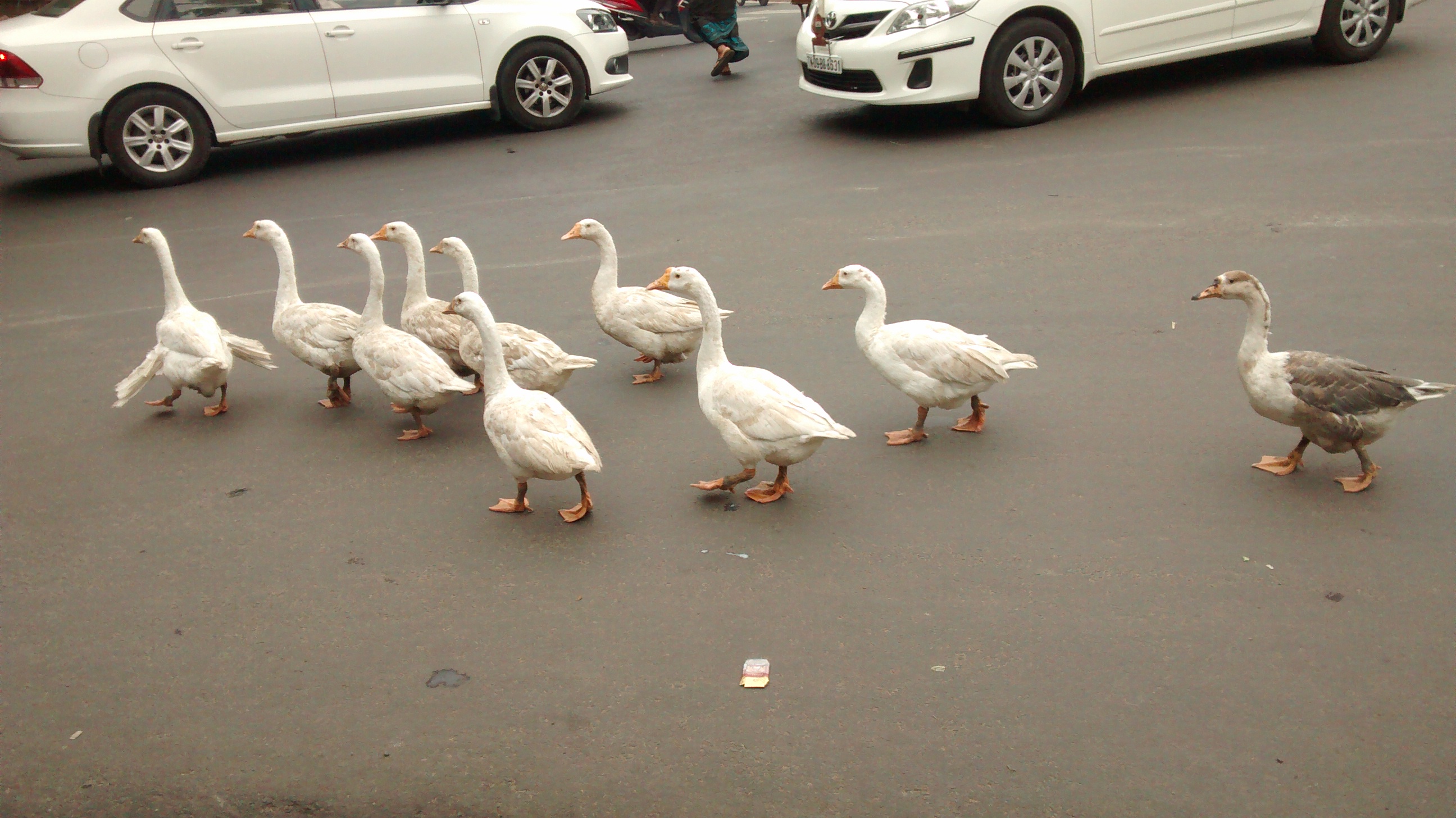
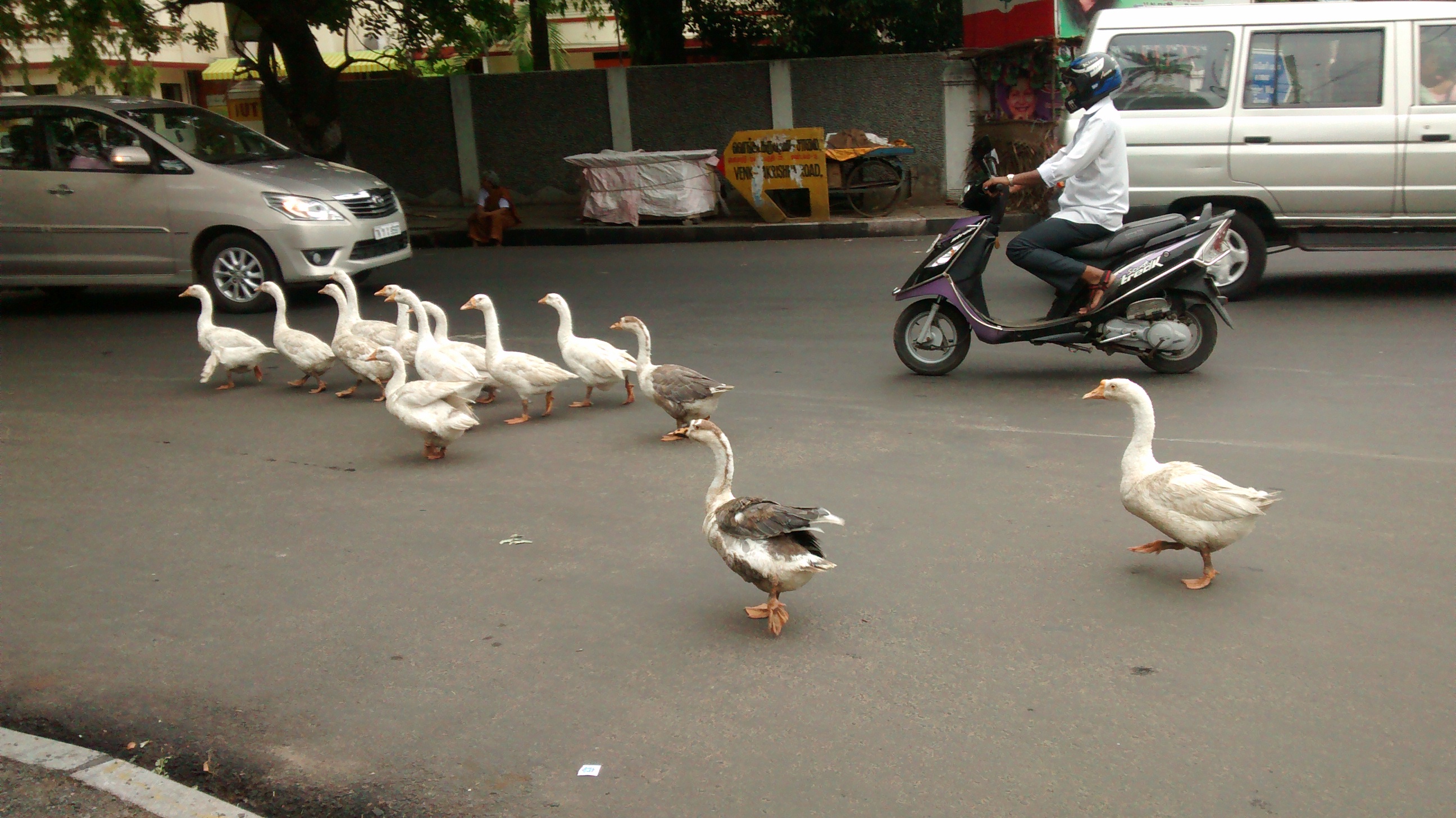
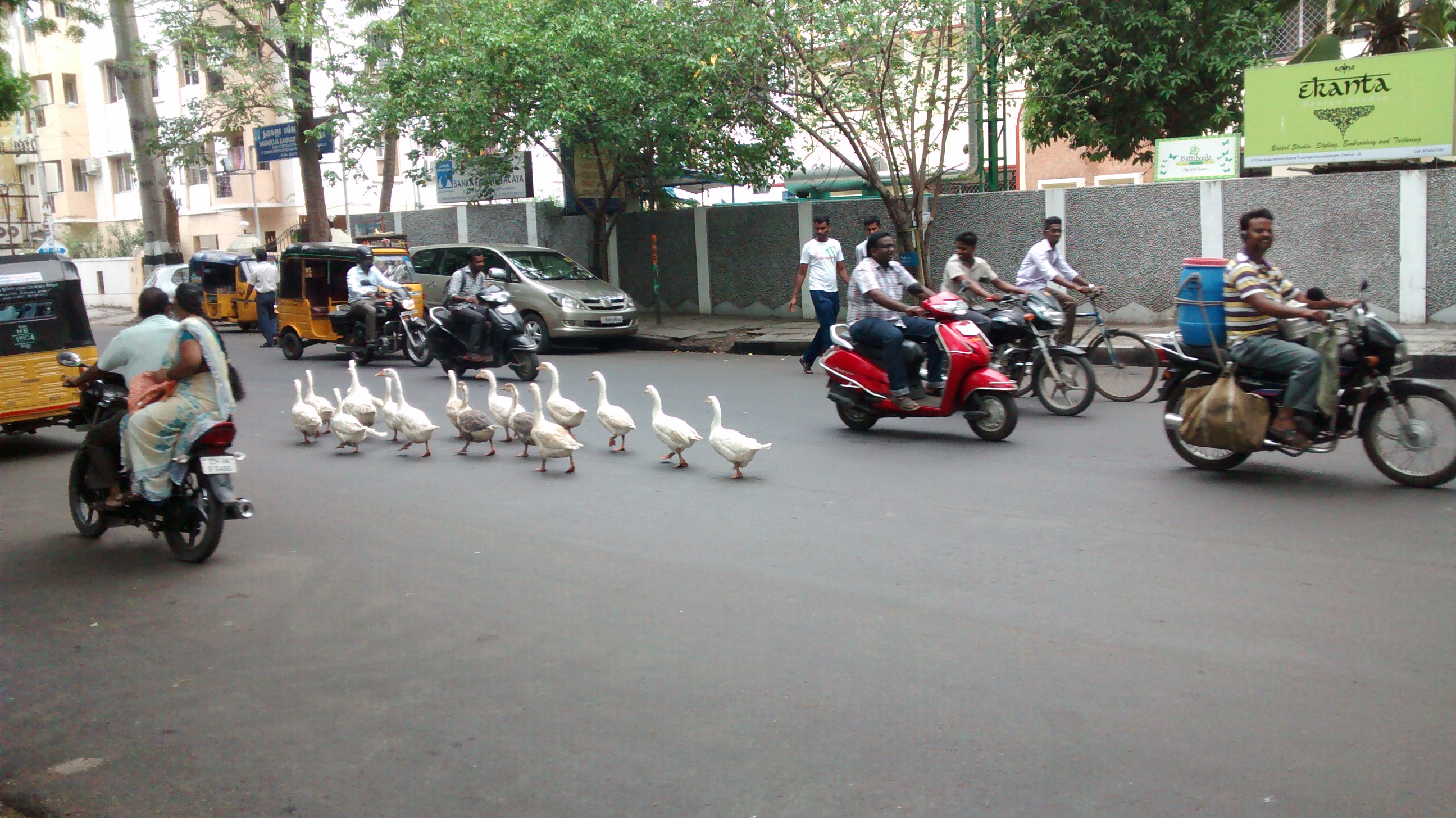
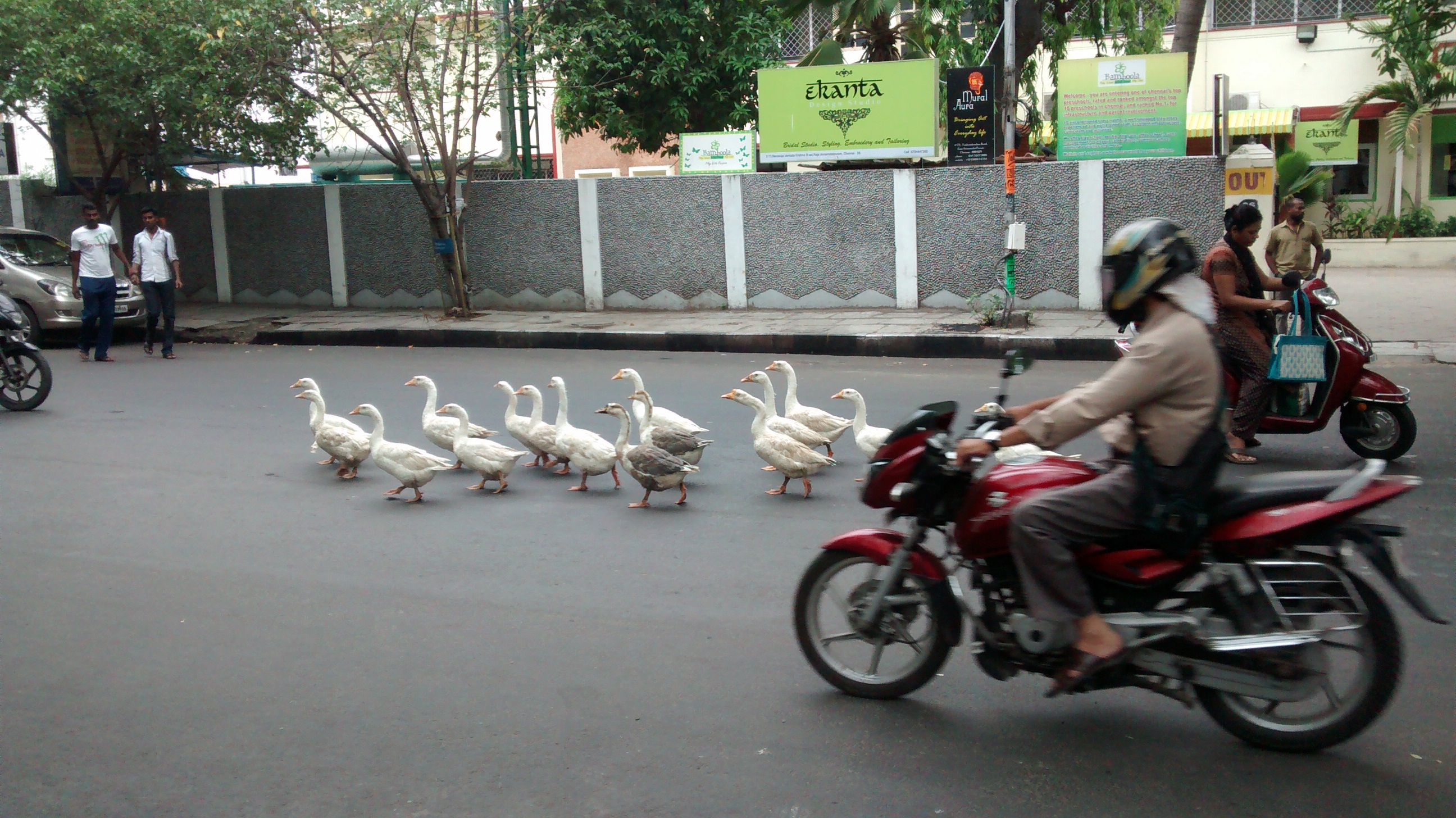
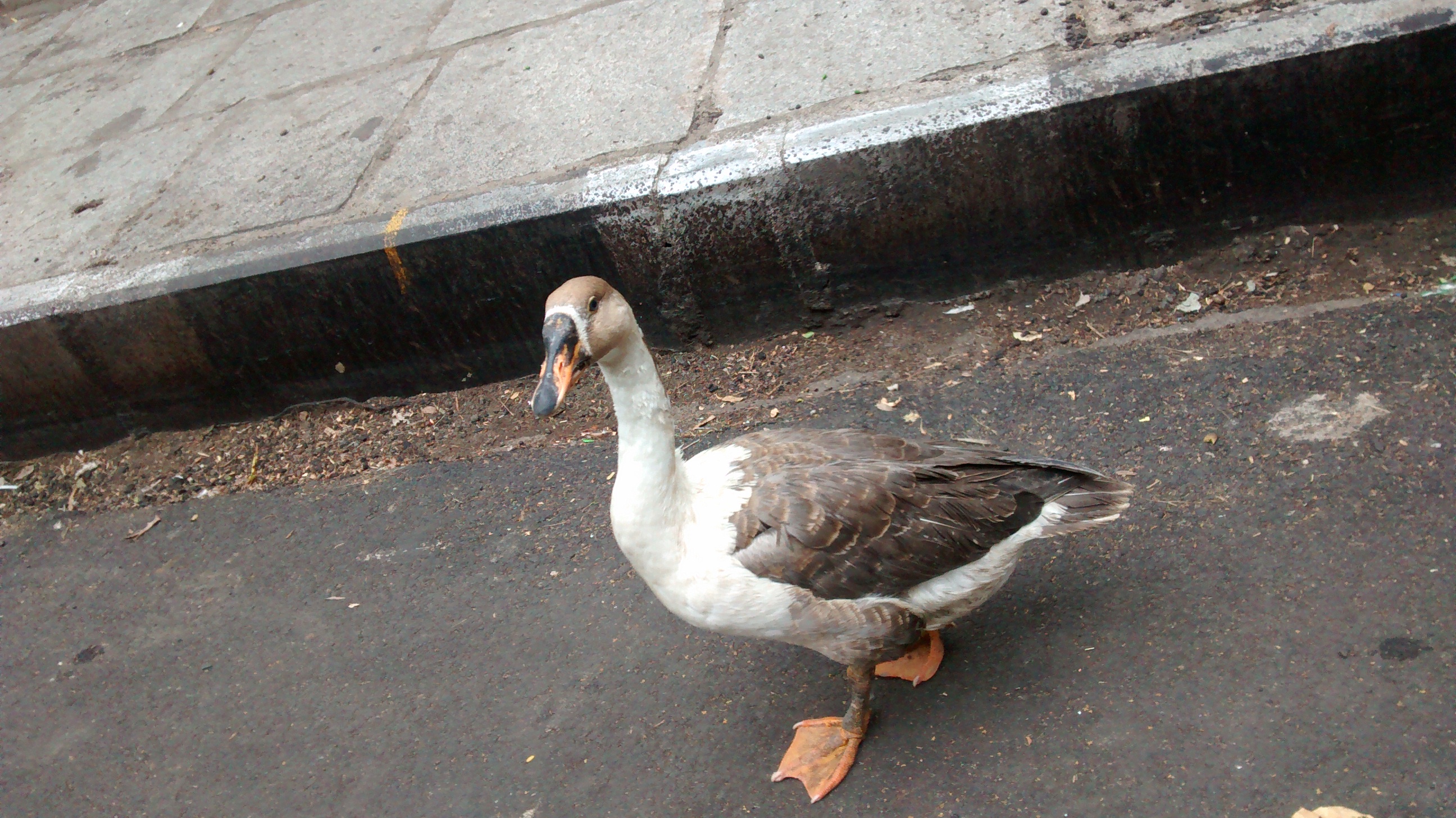
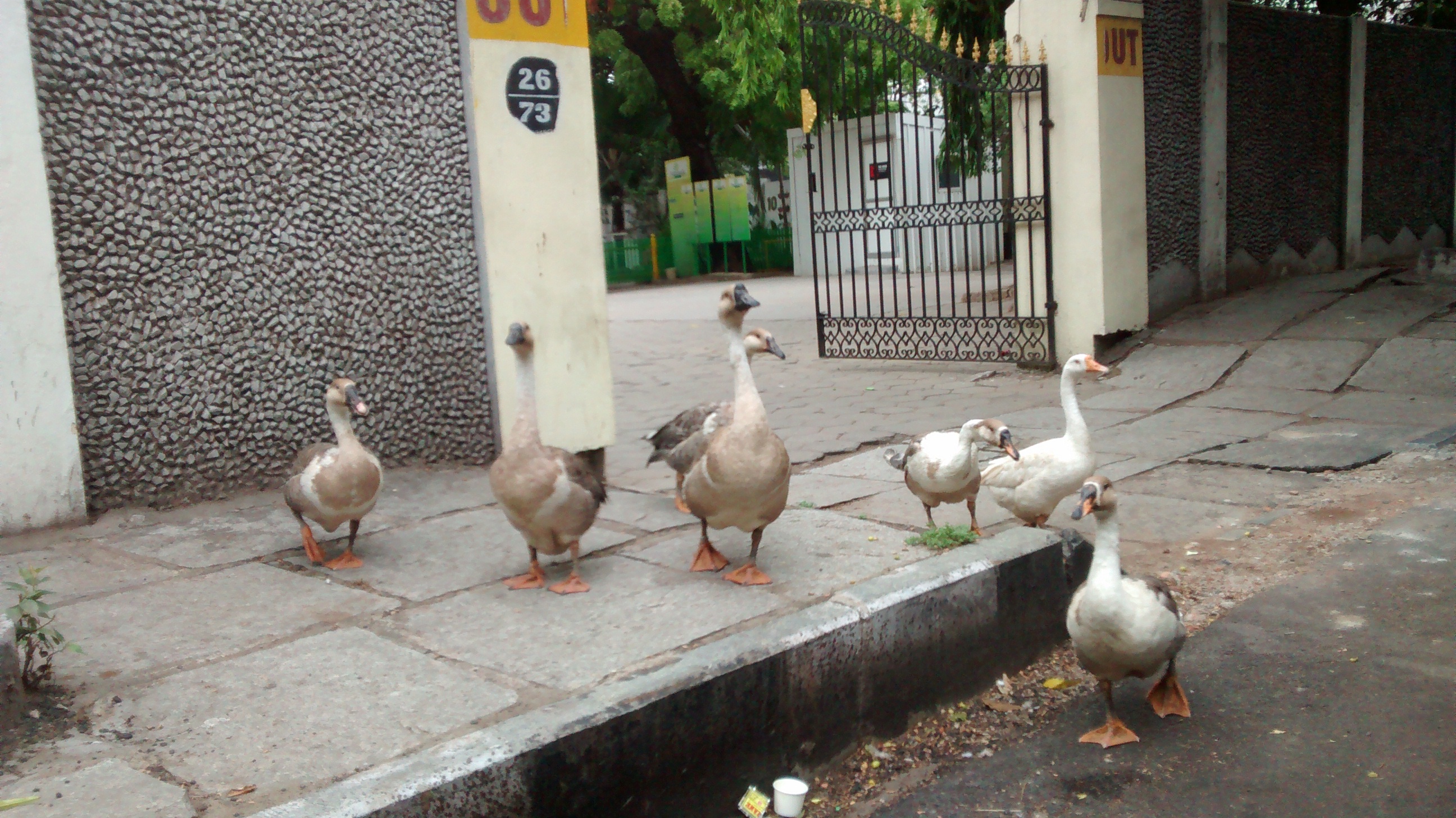
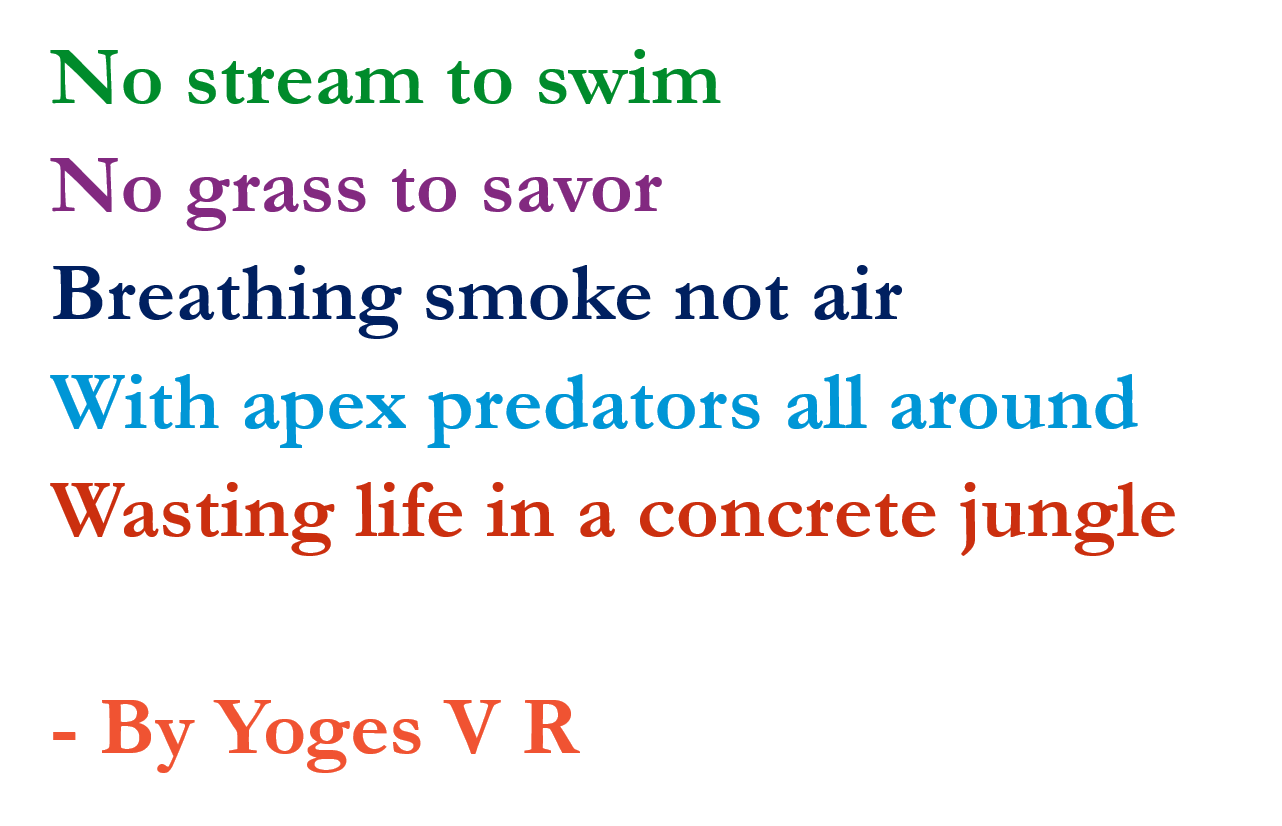
I was pleasantly surprised to spot a flock of geese just outside a restaurant at 9 AM today. A refreshing change compared to the vehicle infested roads that we come across everyday.
A few weeks back as I was talking to one of my college friends. He mentioned to me that he had visited our college the day before to attend the inaugural ceremony of an indoor stadium. Former Indian cricket great Sachin Tendulkar was the chief guest for the function. He had gone there with the hope of getting an autograph from and a photograph with Sachin. It seems that the organizers had arranged or rather hoped to have a breakout session with Sachin post the inaugural ceremony and had invited a lot of people including sponsors, executives from the companies that recruit from our college etc. for the inaugural ceremony.
However post inaugurating the stadium, Sachin left without taking part in the breakout session (Not sure whether Sachin was aware of the plan for a breakout session). A lot of people (including my friend) went back unhappy as they could not get to interact with and/or take a photograph with Sachin. I was wondering to myself as to why my friend and so many others like him would take the day off and travel long distances to get a glimpse of a person who has stopped playing cricket for more than two years now. Are they fans of the phenomenal cricketing skills of Sachin or just Sachin? If they admired the way Sachin played cricket, they would have been better off watching the recordings of many a blistering innings that Sachin had played in his long career than traveling to my alma mater.
If people had been inspired by the good qualities of Sachin (like focus, hard work and dedication to attaining mastery in one’s chosen field) and wanted to follow on his footsteps, they would have stayed focused on their work that day instead of going to the inaugural ceremony. I am confused as to whether people had chosen Sachin as role model to seek inspiration for attaining greatness in their own life or just as an entertainer. Why is that most of us decide to remain passive rather using our role models as inspirations in transforming our life?
When former World Chess Champion Grandmaster Viswanathan Anand was challenging reigning World Chess Champion Grandmaster Magnus Carlsen in November 2014, I had badly wanted Anand to win back the world crown. Anand hails from my hometown Chennai and I, like a lot of other Chennai folks was hoping that Anand will be able to avenge his defeat from the previous World Championship held in 2013. But Carlsen defended his title in style. During the course of a chat with a colleague I had mentioned how dejected I was because Anand had lost once again to Carlsen. My colleague mentioned that in the larger scheme of things, having a new and young world champion (Carlsen is much younger to Anand) would be good for the Chess World and a lot of youngsters would be inspired to take up Chess at a more serious level. Now that I think about the episode, I feel that my colleague is right. The better of the two players won the Championship, so why should I be unhappy about it. If appreciating a good chess player was all that mattered to me shouldn’t I be happy irrespective of who won?
We all have had or continue to have heroes/ role models in our lives. Initially we would start admiring a particular person (e.g. Rafael Nadal) because of one particular skill or characteristic. However with time we would be interested in all sorts of activities of our hero; from the kind of dresses he wears to his last vacation, etc. Most people would go to the level of spending day in and day about getting to know each and every piece of information about their favorite star; they would even take a hell a lot of pride in doing so. They will also start mimicking their favorite star by having the very same bandana or hair style like their favorite star. Worse still they might even start buying the brands endorsed by their favorite star despite realizing the fact that he or she might not be an expert in that product field and might also have a vested interest in endorsing a brand. Yet people assume that they have a divine obligation to follow whatever their favorite star says and does.
People have role models or heroes because understanding or following abstract concepts is difficult. Once we use someone as an example for that concept then we can easily grasp it. Understanding skill, discipline and hard work might be difficult without quoting an example of person who displays all these in a particular field, e.g. Rafael Nadal’s skill, discipline and hard work in the Tennis World. Having a hero or role model is not bad in and of itself. The problem arises when you lose sight of the fact you started admiring Rafael Nadal for his skill (that he displays on the field) and the discipline and hard work (that he puts into his trainings off the field) and instead make him your fashion guru, investment guru and social etiquette guru, etc..
Hero Worship is one of the many maladies affecting modern day. Does following superficial aspects about our favorite sport star or film star really help us in becoming a better people? More importantly does this celebrity culture help the society at large? Blind hero worship has several downsides: celebrity brand extensions (beneficial for the celebrity not for his or her fans), political dynasties (beneficial for the politician and his family and definitely bad for the society), acts of vandalism and violence, people being misled into doing things or buying stuff which might not have done without endorsement from their heroes and last but not the least herd mentality.
Whenever we decide to elevate someone to the pedestal of our personal hero or role model, it is very important to ask these questions to ourselves:
Why qualities that person makes you admire him/ her?
It is always better to remember why we started liking a person in the first place. And we should not try and translate the admiration for a particular characteristic of a person to admiration for that person as a whole. For e.g. we need to question ourselves: “How much ever I like and respect Anthony Robbins, does it make sense for me to accept financial advice from him?”
What do you do with that admiration?
Most of us express our admiration for our heroes in all sorts of wrong ways or rather in ways that are not beneficial to us individually or to the society as a whole. The manifestation of our admiration can take several forms: from the simple following of our heroes fashion statements to emotional and illogical Milk Abhishekams for our hero’s cut-outs to the very dangerous forms like vandalism and acts of violence (e.g. an obsessive Steffi Graff fan stabbing Monica Seles). I remember a scene from one of my favorite Tamil movies, where the hero’s teacher advises him. The teacher asks the hero not to blindly mimic him but to use the admiration for the teacher’s musical skills as a catalyst to grow and bring to fore the unique skills within the hero.
A couple of years back I was watching the video of Suki Sivam giving a talk on leadership qualities in a school function. During the course of the talk, Mr. Sivam mentioned that he generally dislikes signing autographs. During the Q&A session one of the students asked him why he dislikes signing autographs and shouldn’t he oblige and sign the autographs for his fans/ admirers. Mr. Sivam mentioned that rather than wishing to get autographs from their heroes/ role models, the students should aspire/ aim to become someone who would sign autographs for others. Meaning rather than hunting for others autographs the students should spend their energies in becoming an achiever themselves.
Does our hero still display/ espouse the very same qualities for which we started admiring in the first place?
This question becomes important so that we are actually following a person with the qualities that are desirable to us. It helps to prevent us from making emotional and illogical decisions like continuing to support a tainted celebrity (e.g. Lance Armstrong) or support a political dynasty in a democracy.
Recently, I had volunteered in my company for ‘Stop Hunger Now’ event. My company had tied up with ‘Stop Hunger Now’, an international NGO that gets food and life-saving aid to the world’s most vulnerable people. The goal was to pack 100,000 packets of food items for the needy. Overall, there was a need for approximately 1000 volunteers, who will be working on the packing lines. For each of the packing line, there was a need for a total of 10 volunteers per line, working for 1 hour shift each. Our company’s social impact team was planning to have 12 packing lines, and approximately 8 – 9 shifts to complete packing of 100,000 meals (Uncooked, dry food and vegetables). Each person had to volunteer to work for one hour… just one hour for this cause. Part of our cafeteria was cordoned off for this activity. I had chosen 2 PM to 3 PM timeslot. I and a few of my colleagues reached the registration desk at the appointed hour.
At the registration desk, they had a paper to fill our details. We saw a lot of smiling, excited people curiously taking a peek at the packaging lines. At the registration desk, they distributed us a cap for covering our head and then a pair of polythene glows. Just behind that table there was a partition frame that was partially covering the 12 long tables arranged in 6 rows and 2 columns with aisles in between. Each table was kind of a mini packaging line. They were playing music through a stereo system to motivate the volunteers. The whole place was buzzing with activity. A few of the people were busy replenishing the packaging lines by fetching food items from the store room. From the registration desk a volunteer led us to the packaging area assigning us to different packaging lines that needed volunteers.
At each packaging line, One person was opening and handing over the packet/ cover in which the food items will be filled, the next person was filling the packet with a cup of rice and a cup of dhal, the next person was adding a small amount of dried vegetables and the next person was putting a small sachet of minerals and vitamins mix to the packet. On either side of the table there was one person who was weighing the packets to make sure if they were within the desired weight range; if not they will add a little bit of rice to the pack to meet the weight requirement. Finally one person on either side of the table would seal the packet using an electric sealer. It was at this sealing location that I was posted for an hour. Beside the sealing location, we had to arrange the sealed food packets which then will be packed into a carton at 36 packets per carton. As I was being assigned to this work, I assumed that if I could seal one packet per minute, it will be a significant personal achievement.
Initially when I was assigned to the table, the person who was helping to seal the food packets during the previous one hour taught me how to seal the packets. After ensuring that I was doing the task correctly (by observing me for about 5 minutes) he signed off. For about the next twenty minutes, I was sealing the covers frantically like a humanoid robot. I was counting the number of packets that I was sealing and how was kind of curious to predict the number of packets that I will seal in one hour at this rate. Well in these twenty minutes, I actually did not know the contents of the very packets that I was sealing!!! At this juncture curiosity took over me and I paused for a minute to investigate the contents of the packets; that’s when I figured out that the packet contained rice, dhal, dried vegetables and a sachets. Then for the first time in that 20 minutes, I looked to my left to see what was all happening in that table. It was strange, even while doing such a small and mundane task, I got lost into my own world. And I was lost in achieving some goal (number of packets to seal) that had little importance in the larger picture. Even at this moment I did not get introduced to any of the other folks who were working at that table. I also noticed there was hardly any interaction between the other people at that table as well.
With every passing minute, I got increasingly uncomfortable due to sweat in my palms. I also kept a count of the number of packets that I sealed. I also kept thinking how life would be on an actual packaging line/ assembly line within a factory. We were working in an air-conditioned cafeteria, they were playing music to motivate us, people were doing a little bit of stand-up comedy as well and they were announcing the progress made through a loud speaker. None of this would be present in an actual factory. Also we were going to do that work for only one hour plus an added incentive that we were doing it for a good cause. In a factory, people would be doing this kind of work for hour’s together day in and day out. Surely the mental agony of being transformed into a temporary humanoid robot without much interaction with colleagues would be more than the physical pain incurred through working long hours. I wonder if Henry Ford would have thought about the negative impact on the quality of human life that his invention, the assembly line would have for ages to follow.
As my thought kept slipping into these kinds of internal deliberations, I was pulled back into the real world by the loud announcements about the progress being made against the target of packing 100,000 food packets. At the end of one hour, another volunteer took over the task from me. In that one hour, I sealed 153 packets. I had to rework on 4 of the packets because, I did not seal them completely the first time. I looked around for my team members and once they were also finished, we took a few snaps and selfies and proceeded towards the exit. As we were walking back to our work desks, I was thinking about the missed networking opportunity due to lack of interactions at our assembly line. More importantly I was feeling bad for the millions of people who work in much tougher packing/ assembly lines across the globe for years together. An hour after we got back to work, we got a mail stating that the initiative had met its target a couple of hours before schedule. I felt happy for volunteering for that initiative even if it was for only one hour.
I missed writing about a personal milestone that fell on January 11, 2015. On January 11, 2015 I completed one full year of becoming a vegetarian (no animal products except milk and derivatives of milk). I never thought I would continue to be a vegetarian for such a long time. This has surprised both me, my family members and close friends as well.
Right from a young age, I was fond of eating non-vegetarian food. The fact that my mother was an expert at cooking and she was always interested in cooking new dishes for us was an added incentive. I was so fond of non-vegetarian food that in the three and half years that I lived in Hyderabad, except on Saturdays on all other days I used to have either Mutton Biryani or Chicken Biryani for lunch and dinner. During that period the concept of eating vegetables and leaves never appealed to me. There is even a saying in my mother tongue Tamil, ‘Konna Pavan, Thinna Pochu’ (If you a kill an animal it’s a sin; but if you eat it, you will be absolved of the sin).
During my college days, the most famous punch dialogue among me and my fellow non-vegetarian friends was, ‘Neenthurathula Submarainayum, Parakurathula Aeroplaneyum thavira maththadhu ellathayum sapiduvom.’ (We would eat everything that swims except the submarine and eat everything that flies except the aero plane). The most famous joke for me and my nephew was, ‘Eating non-vegetarian items is the most efficient way of eating vegetarian items.’
All these were about to change; only that I did not realize the sub-conscious change that was taking place inside me. I lived another three years in Bangalore continuing to be a non-vegetarian. In that period I got married and instead of eating non-vegetarian items in restaurants, I started eating non-vegetarian dishes cooked by my wife. And that’s where the seeds of change were sown. When I was a bachelor, I used to see only the non-vegetarian dishes at restaurants. I did not get to see how these animals were butchered. But when my wife started cooking for me, I had to visit the butchers’ shops at least once a week. There you get to see and experience all the gory details. For one, the live birds would be stored in cages in front of the shops. Every now and then, one of the shop guys would catch hold of few live birds and take them to the back yard. Within a few minutes he will come out with the butchered bird. After seeing these scenes as few dozen times, it became very difficult for me to ignore the fact that I am the reason that a bird had to be butchered that day.
Slowly I was losing the inclination to have non-vegetarian dishes. While earlier I used to give suggestions to my mother and/or wife on what non-vegetarian items to cook on Sundays or other festival days, now I was becoming indifferent to what’s being cooked. For a long time I was thinking about becoming a vegetarian at least for a short period of time. By this time, I had moved back to Chennai. One day as I was riding on my bike, I was about to cross a butcher’s shop when I saw live sheep being delivered to the shop (they were being unloaded from the truck and being pushed into the shop). Suddenly, one of the sheep was trying to escape and was about to run towards the road. One of the shop guys caught hold of the sheep and threw it very forcefully into the sheep. It hit me hard that it was non-vegetarians like me who are incenting butchers like him to throw those poor animals into certain death. Suddenly the statement, ‘I am not killing those animals’ that I used to justify myself seemed far from truth. I started hearing voices in my head: ‘Those animals are being killed to satiate the sadistic taste buds in your tongue. People like you are the reason why those animals are being killed. The foundation of health for your body is ultimate misery and merciless cruelty to animals.’
From here, it was only a matter fact that I give up eating non-vegetarian dishes. I chose January 11, 2014, the day of Vaikunta Ekadesi, an auspicious day for Vaishnavites as the day to discontinue being a non-vegetarians. Initially I was very skeptical that someone like me, who for more than thirty years has enjoyed eating non-vegetarian food could give up on meat, fish, crab, prawn and egg. I thought I’ll try for a brief period only and I was too confident I will not be able to do that itself. But as of today (28th January, 2015) I have not eaten non-vegetarian items not only in their direct form but in indirect forms as well (pastries, biscuits and puddings that contain egg).
While I don’t miss eating non-vegetarian food, there are couple of issues that I have faced quiet frequently. Since I do not eat even egg, I have to read the list of ingredients in packaged foods. Also my favorite bakery does not carry its entire line of pastries in their eggless form. Also when I attend family functions of close relatives, I run into an uncomfortable situation if they serve non-veg food; they feel offended if I say I have become a vegetarian and hence cannot eat non-veg food. I am not sure how long I will be a vegetarian. For now, I am proud and enjoy being a vegetarian.
The Daily Prompt: Free Association
Write down the first words that comes to mind when we say . . .
. . . home.
. . . soil.
. . . rain.
Use those words in the title of your post.
There are so many words that comes to my mind as I think of these three prompts.
Home: Heart, Family, Happiness, Comfort
Soil: Life, Patience, Roots
Rain: Elixir, Joy, Water, Flood
But if I try to associate these three prompts with my life, the word that comes to my mind is, ‘Journey.’ Please continue to read on about my journey.
Like a child eating his favorite candy happily, I was enjoying the pleasant comfort of my home. Years flew like seconds which I could barely acknowledge or recognize. I was jealous of the eagles that were flying, the horses that were running and the fishes that were swimming. But I never made an effort to figure out if I was an eagle or a horse or a fish. Soon enough like a loose soil, I was swept away from home by the winds of change. No goal to pursue and no destination in mind, but yet I continued my journey.
And like a voyager lost in the sea, with every additional step I was more lost than ever. Every time I tried to make a course correction or return, hope triumphed over experience. Years passed and here I was; sometimes stuck on the root of plant or sometime stuck on a rock but always wondering if this is where I wanted to be. But one fine day, there was rain. A rain like nothing this loose soil had seen before. A rain that brought back the loose soil back to where it started from.
It looks like the journey is over. What is most valuable thing that I earned in this journey, is it fortune or fame? Is it love or legacy? It is the ‘experience’ that I gained in pursuit of all these. And in this journey I learned as much about myself as I have learned about this world. A journey with no destination to pursue but which leads to self-awareness is much better than a journey that leads to an intended destination but with no self-awareness.
All human beings are in their own unique life-long journey with no permanent destination. The journey is the only constant thing, all destinations are only temporary. If I look back at my journey so far and have to assign an adjective to it, what would it be? ‘Interesting’. It was an interesting journey. It is an interesting journey and it will continue to remain so in future as well. The journey continues from another temporary destination.
About a couple of days ago I came across a news article and a blog post that serve as the inspiration for this post. The news article is by non-profit organization Oxfam and it says that the richest 1% of the world is most likely to control 50% of global wealth by 2016. The report is interestingly titled: ‘WEALTH: HAVING IT ALL AND WANTING MORE.’ The executive summary of the report reads:
‘Global wealth is increasingly being concentrated in the hands of a small wealthy elite. These wealthy individuals have generated and sustained their vast riches through their interests and activities in a few important economic sectors, including finance and pharmaceuticals/healthcare. Companies from these sectors spend millions of dollars every year on lobbying to create a policy environment that protects and enhances their interests further. The most prolific lobbying activities in the US are on budget and tax issues; public resources that should be directed to benefit the whole population, rather than reflect the interests of powerful lobbyists.’
One key finding of the report caught my eye: ‘The very richest of the top 1%, the billionaires on the Forbes list, have seen their wealth accumulate even faster over this period. In 2010, the richest 80 people in the world had a net wealth of $1.3tn. By 2014, the 80 people who top the Forbes rich list had a collective wealth of $1.9tn; an increase of $600bn in just 4 years, or 50% in nominal terms. Meanwhile, between 2002 and 2010 the total wealth of the poorest half of the world in current US$ had been increasing more or less at the same rate as that of billionaires; however since 2010, it has been decreasing over this time.’ It seems to me that the global recession and country specific recessions since 2008 have not had much impact on the wealth of the global superrich. Another interesting information from the report: ‘In 2010, it took 388 billionaires to equal the wealth of the bottom half of the world’s population; by 2014, the figure had fallen to just 80 billionaires.’ The wealthy are getting wealthier by the day.
The report also finds that, ‘Companies from the finance and pharmaceutical sectors spent millions of dollars in 2013 on lobbying.’ All these lobbying has resulted in favorable results for the companies in these sectors at the expense of tax payers. Again to quote from the report: ‘While the financial sector has recovered well as a result of this bailout, median income levels in the USA are yet to return to their pre-crisis levels. The ongoing cost to the tax payer for “systematically important financial institutions‟ – in other words those that are too big to fail – has been estimated by the IMF to be $83bn every year.’ The report goes on to say, ‘In the US, the two issues which most lobbying is reported against are the federal budget and appropriations and taxes. These are the public’s resources, which companies are aiming to directly influence for their own benefit, using their substantial cash resources. Lobbying on tax issues in particular can directly undermine public interests, where a reduction in the tax burden to companies results in less money for delivering essential public services.’
Another interesting observation from the report: ‘The three pharmaceutical companies (GSK, Johnson & Johnson and Novartis) that are members of the International Federation of Pharmaceutical Manufacturers & Associations (IFPMA) have made the largest contribution to the Ebola relief effort, have collectively donated more than $3m in cash and medical products. But the amount of money that has been spent on Ebola and other activities that have a broader benefit to society needs to be looked at in the context of their expenditure on corporate lobbying to influence for their own interests. These three companies together spent more than $18m on lobbying activities in the US during 2013.’ Did I read that right: $18 MN for lobbying in U.S. but only $3MN to fight Ebola, a disease that was killing roughly 1 in 2 of the infected people in the current outbreak?
Some of the remedies suggested by Oxfam to alleviate such extreme inequality include:
I was interested in looking at examples of difference in tax rates between the wealthy and the rest when I ran into a videos in which none other than Warren Buffett, one of richest men in the world, had claimed in 2007 (if I’m not wrong) that he is taxed at a lower rate than people who work for him!!!
Looks like things have not changed since then, a proof for which I came in the blog post ‘The Taxman Cometh’ by ‘I Pledge a Fallegiance’. He quotes the Institute on Taxation and Economic Policy study on taxation in the United States that finds that: ‘in 2015 the poorest fifth of Americans will pay on average 10.9 percent of their income in state and local taxes, the middle fifth will pay 9.4 percent and the top 1 percent will average 5.4 percent.’ The author concludes that: ‘It seems that States and localities have regressive tax systems because they tend to rely more on sales and excise taxes (fees tacked onto items like gas, liquor and cigarettes), which are the same rate for rich and poor alike. Even property taxes, which account for much of local tax revenue, hit working- and middle-class families harder than the wealthy because their homes often represent their largest asset.’ All this makes the author conclude: ‘poverty is a waste product of wealth.’
Years ago when I was chatting with some of MBA batch mates, one of them said that USA has made an important contribution to mankind by introducing the concept of wealth creation to the world. He said that because of this contribution by USA, accumulation of wealth is no more a zero-sum game and one person does not have to plunder another person to increase his wealth. He claimed that this concept of ‘wealth creation’ is the fairest system possible. Looking at the findings of Oxfam and the Institute on Taxation and Economic Policy, it doesn’t look the current world’s approach to wealth creation is fair by any yardstick.
I have always found it interesting that the government would let corporations to deduct their expenses first and then levy income tax on what is left of their revenue but would not follow the same taxation approach when it comes to individual tax payers. Clearly just like in a corporation, some of the expenses for an individual are also mandatory/ inevitable. So shouldn’t they be deducted first before levying any income tax? I am starting to wonder if transaction taxes would be a fairer taxation system (on the common man) than income taxes.
I am writing this post for the ‘Be Inspired by the Neighbors’ exercise. On January 15, I read a post by Bijosh on his blog Odd Thoughts. Bijosh writes with the pen name Thilopian. The title of the blog post was: Can we define love? The main idea in the blog post is: ‘pure love is love itself. We should become love. We don’t love anybody. What we must do is to be love.’ My comment for this blog post was: ‘Nice Article. Very Well Written. Reading your post, I am reminded of the definition for Love that was given by one of my professors in college, “Love is an Act of accepting another person in Totality”.’
For the purpose of this post, I am going to assume love not just in its romantic form but as any act of kindness/ affection involving at least one living being. There is another definition of love that I read in an autograph notebook during my school days: ‘Love is the union of mind and soul.’ But I like the definition of love by our professor: ‘an Act of accepting another person in Totality.’ I always wonder how people accept those characteristics in their loved ones which they would disapprove/ despise in a stranger. The reason is love – the act of accepting a person in totality. It is also said that you don’t love a person because he or she is special, rather someone becomes special to you because you love him or her.
But a look around the very societies we live in, we come across innumerable violence that is unleashed in the love for one’s own ideology, race, religion, language, love for material well-being, and love for power, etc. So much crimes happen due to humans’ irrational, unjustifiable and psychotic love that one can easily assume that love is not a feeling/ word but an abbreviation (LOVE) that stands for Lots of Violent Emotions. If Buddha who preached that ‘Desire is the root cause of all suffering’ were to given one more advise for today’s world, he might even say, ‘Love is the root cause of all suffering.’
Buddha, the great soul, teacher and God to millions of Buddhists is not plagued by my short-sightedness and would not arrive at such hasty conclusions. Love for one’s ideology/religion/race/language at the expense of human virtues is the root cause of all suffering. Love for material well-being and hold over power at the expense of one’s character is main reason for many maladies of today’s human societies.
Human Beings are paradoxes beyond comprehension. The same people who might show indifference to a lot of suffering and injustice around them would one fine day take up one particular cause. The same people who would lead self-centered lives every day would rush to help others in the face of natural or man-made disasters. A couple of examples come to my mind. One is the example of a group of people from Punjab running community kitchens and relief camps for victims of the Indian Ocean Tsunami in Nagapattinam district in Tamil Nadu. If difference were to lead to divisions and apathy, then these people from Punjab should not volunteered to help. To list the differences: the two states are in different corners of India, the people of the two states speak different languages, there is a popular perception/ school of thought that the people of these two states belong to different human races, a lot of victims and a lot of volunteers belonged to different religions as well, to name a few. Add to these most of the volunteers might not even face the natural tragedies caused by the sea in their life time (Punjab is a landlocked state bordering Pakistan). Yet these men and women from Punjab had travelled more than thousand kilometers to live in difficult conditions serving people whom they might not even see again in their lives. If this is not an example of love for humanity and human virtues, then I don’t know what would constitute one.
The other example is a much more recent one: The battle that aid workers and medical professionals are waging in Africa against Ebola. The disease has probably one of highest mortality rates (the last time I saw news coverage on Ebola on BBC/ CNN, they reported roughly one in two people who contacted the disease had died, in the current outbreak). Add to this, there were cases in the past as well as in the present outbreak of aid workers and medical professionals who were helping the patients contacting the disease and losing their lives. All these factors should prevent people from treating the patients who have Ebola. Yet there were/are so many people, not only people of African countries but people from other countries as well, volunteering to treat these patients and in that process willingly putting their lives in the hands of grave danger. Again what drives these people? Definitely not money. It is the love for humanity and human virtues.
All these train of thoughts bring me back to the question: the definition of love? At the same time there is another flash of thought in my mind. Human existence on this planet will not be dependent on our individual as well as collective ability to define love. It will be driven by our ability to show love and affection to other living beings as well as our ability to experience and receive love and affection.
I am writing this post for the ‘Be Inspired by the Neighbors’ exercise. Yesterday I read a post by Marilyn Armstrong on her blog Serendipity. The blog poat had a bunch of photos posted with explanation. Marilyn had created this blog post to take part in Cee’s Which Way Photo Challenge: 2015 Week #2. The title of the blog post was: FOLLOWING THE BIRDS – CEE’S WHICH WAY PHOTO CHALLENGE. Marilyn had posted a bunch of photos of wild birds swimming on water bodies.
My comment to Marilyn was: ‘Excellent post. The photos look fantastic. Were they all taken on the same day? Which camera did you use? A thing of beauty is a joy forever. Your photos have beauty written all over them. Keep up the good work.’ Marilyn was kind enough to respond quickly: ‘Thank you! They were taken on a bunch of different days over a period of 3 years, though all in the Blackstone Valley. The two signed by my husband were taken on his Panasonic Lumix XZ 60. Mine were all taken on Olympus Pen PM-2 or an Olympus Pen EP3. Some are quite recent, just last month. Others date back to spring 2012, though many were taken at the same locations in different months and years.’
To begin with, I like photography. For a couple of years I even had a DSLR camera and used to take a lot of snaps. But I found the experience of using a DSLR camera to be cumbersome and I am very lazy as well. So I have become a dormant photographer or photographer in hibernation these days! Nevertheless, I admire good photography and that’s the reason in addition to liking Marilyn’s post, I also left a compliment on her blog.
They say, ‘a picture is worth a thousand words.’ But these seven words have survived hundreds of years, a period over which the picture which inspired these words was lost for eternity. Human words are too weak an instrument to describe something that human mind enjoys through the eyes. However, this exercise is about writing and therefore I embark (despite my limited command over English) on the herculean task of describing Marilyn’s photos. I have subscribed to Marilyn’s blog for the past couple of months but I do not know whether she is a professional photographer or an amateur photographer or just a casual photographer.
These photos of birds swimming in water bodies without any care in the world is an awesome sight even at a casual glance. And that’s the reason I was drawn to this post. These bunch of photos captured the grace of God’s creation in its pristine form. Though these are still photographs they ooze with life. I am not sure whom to praise for the joy/ ecstasy that I attained in seeing these beautiful photographs: should I praise Marilyn’s keen sense of timing and her skill? Should I praise those birds who were just following their natural instincts? Should I praise some unknown cosmic power that made Marilyn’s skill, a piece of technology (camera) and a bunch of nature’s beautiful creations cross each other’s’ path? Or should I praise the creators of the WordPress platform that enables digital imprints of such serendipitous acts to be enjoyed by people who are live in remote corners of this globe?
Most people will think of motion pictures (videos) as a technological progression to still photography. But still photography, since it is a snapshot at one particular point in time, introduces an element of suspense (what happened next?). Still photography is more like an abstract philosophy open to multiple interpretations. Still photography helps us to achieve a power that God did not bestow upon us: ‘an ability to freeze time. An ability to look at any event is isolation to its preceding or succeeding events.’
Since these snaps were taken by Marilyn and her husband at different points in time over a period of two to three years, they display multiple gradients of multiple factors: different birds, different seasons, may be different water bodies too, different light settings etc. We all find it very difficult to follow any abstract concepts. But while looking at these bunch of photos by Marilyn and her husband, the abstract concept, ‘beauty in nature’s creations’ penetrates deep into our eyes, seeps deep into our hearts and gets sculpted into our minds for eternity. Try however hard, we will lose the battle to dislike these photos.
J. Krishnamurti writing in his book, ‘Meditations’ says: ‘A meditative mind is silent. ….. It is the silence when thought – with all its images, its words and perceptions – has entirely ceased.’ These bunch of photos take us into a meditative state, a state of trance where nothing seems to exist: not you, not Marilyn, not even those birds. The only thing that exists is the beauty of nature.
As far as I can remember, I have always had trouble waking up early in the morning. I am not one of those morning birds who are chirpy from the moment they wake. And I don’t remember the last time I had seen a sunrise. So it has been my secret wish for about a couple of months now to go to the beach and see the sunrise.
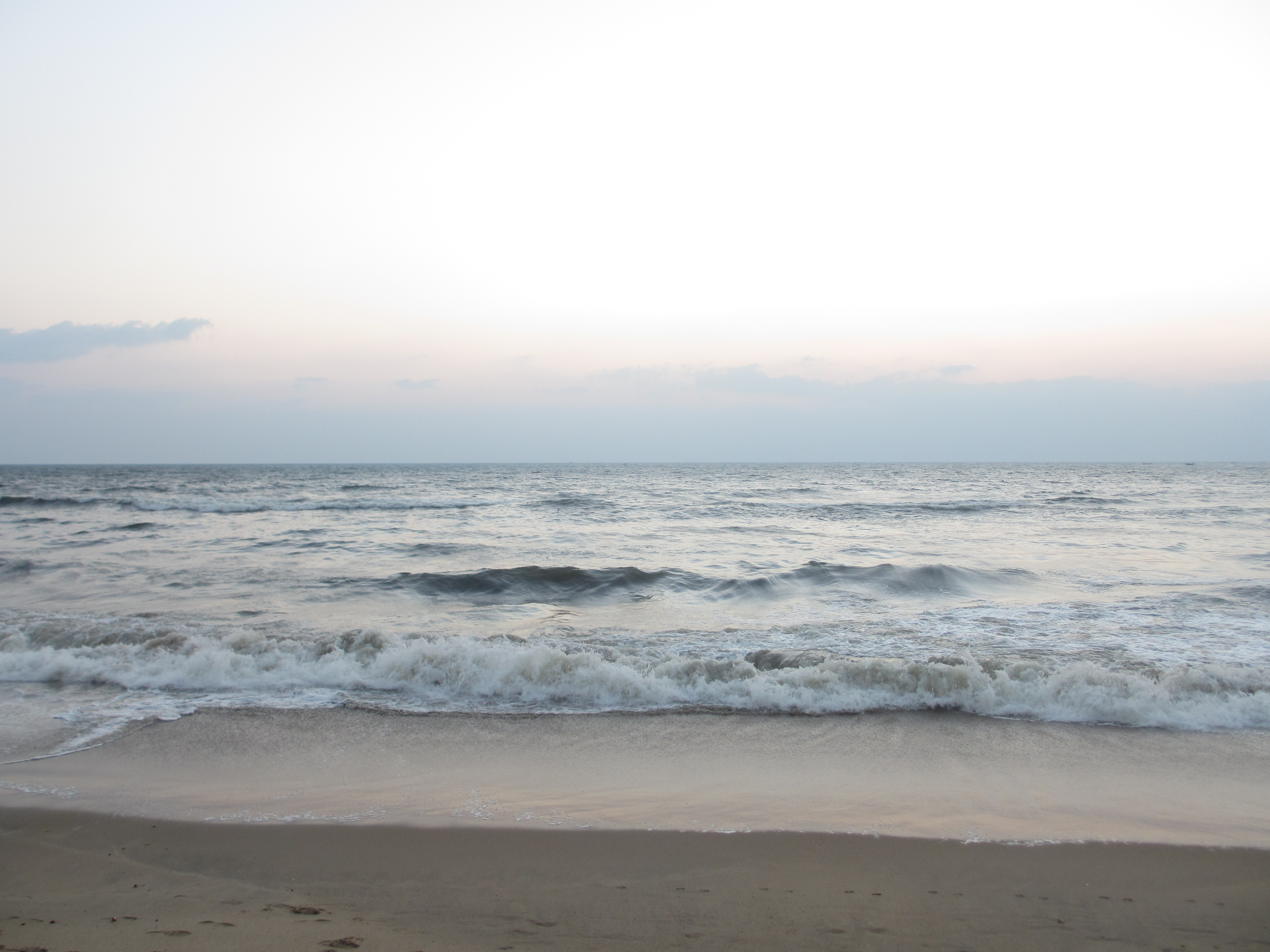
Sunrise at Elliot’s Beach
I woke up chance at around 5 AM on January 11, 2015. Instead of going back to bed (as usual) I decided to go and see the sunrise at Elliot’s Beach, Chennai. I carried a point and shoot camera along with me. I reached the beach a little late, however the clouds near the horizon had masked the view of the ‘Golden Disc’ rising out of the sea just like one of the Bond Girls coming out of the water towards the shore.
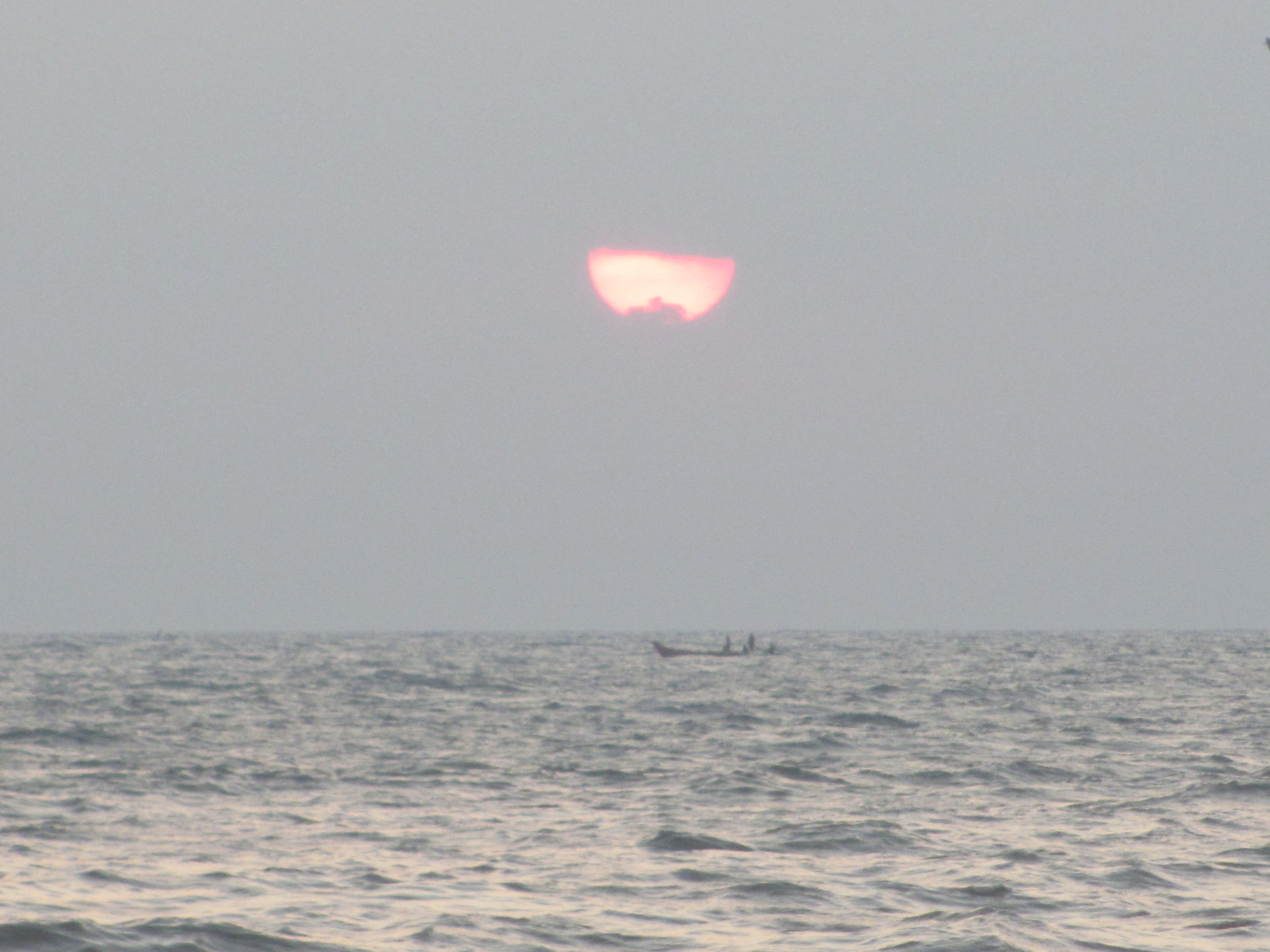
A Catamaram in the Sea
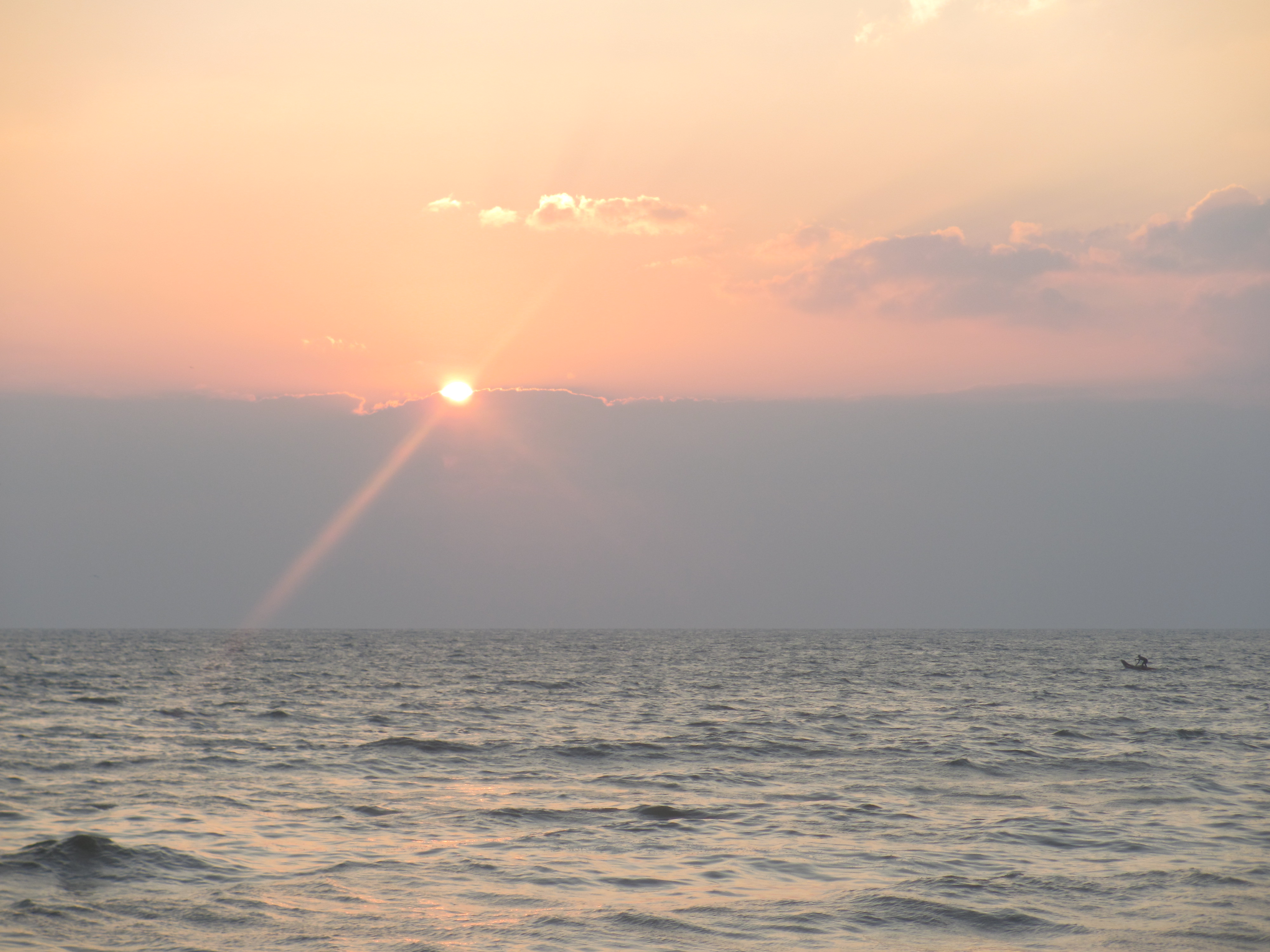
The Sun is just peeping out
At first I was disappointed that I was late. But then I thought this was a significant personal milestone for me and there was nothing to feel bad about. As I was taking snaps of the sun, I saw a motorized fishing boat returning to the shore to the nearby fishing hamlet. Eager to take a few snaps of the fresh fishes that the fishermen would be bringing, I headed in that direction.
As I was walking towards the boat, I saw the carcasses of two huge sea turtles on the shore. I took a snap of one of the sea turtles with the rising sun as the backdrop. Suddenly, the saying, ‘a new day, a new beginning’ flashed in my mind’s eye and I felt bad at the irony of the situation. I left the water front and started to walk in the roads near the beach.

A dead sea turtle
At one particular spot, a group of bikes parked together caught my attention. The reason is you come across 15 bikes of the same model all parked beside each other, every day. These bikes were all KTM 200 CC bikes. I checked the registrations on the bikes, they were from different localities within Chennai. One of the bikes had the tagline, ‘Eat, Sleep and Ride’ painted on it. About 20 feet from this pack there was another KTM bike with the message, ‘Riders not Racer’ parked.

15 KTM bikes parked together
I continued my walking session in a reflective mood. I always used to like going to Marina Beach and Elliot’s Beach along with family or friends while I was in school and college. I found the sight of ‘wave after wave crashing on the shore’ particularly therapeutic and comforting during times when I was in a bad mood. There have been countless instances when I was involved in mindless and aimless chatter with family of friends sitting on the beaches of Chennai.
As a kid I always used to jump in joy at the first sight of the beach as we used to walk through Wallajah Road towards thee beach. I can still remember how ecstatic I used to get at the exact moment when I used to complete my stroll through the beachfront and venture into the water. The sight of other kids laughing and playing in water, the moist air, the salty smell and the happy and playful times spent at the beachfront used to make me yearn for more time at the beach and would make me plead with my parents to take me to the beach more frequently.
However the association of beaches in Chennai with a ‘place for fun and happiness’ suddenly changed on that fateful 26th December morning ten years ago, when a bunch of giant murderous waves gatecrashed on the grand party called ‘everyday life’ that people in India, South Asia and South East Asia were enjoying. I remember seeing in horror and disbelief (about 10 days after the Tsunami day) a motorized fishing boat crashed into the first floor balcony of a sea-facing house on Thiruvanmiyur beach. Somehow after that day I don’t think of the sea/ beach as a place where we humans go for relaxation and re-creation. The sea is an enormous sleeping giant and the lives of people in sea-facing cities are at the mercy of this giant dormant volcano filled with water.

My name is Yoges (pronounced as Yo-gesh). If it’s pronounced as ‘Yogesh’ why is it written as ‘Yoges’? Well, that’s a long story. I am 35 year old guy from Chennai, India. The story of my name starts with my father’s name, Raja Gopal. When I was born on 6th April 1980, my parents decided to give me a name similar to my father’s name and named me as ‘Ram Gopal.’ Instead of making this as my official name, they decided to consult our family’s astrologer. And the astrologer introduced the first twist in the screenplay of my life.
The astrologer after carefully considering the planetary alignment at the time of my birth as well as my birth star bowled a ‘Googly’ and announced that my name should start either with ‘Yo’ or ‘Ya.’ Not to be outdone by the astrologer’s advice my parents named me as ‘Yogesh Ram Gopal.’ My name would have stayed this way had it not been for an idea that was planted in my dad’s mind several years ago. It’s called ‘Numerology.’ I am not sure who introduced my dad to the concept of Numerology; may be it is an elder one from the family or a friend or maybe even a newspaper article. But the fact is my dad very firmly believes in Numerology. And so my parents were checking if my would-be name (Yogesh Ram Gopal) would be ‘Numerology’ compliant as well. Unfortunately, ‘Yogesh Ram Gopal’ along with the initials (V R) did not lead to the favorable number (as per Numerology). Neither did ‘Yogesh Ram’ nor ‘Yogesh.’ So finally they settled for the odd spelling for my name as ‘Yoges’ though everyone in the family always pronounced it as ‘Yogesh.’
There is a little bit of history in the choice of initials that were chosen for me and my sisters. Unlike the majority in India, in in my state Tamil Nadu, people mostly do not have Surnames. The norm is using abbreviation of one’s native place plus father’s name or abbreviation of grand father’s name plus father’s name or just father’s name as initials. Example: In the late CM of Tamil Nadu C.N. Annadurai’s name, ‘C’ stands for his native place Conjeevaram and ‘N’ stands for his father’s name Natarajan.
So my name should have been either R Yoges (Rajagopal Yoges) or P R Yoges (Padapai Rajagopal Yoges), Padapai being my ancestral village. However fate intervened in the form of a conversation that my dad had with one his friends who worked as a nurse at CSI Kalyani Hospital, Chennai around the time my eldest sister was born. It seems that the nurse felt that it’s unfair that while the mother of the baby incurs a lot of pain in bringing the baby to this world, only the name of the father is given as initials. My dad recalled a few years back that at that moment he decided that he will include my mother’s name along with his name as initials for his children. So I and my sister’s got the initials as V R (Vijayalakshmi Rajagopal).
Well, I wouldn’t be thinking about writing about my name had it not put me into some interesting situations at school, college and workplace. First of all, most of my classmates and teachers in school were intrigued about the unusual spelling for my name. One of the teachers who came as substitute for my math teacher, on looking at my name on my notebook even commented, “Idiot, you don’t even know how to spell your name?” My class representative came to my rescue and told her that it’s a numerology based name (I have struck to that explanation ever since). Most of classmates would either call me as ‘Yo-ges’ or ‘Yogx’. Things got slightly better during graduation and post-graduation when my class mates called me as Yogi (meaning: a person who has spent a lot of their life doing yoga and studying the philosophy of yoga) or Yogi Bear (!!!).
But I always keep running into trouble while filling my name in applications for institutions outside Tamil Nadu. Applications for most institutions (outside Tamil Nadu) don’t account for Patronymic names and hence keep asking for ‘Surname’. And I have to fill my parents name in the place given for surname. This always keeps leading to interesting permutations for my name depending upon how the institutions’ computer systems are configured.
Post MBA when I went to work with an MNC, I started facing another interesting problem. The company had policy of using ‘surname, first name’ as the naming convention in Outlook profiles. They did not allow photos to be uploaded to avoid any discrimination in staffing. The IT people who created my outlook account configured my name as “Rajagopal, Yoges Vijayalakshmi.” In one particular year I signed up to be training coordinator for my department’s trainings. We had the practice of allowing a few people from other departments to attend our department’s training. So our training announcements would be sent to other departments with my name as the training coordinator. To my horror, in one of the months about half a dozen mails (from people from other departments) landed in my inbox with more or less the following message: “Hello Miss Vijayalakshmi, We would like to attend the above said training.” Miss Vijayalaksmi!!! The issue is that they assumed my oddly spelt name ‘Yoges’ as family name. There was no photo to see that it’s actually a guy. On seeing a feminine name Vijayalakshmi, they addressed it as ‘Miss Vijayalaksmi.’
I have always thought that my parents could have given me a Tamil name or the name of a famous historical personality from Tamil Nadu instead of a Sanskrit based name ‘Yogesh.’ This feeling started taking roots in a Tamil class during my primary school days when our Tamil teacher pinpointed students with pure Tamil names. In that class I learned that my name was a Sanskrit based name. I thought that it was wrong on my parents’ part to have given me a Sanskrit based name and decided that when I grow up I will choose a name that has some significance in Tamil literature or Tamil history. The issues that I had to face due to the odd spelling for my name only made this feeling stronger with each passing day. In the heydays of Orkut, for a couple of years I used the original name of the greatest of Tamil kings, ‘Arul Mozhi Varman’ as my profile name. However, slowly I was losing the inclination to change my name. Somehow I was starting to believe that ‘It’s the divine right of parents to name their child and the child has no right to change his/her name.’ What if the child does not like his/her name? He or She has to earn a name or title from the society through some meaningful contribution to the society.
For a number of years I never thought about what is the actual meaning of my name. I was forced to think about it during the third year of my graduation. I had applied for the Engineering Stream of Indian Air Force through University Entry Scheme. I had cleared the written test and had to go to Mysore for in-person interviews and tasks. We were divided into groups based on the increasing order of our age. My batch did not have any tasks in the first day. Post dinner when we were discussing with guys who had tasks that day, a lot of guys said that they were asked for the ‘meaning of their name’. That night I thought about what is the meaning of my name; however I could not think of a good answer. When I was posed that question the following day, I could not give a convincing reply. However the officer who asked me this question, told me that my name ‘Yogesh’ might have its origins in the root word for ‘Yoga.’ When I came back from Mysore, I started looking for the meaning of name on the internet. I figured out that my name could mean God of Yoga or Destiny’s God.
I once came across an email forward: ‘by the time you realize whatever your dad said makes sense, your son would be thinking that whatever you say doesn’t make sense.’ I had to come to terms with this reality when I had a daughter in 2012 and it was time to give her a name. I preferred giving my daughter a pure Tamil name but my wife wanted a name that was stylish. A search for names on the internet and books proved futile. However a colleague of mine suggested the name ‘Venpa’ (a form of Tamil Poetry) which matched our criteria. However as per my daughter’s birth star her name has to start with ‘Tha’, ‘Dha’ or ‘Sa.’ My father also handed me a book on Numerology to figure out a name that leads to a favorable number! Though I do not believe that name alone will ensure in success or well-being in life, I did not want to deny the doses of good luck (offered by an astrology and numerology based name) to my daughter. So reluctantly, I decided to figure out a name that would be favorable as per astrology as well as numerology.
But figuring out such a name proved more difficult than I had imagined. First, the number of names were limited (How many Hindu female names can you get starting with the three alphabets T, D or S?). Second, a lot of names that I liked, my wife did not like and vice-versa. Finally we were left with only a handful of names to choose from. Now came the interesting part of making the names Numerology compliant!!! I exhausted half a note book in trying to figure out a favorable combination. I spent quite a few hours on this exercise in frustration. I would add an additional ‘a’ or ‘h’ or ‘e’ to a name, but still it would not lead to a lucky number. Some names would get morphed into a completely unrecognizable form due to all the alphabet additions that I made.
We had decided to name our daughter on November 9, 2012. The ceremony was supposed to start at 9 AM. It was late in the evening on November 8 and I still had not figured out a name. I was frantically trying to arrive at a name while my wife was attending to our daughter. My wife had worried look on her face. Hours were just ticking by but a name that meets all our criteria was proving to be elusive. Around 3 AM on November 9 I had two names lined up but couldn’t choose one over the other. I went to my wife, showed her two fingers and told her that each one stood for a name and she had to choose one. My wife chose ‘Thanvii’. The original word behind this name is ‘Tanvi’ (meaning: soft and tender). I had introduced additional H and I to make this name Numerology compliant. At this juncture I am reminded of a joke made by one of my ex-colleagues, ‘In Tamil Nadu there is a “H” free after every “T” and every “D”.’ Like our parents we also decided to use my name and my wife’s name as initials to my daughter.
Somehow after going through this whole name finding mission, I see my name as well the process my parents used to arrive at my name in a more favorable light. As I was going through the process of choosing a name for my daughter, deep inside I wanted the ‘divine power’/ ‘luck’ that I had invoked through an Astrology and Numerology compliant name to be a guiding force for my daughter long after I have left this earth. As I recollect now, the odd spelling for my name had given me a benefit that I have failed to recognize over the years. The odd spelling for my name has severed as a good ice-breaker topic for me over the years. I could always add a couple of sentences to my introduction instead of just stating my name. In my workplaces (when there are other people with the same name Yogesh), the odd spelling for my name has ensured that my name is easily findable in the address book. I have told new colleagues time and again to just look for the ‘Yogesh’ without the ‘h’ in the name!
I have come across the question, ‘What’s in a name?’ so many times in books, discussion, articles etc. When we look superficially a name is insignificant and only the life of the person bearing the name carries a meaning. But if we look at a much deeper level, even if the life of the person bearing the name is meaningless, the name is still significant in a number of ways. The name could be mish-mash of various ancient bodies of knowledge. The name could be the end-result of various belief systems of a family that has been passed down across generations over a millennia. The name could be the remnant of a struggle to ensure in a new social order in a by-gone era. The name could be the result of just a spark of an idea that was lit in the minds of the parents by someone whom the child is never going to meet in his or her life. Above all the name could be a manifestation of desire or a longing within the heart of every parent for his or her child to have the best possible life known to mankind.
Everything made Art.
The musings and ramblings of a young poet.
Rhymes and Reasons for Every Season
words. hearts. humanity.
The Life & Ramblings Of A Zillennial
welcome to my paradoxes
where wellness meets authenticity.
Here's To Express.. :)
THIS SITE IS ABOUT ME, MY CREATIVITY, MY IMAGINATION AND MY FEELINGS.
Hi! my name is Sebastian (You can call me Seb!) ...welcome to my Blog. I'm a photographer from Worcester, Worcestershire, England. Thanks for dropping by! I hope you enjoy my work.
Open Your Mind
Epic fantasy & military sci-fi author.
An Independent Nondiscriminatory Platform With No Religious, Political, Financial, or Social Affiliations - FOUNDED 2014
Living slowly, adventuring often ✨️
Connecting Inner voice to External World
Gray clouds trail across the sky. In the pale winter sun a flock of geese (Ben Grafström--Akita, Japan)
Tip Shack generates inspiring, positive, informative, entertaining and useful tips & guide, covering fast and fun gastronomy, movies, entertainment, sports, beauty, news, relationships and technology.
Climbing, Outdoors, Life!
Challenging and Supporting People to do the Most Important Work of their Lives
Seeing Systemic Change Before Pathways Harden
The daily reads and writes
rays on life...


