Words of Wisdom from Kevin Kelly

A friend of mine sent across an article titled, 68 Bits of Unsolicited Advice, a couple of days ago. I managed to read it only today. It’s actually a list of advice by Kevin Kelly, the founding executive editor of Wired Magazine. The list contained 68 points, a number that Kevin had chosen to be in parity with his age (68 years). I was thinking of writing a blog post about my favorite ones from Kevin’s 68 points of advice. However as I started compiling a list, I realized that reading through the list and grouping them to relate to broad areas was difficult; to start with the list was not even numbered. So I have grouped Kevin’s 68 points of advice into broad categories (pretty subjective) so as to make it easy to understand and refer back. So given below is my classification of Kevin’s 68 Maxims.

Collaboration:

  1. Always demand a deadline. A deadline weeds out the extraneous and the ordinary. It prevents you from trying to make it perfect, so you have to make it different. Different is better.
  2. Don’t be afraid to ask a question that may sound stupid because 99% of the time everyone else is thinking of the same question and is too embarrassed to ask it.
  3. Rule of 7 in research. You can find out anything if you are willing to go seven levels. If the first source you ask doesn’t know, ask them who you should ask next, and so on down the line. If you are willing to go to the 7th source, you’ll almost always get your answer.
  4. Don’t ever respond to a solicitation or a proposal on the phone. The urgency is a disguise.
  5. Be prepared: When you are 90% done any large project (a house, a film, an event, an app) the rest of the myriad details will take a second 90% to complete.

Communication:

  1. Being able to listen well is a superpower. While listening to someone you love keep asking them “Is there more?”, until there is no more.
  2. Rule of 3 in conversation. To get to the real reason, ask a person to go deeper than what they just said. Then again, and once more. The third time’s answer is close to the truth.
  3. Everyone is shy. Other people are waiting for you to introduce yourself to them, they are waiting for you to send them an email, they are waiting for you to ask them on a date. Go ahead.
  4. Don’t say anything about someone in email you would not be comfortable saying to them directly, because eventually they will read it.
  5. How to apologize: Quickly, specifically, sincerely.

Creativity:

  1. To make something good, just do it. To make something great, just re-do it, re-do it, re-do it. The secret to making fine things is in remaking them.
  2. Pros are just amateurs who know how to gracefully recover from their mistakes.
  3. Separate the processes of creation from improving. You can’t write and edit, or sculpt and polish, or make and analyze at the same time. If you do, the editor stops the creator. While you invent, don’t select. While you sketch, don’t inspect. While you write the first draft, don’t reflect. At the start, the creator mind must be unleashed from judgement.
  4. Art is in what you leave out.
  5. Anything real begins with the fiction of what could be. Imagination is therefore the most potent force in the universe, and a skill you can get better at. It’s the one skill in life that benefits from ignoring what everyone else knows.

Interpersonal:

  1. Gratitude will unlock all other virtues and is something you can get better at.
  2. Treating a person to a meal never fails, and is so easy to do. It’s powerful with old friends and a great way to make new friends.
  3. Reading to your children regularly will bond you together and kick-start their imaginations.
  4. The more you are interested in others, the more interesting they find you. To be interesting, be interested.
  5. Optimize your generosity. No one on their deathbed has ever regretted giving too much away.
  6. The Golden Rule (Treating others as you want to be treated) will never fail you. It is the foundation of all other virtues.
  7. Perhaps the most counter-intuitive truth of the universe is that the more you give to others, the more you’ll get. Understanding this is the beginning of wisdom.
  8. Friends are better than money. Almost anything money can do, friends can do better. In so many ways a friend with a boat is better than owning a boat.
  9. This is true: It’s hard to cheat an honest man.
  10. Hatred is a curse that does not affect the hated. It only poisons the hater. Release a grudge as if it was a poison.
  11. To make mistakes is human. To own your mistakes is divine. Nothing elevates a person higher than quickly admitting and taking personal responsibility for the mistakes you make and then fixing them fairly. If you mess up, fess up. It’s astounding how powerful this ownership is.
  12. When someone is nasty, rude, hateful, or mean with you, pretend they have a disease. That makes it easier to have empathy toward them which can soften the conflict.
  13. Don’t take it personally when someone turns you down. Assume they are like you: busy, occupied, distracted. Try again later. It’s amazing how often a second try works.
  14. Promptness is a sign of respect.

Learning:

  1. Learn how to learn from those you disagree with, or even offend you. See if you can find the truth in what they believe.
  2. Being enthusiastic is worth 25 IQ points.
  3. A worthy goal for a year is to learn enough about a subject so that you can’t believe how ignorant you were a year earlier.
  4. Don’t be the smartest person in the room. Hangout with, and learn from, people smarter than yourself. Even better, find smart people who will disagree with you.
  5. There is no limit on better. Talent is distributed unfairly, but there is no limit on how much we can improve what we start with.

Life-Hacks:

  1. The purpose of a habit is to remove that action from self-negotiation. You no longer expend energy deciding whether to do it. You just do it. Good habits can range from telling the truth, to flossing.
  2. Never use a credit card for credit. The only kind of credit, or debt, that is acceptable is debt to acquire something whose exchange value is extremely likely to increase, like in a home. The exchange value of most things diminishes or vanishes the moment you purchase them. Don’t be in debt to losers.
  3. When you are young spend at least 6 months to one year living as poor as you can, owning as little as you possibly can, eating beans and rice in a tiny room or tent, to experience what your “worst” lifestyle might be. That way any time you have to risk something in the future you won’t be afraid of the worst case scenario.
  4. If you are looking for something in your house, and you finally find it, when you’re done with it, don’t put it back where you found it. Put it back where you first looked for it.
  5. When an object is lost, 95% of the time it is hiding within arm’s reach of where it was last seen. Search in all possible locations in that radius and you’ll find it.
  6. If you lose or forget to bring a cable, adapter or charger, check with your hotel. Most hotels now have a drawer full of cables, adapters and chargers others have left behind, and probably have the one you are missing. You can often claim it after borrowing it.
  7. For every dollar you spend purchasing something substantial, expect to pay a dollar in repairs, maintenance, or disposal by the end of its life.
  8. On vacation go to the most remote place on your itinerary first, bypassing the cities. You’ll maximize the shock of otherness in the remote, and then later you’ll welcome the familiar comforts of a city on the way back.
  9. When you get an invitation to do something in the future, ask yourself: would you accept this if it was scheduled for tomorrow? Not too many promises will pass that immediacy filter.
  10. Buying tools: Start by buying the absolute cheapest tools you can find. Upgrade the ones you use a lot. If you wind up using some tool for a job, buy the very best you can afford.
  11. Learn how to take a 20-minute power nap without embarrassment.
  12. Don’t trust all-purpose glue.

Success Tips:

  1. Show up. Keep showing up. Somebody successful said: 99% of success is just showing up.
  2. Don’t be the best. Be the only.
  3. Saving money and investing money are both good habits. Small amounts of money invested regularly for many decades without deliberation is one path to wealth.
  4. You are what you do. Not what you say, not what you believe, not how you vote, but what you spend your time on.
  5. The universe is conspiring behind your back to make you a success. This will be much easier to do if you embrace this pronoia.
  6. If you are not falling down occasionally, you are just coasting.
  7. When crisis and disaster strike, don’t waste them. No problems, no progress.
  8. If you desperately need a job, you are just another problem for a boss; if you can solve many of the problems the boss has right now, you are hired. To be hired, think like your boss.
  9. You can obsess about serving your customers/audience/clients, or you can obsess about beating the competition. Both work, but of the two, obsessing about your customers will take you further.
  10. You really don’t want to be famous. Read the biography of any famous person.
  11. Experience is overrated. When hiring, hire for aptitude, train for skills. Most really amazing or great things are done by people doing them for the first time.
  12. Following your bliss is a recipe for paralysis if you don’t know what you are passionate about. A better motto for most youth is “master something, anything”. Through mastery of one thing, you can drift towards extensions of that mastery that bring you more joy, and eventually discover where your bliss is.

Wisdom of a Lifetime:

  1. Trust me: There is no “them”.
  2. Never get involved in a land war in Asia.
  3. Extraordinary claims should require extraordinary evidence to be believed.
  4. Acquiring things will rarely bring you deep satisfaction. But acquiring experiences will.
  5. Eliminating clutter makes room for your true treasures.
  6. A vacation + a disaster = an adventure.
  7. I’m positive that in 100 years much of what I take to be true today will be proved to be wrong, maybe even embarrassingly wrong, and I try really hard to identify what it is that I am wrong about today.
  8. Over the long term, the future is decided by optimists. To be an optimist you don’t have to ignore all the many problems we create; you just have to imagine improving our capacity to solve problems.
  9. Before you are old, attend as many funerals as you can bear, and listen. Nobody talks about the departed’s achievements. The only thing people will remember is what kind of person you were while you were achieving.
  10. When you die you take absolutely nothing with you except your reputation.

Hope you find my classification.

Do book mark Kevin Kelly’s website. It has a treasure trove of articles on a host of subjects: https://kk.org/

Oh, I almost forgot.

Belated Happy Birthday Kevin.

Thanks a lot for sharing your words of wisdom.
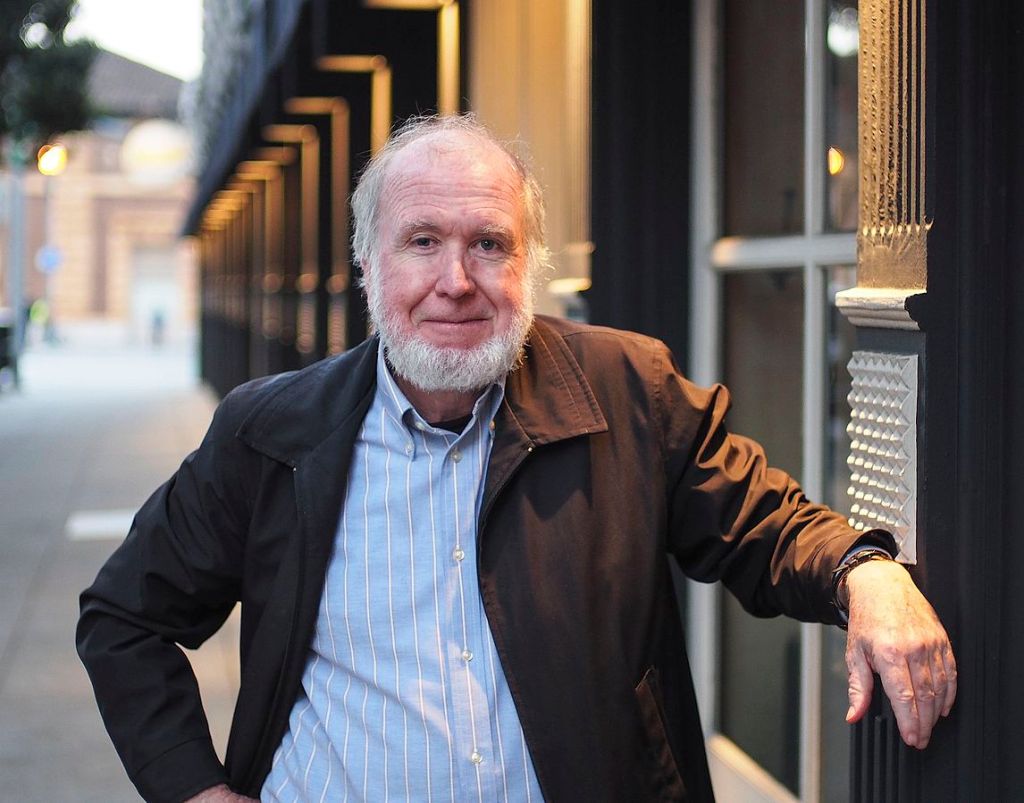
Image Source: Flickr
Image by: Christopher Michael

The Art of Creative Thinking by Rod Judkins

The Art of Creative Thinking

A couple of days back I finished reading ‘The Art of Creative Thinking’ by Rod Judkins. It’s a short and crisp book. The book does not have a table of contents and the chapters are not grouped together by broad topics either. In fact at the end of each chapter the authors suggest two chapters from the book for further reading, one about a related idea discussed in the chapter and another about a slightly contrarian idea.

The book is light on exercises on how to increase our creativity. What caught my attention were the inspiring stories and whole lot of powerful one liners. I liked the story about Nobel Prize winning astrophysicist Subramanyan Chandrasekhar and his two Nobel Prize winning students (the only two students to sign up for one of his classes!). The other inspiring story was about Craig Good, who joined Pixar as a janitor but through his efforts and training from the company became a camera artist for such successful films like Toy Story, Finding Nemo and Monsters, Inc.

The book is filled with a lot of good one liners. A few of them:

  • The most common decision at a meeting is to have another meeting.
  • It is more important to be the best version of yourself than a bad copy of someone else
  • Put your personality before practicality and your individuality into everything
  • Doubt is the key to unlocking new ideas
  • Think of nature not as a source of materials to use but as a library of ideas
  • Most are born geniuses and are de-geniused by education and convention
  • Your present circumstances don’t determine your destination, they only determine your departure point
  • The real currency of our time is not money; it’s attention
  • Hierarchies maintain the quo after it’s lost its status
  • Work is a dangerous form of procrastination
  • The history of art is inseparable from the history of money
  • The first spark of inspiration always needs reworking and revision
  • Growth is painful and change is painful, but nothing is more painful than staying in the wrong place

Overall the book is good on the inspiration front but rather shallow on techniques to improve and nurture creativity. However a good book to read just for the countless inspiring stories that it covers.

STEPPS TO MAKE ANY IDEA CONTAGIOUS

Contagious

In the book ‘The Tipping Point’ published in 2000, Malcolm Gladwell popularized the idea of ‘The Law of the Few,’ and stated that, ‘The success of any kind of social epidemic is heavily dependent on the involvement of people with a particular and rare set of social gifts.’ Essentially what this means is that when messages or ideas spread in a society through word of mouth, rapidly like an epidemic, it is due to special influential people. Identifying these influential people and getting them on board to support our idea or cause would mean that our idea or cause would spread through the society like unhindered forest fire. However there has been a lot of criticism for ‘the law of the few’ most notably from Duncan Watts, author of ‘Six Degrees.’

In ‘Contagious,’ Wharton Professor Jonah Berger argues that irrespective of who originates or passes along a message, it can be contagious if it has six key attributes. The author has devoted a chapter each for these six attributes.

  • Social Currency – The basic premise of this chapter is ‘We share things that make us look good
  • Triggers – This chapter is built on the central idea, ‘Top of the mind, tip of the tongue
  • Emotion – In this chapter the authors illustrates several cases to drive home the point, ‘When we care, we share
  • Public – This chapter is built on the central idea, ‘Built to show, built to grow
  • Practical Value – The key message from this chapter can be boiled down to, ‘News you can use
  • Stories – The core of this chapter is built around, ‘Information travels under the guise of idle chatter

In the words of Jonah Berger, ‘Harnessing the power of word of mouth, online or offline, requires understanding why people talk and why some things get talked about and shared more than others. The psychology of sharing. The science of social transmission.’  The author uses a number of psychological studies and real world examples to drive home the point that the inherent attractiveness of any message/ idea can be enhanced so as to make it worth sharing in the minds of its recipients.

Just to ensure that Virality is not an end in itself, but a means to an end, the author has this piece of advice for anyone trying to implement his methodology, ‘When trying to generate word of mouth, many people forget one important detail. They focus so much to make people to talk that they ignore the part that really matters: what people are talking about.’

The most important consideration as per the author is that, ‘ensuring the idea not only goes viral but also to make it valuable to the sponsoring company. Virality is most valuable when the brand or product benefit is integral to the story. When it’s woven so deeply into the narrative that people can’t tell the story without mentioning the brand or the product or the company.’

Even if we are not a marketer, ‘Contagious’ by Jonah Berger is a book worth reading just to understand why we hit the ‘share’ or the ‘retweet’ or the ‘forward’ buttons for some messages while ignoring a vast majority of the messages that we receive.

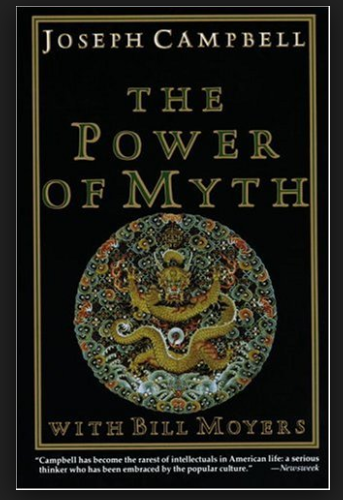
The Power of Myth by Joseph Campbell

The Power of Myth

Yesterday I finished reading ‘The Power of Myth’ based on a televised conversation between Comparative Mythologist, Joseph Campbell and TV anchor, Bill Moyers. The book set in the conversational style and makes for an easy read.

The sentence ‘Myths are clues to spiritual potentialities of the human life’ appear in the opening chapter as well as the closing chapter of the book. And that’s one of the key messages that this conveys. The other key theme discussed in this book is the similarity or proximities between myths from different cultures, places and times. The close association, as per Campbell, is due to ‘certain powers in the psyche that are common to all mankind.’ As per Campbell, ‘Every mythology has to do with the wisdom of life as related to a specific culture at a specific time. It integrates the individual into his society and the society into the field of nature.’

Some of the countless nuggets of wisdom from the book:

  • Every religion is true in one way or another. It is true when understood metaphorically. But when it gets stuck to its own metaphors, interpreting them as facts, then you are in trouble.
  • If you think that the metaphor is itself the reference, it would be like going to a restaurant, asking for the menu, seeing beefsteak written there, and starting to eat the menu.


  • Compassion is the fundamental religious experience, and, unless that is there, you have nothing. (A very important observation given the current series of religion based hate crimes).
  • You get a totally different civilization and a totally different way of living according to whether your myth presents nature as fallen or whether nature is in itself a manifestation of divinity, and the spirit is the revelation of the divinity that is inherent in nature.
  • Life is pain, but compassion is what gives it the possibility of continuing.
  • It’s characteristic of democracy that majority rule is understood as being effective not only in politics but also in thinking. In thinking, of course, the majority is always wrong.
  • Giving birth is definitely a heroic deed, in that it is giving over of oneself to the life of another.
  • Making money gets more advertisement. So the thing that happens and happens and happens, no matter how heroic it may be, is not news. Motherhood has lost its novelty, you might say.
  • Our life evokes our character. You find out more about yourself as you go on. That’s why it’s good to be able to put yourself in situations that will evoke your higher nature rather than your lower.
  • Mythology is not a lie, mythology is poetry, it is metaphorical.
  • The myth is the public dream and the dream is the private myth (just brilliant).
  • A legendary hero is usually the founder of something – the founder of a new age, the founder of a new religion, the founder of a new city, the founder of a new way of life.
  • In order to found something new, one has to leave the old and go in quest of the seed idea, a germinal idea that will have the potentiality of bringing forth that new thing.


  • You must have a room, or a certain hour or so a day, where you don’t know what was in the newspapers that morning……. This is a place where you can simply experience and bring forth what you are and what you might be. This is the place of creative incubation.
  • The earth does not belong to man, man belongs to the earth. All things are connected like the blood that unites us all. Man did not weave the web of life, he is merely a strand in it. Whatever he does to the web, he does to himself. (People carrying out the destruction of the ecology in pursuit of a fat bank account, please take a note.)
  • People say that what we’re all seeking is a meaning for life. I think that what we’re seeking is an experience of being alive, so that our life experiences on the purely physical plane will have resonances within our own innermost reality, so that we actually feel the rapture of being alive.
  • What we’re learning in our schools is not wisdom of life. We’re learning technologies, we’re getting information. There’s a curious reluctance on the part of faculties to indicate the life values of their subjects.

When I was watching the movie Troy, based on Greek epic Iliad, I was struck while watching the scene in which Achilles is killed by an arrow piercing his heel which is similar to a scene from Hindu epic Mahabharata, in which Krishna is killed by an arrow piercing his foot. After reading this book, I now realize that there are countless similarities between mythologies from different parts of the world.

There is one striking conversation in the second chapter in which Moyers reads verses from the creation story in Genesis and Campbell gives equivalent verses from other cultures ranging from the Pima Indians in Arizona, the Hindu Upanishads from India and the Bassari People of West Africa.

There is another conversation in the book about a story from Persia that Satan was condemned to hell because he loved God so much. I remember the The parallel episode to this from Hindu stories where the gate keepers of Vaikuntam, the heavenly abode of God Vishnu, are cursed by a group of saints. On the intervention of God Vishnu they are given an option between staying away from Vishnu for six births if they praise Vishnu in each birth or staying away from Vishnu for three births if they denounce him in each birth. Not able to bear the thought of being away Vishnu for six births, they accept to denounce him and are born as Asoora (Demon-like) kings in their next three births.

Reading ‘The Power of Myth’ is the best way to realize that humanity as whole shares the same roots, shares the same resources, shares the same fears and ultimately shares the same fate on this earth. As they say: ‘God is Love and Love is God.’ Love life and let all life forms live and flourish on this beautiful planet. May the power of sanity be with us and lead us to embrace the God within each one of us.

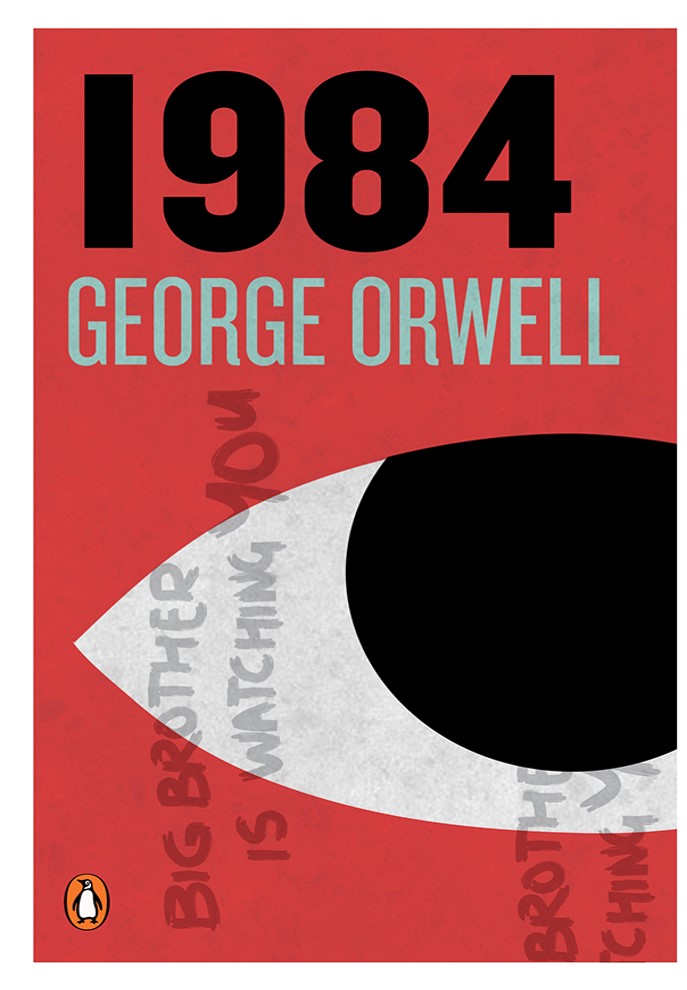
Nineteen Eighty-Four by George Orwell

1984 Book Cover

A while back I had read Animal Farm by George Orwell. I liked the book a lot and even wrote a book review on my blog. I decided to read Orwell’s other famous book ‘1984.’ In Animal Farm, George Orwell narrated about an idealistic revolution gone wrong and a totalitarian regime that arises as an aftermath in an easy to understand form. For people who did not get the message after reading Animal Farm, Orwell has written 1984 with all the gory details. The intensity of the novel was like Earth’s Gravitational Force; I could not prevent my mind from getting sucked into the novel.

Like I wrote in the review on Animal Farm, the brilliance of Orwell stems from the fact that he was able to clearly understand and present to us the pit falls of having a totalitarian regime without proper checks and balances in place. The only thing that he forgot to tell us in either books is that any system, including a democracy, could just be a tool serving only the people in power if there are no proper checks and balances in place. I am not sure if Orwell foresaw and would have written about it, but as the events of the past few years have shown, big business is as dangerous as big government. In a way the term big brother could be used to refer to anyone or any organization with too much of power to influence and control the fortunes of the general public.

For every Edward Snowden who succeeded in exposing the illegal practices of big governments countless many would have failed and would have paid a heavy price for their audacity. For every successful corporate whistle blower, countless many would have been silenced and had their careers ruined. For every media house that fights for the welfare of the people, there are countless many which have become part of the establishment that is oppressing the people. In a way, the protagonist of 1984 is symbolic of face-less, unknown and unsung heroes over the ages who had tried to fight against and change corrupt systems but ultimately got crushed under the weight and the power those very same systems.

A simple blog post would not be enough to narrate the brilliance of George Orwell’s work; Even an entire book would not suffice that purpose. Given the fact George Orwell’s was battling tremendous odds to complete this book, his last one, we would do ourselves a favor if we treat this book not just as a novel but as a ‘sacred text’ that explains the pitfalls of trading off our individual freedom for the sake non-existent stability and security. A few literary gems, nuggets of wisdom, revelations from the book are given below:

  • Nothing was your own except the few centimeters inside your skull
  • It was not by making yourself heard but by staying sane that you carried on the human heritage
  • The consequences of every act are included in the act itself
  • The immediate advantages of falsifying the past were obvious, but the ultimate motives was mysterious
  • The Heresy of heresies was common sense
  • It struck him that in moments of crisis one is never fighting against an external enemy, but always against one’s own body
  • Accepting the party as something unalterable, like the sky
  • In a way, the world-view of the Party imposed itself most successfully on the people incapable of understanding in it – just brilliant.


  • In the long run, a hierarchical society was only possible on the basis of poverty and ignorance
  • The essential act of war is destruction, not necessarily of human lives, but of the products of human labor


  • The consciousness of being at war, and therefore in danger, makes handing-over of all power to a small caste seem the natural, unavoidable condition of survival
  • The aim of the High is to remain where they are. The aim of the Middle is to change places with the High. The aim of the Low……is to abolish all distinctions and create a society in which all men shall be equal
  • No advance in wealth, no softening of manners, no reform or revolution has ever brought human equality a millimeter nearer. From the point of view of the Low, no historic change has ever meant much more than a change in the name of their masters
  • With the development of television, and the technical advance which made it possible to receive and transmit simultaneously on the same instrument, private life came to an end. – The smart phone and the social media are the logical extensions of this phenomenon.
  • It had long been realized that the secure basis for oligarchy is collectivism. Wealth and privilege are most easily defended when they are possessed jointly
  • What can you do against the lunatic who is more intelligent that yourself, who gives your arguments a fair hearing and then simply persists in his lunacy?
  • Power is not a means, it is an end
  • One does not establish a dictatorship in order to safeguard a revolution; one makes the revolution in order to establish the dictatorship.


  • The object of persecution is persecution. The object of torture is torture. The object of power is power.

For all the advancement in science & technology, social sciences, economics and arts in the last hundred years or so, the world of today is much closer to ‘Dystopia’ than ‘Utopia.’ The world of today is a dystopian one where there the focus is on profits and not on people and on earnings per share and not on ecological balance.

I found it every interesting that both in ‘Animal Farm’ as well as in ‘1984’ the ruling class instills the fear about a renegade in general public and uses that fear to safeguard their hold over the public. While the ‘Screen’ mentioned in the book sends out information that not everybody likes, today we all own a Screen (smart phone) which provides us with information (paid news and advertising) that we absolutely adore. Strangely we not only have allowed both big government and big business to snoop on us but have grown to absolutely love the idea (for the sake of a few freebies that we receive in return).

Today the single biggest influence on our lives is not our provincial or national governments but the unified global economic order. Under the influence of the globalization every country is like a conjoined twin with every other country. Free market proponents (read big businesses) have used the free of communism, socialism and the hold of big government to only increase their power and hold over our lives. Just to paraphrase what Orwell wrote in Animal farm, today there is no difference between Big Government and Big Business. They are two sides of the same coin with ‘subjugation of ordinary public’ as their common objective. Today if there is anything that is close to a totalitarian regime, it is the unified global economic order and the hold of capitalism over it.

The Big Businesses have found their ultimate example in the Roman Emperors who provided grand acts in the colosseum for the people to prevent them from thinking for themselves and questioning the emperors’ objectives and actions.  Similarly Big Businesses through their print houses, tabloids, TV channels, movie houses, sports teams are bringing us action and more unwanted and unnecessary action to our cities, our localities, our streets, our living rooms and ultimately to the sacred space in our palms. After exhausting all our time, energy, money and cranial capacity on all these activities, we can hardly think about and act in our own best interests.

Animal Farm by George Orwell

Animal Farm

One of my MBA professors once said, ‘If I have to talk sense, I can make it even in five minutes; I don’t need a whole hour.’ Animal Farm by George Orwell is small book (a novella – 95 pages in Penguin Book that I read) that makes a lot of sense even though seventy years have passed since it was first published. The author wrote this fable/ allegory or fairy tale with Soviet Union under Stalin in mind and yet a vast majority of the situations and observations are applicable even today’s world, even to democracies like India.

Such is the brilliance of Orwell that while reading some of the lines in the book, I was reminded about news items that I have read in the recent past. Take for example this line from the book: ‘Two cows, enjoying a drink at the pool, would exclaim, “Thanks to the leadership of Comrade Napoleon, how excellent this water tastes!”’ On reading this line I was reminded of the umpteen number of times how the success of government schemes are attributed directly to the efforts of only the Chief Minister/ Prime Minister. Another one: ‘Squealer always spoke of it as a “readjustment,” never as a “reduction.” On reading this one I got reminded of how Hillary Clinton claimed on TV during a prime time interview that FBI Investigation against her is just a “Security Review” and “not an investigation.”’ Not to forget the barrage of ‘my statement was taken out of context’ or ‘my tweet was taken out of context’ statement that you get to hear these days.

Another brilliant line from the book, ‘Somehow it seemed as though the farm had grown richer without making the animals themselves richer – except, of course, for the pigs and the dogs.’ This line could just be an apt criticism against today’s Capitalism and Globalization. I was also reminded of the growing income inequality and the recent Bernie Sanders campaign which focused a lot on the income and wealth of the richest one-tenth of one percent of Americans.

A gem of a statement from the book, ‘All animals are equal. But some animals are more equal than others.’ On reading this I was reminded of how a loan defaulter billionaire was allowed to leave this country, how the hit and run case of a Bollywood super star has progressed nowhere in over a decade and how even a retired judge was also in favor of clemency for a Bollywood actor convicted of possessing a gun.

Or this wonderful line: ‘Throughout the whole period of his seeming friendship with Pilkington, Napoleon had been in secret agreement with Frederick.’ This line reminded me of how parties that competed against each other in assembly elections become allies by the time the Lok Sabha elections are around the corner, within just a few months.

In the end Animal Farm is about a few simple truths:

  1. No sooner than the objectives of a movement are achieved, the ideals behind the crusade are forgotten
  2. The leaders of the movement who get elevated to power centers soon forget the people and enforce policies that are beneficial only to themselves, which would aid in extend their reign.
  3. Without proper checks and balance any system would fail in the long run
  4. Blind faith and apathy of the people are as dangerous to the people and the country as nepotism, corruption or tyranny.

Animal Farm is a must read for anyone irrespective of their political ideology. It is a short but brilliant book. Hats Off to George Orwell for writing this timeless Classic.

Book Review: ‘Between Parent and Child’ by Dr. Haim G. Ginott

Between Parent and Child.jpg

Of late my wife has been reprimanding me for being hypercritical and harsh with my daughter. Not wanting to get into my way versus your way debate with my wife, I decided to check for myself if my wife’s comments are actually true. Where else would I turn to counsel than my new-found best friends, books? I turned to Amazon search engine to shortlist a book to read on the subject and after a few clicks, I had found ‘Between Parent and Child’ by Dr. Haim G. Ginott, a book first published in 1965 and considered a classic on this subject.

Forget the content of the book, the book could easily called a classic for the number of high impact one-liners in it. Mid-way through the book I completely lost count of the number of one-liners that made me sit up and say wow! The book is concise but thorough and the chapters are short but effective. Most importantly at the end of each chapter I was motivated to read the next chapter. The book proceeds at a rapid pace in dispelling many myths about parenting and parent-child interactions. Overall it’s a very good and delightful book to read and could be an important source to refer back to, from time to time.

Some of my favorite pointers/ observations from the book are:

  1. Don’t be a parent, be a human being who is a parent
  2. Good parents need skill
  3. Communication for connection: Respond to children’s feelings, not their behavior
  4. Behind many childhood questions is the desire for reassurance
  5. Fish swim, birds fly, and people feel
  6. Praise, like penicillin, must not be administered haphazardly
  7. Abusive adjectives, like poisonous arrows, are not to be used against children
  8. Anger, like the common cold, is a recurrent problem. We may not like it, but we cannot ignore it.
  9. The niceties of the art of living cannot be a conveyed with a sledgehammer
  10. Emotions, like rivers, cannot be stopped, only directed
  11. Parents can initiate favorable changes in their child by listening with sensitivity
  12. Discipline, like surgery, requires precision – no random cuts, no careless attacks
  13. Discipline: Permissive of feelings but strict with behavior
  14. When children are punished they resolve to be more careful, not more obedient or responsible
  15. Effective upbringing is based on mutual respect between parent and child without the parent’s abdicating the adult role
  16. It’s desirable that a parent or other caring adult be home to greet children upon their return from school
  17. It hurts to share a parent’s or a spouse’s love
  18. Children do not yearn for equal shares of love: They need to be loved uniquely, not uniformly
  19. Efficiency is the enemy of infancy: Children need opportunities to experiment, struggle, and learn without being rushed or insulted
  20. Children need a clear definition of what is acceptable and what is unacceptable behavior

Even Scavenging Crows Don’t Sell Themselves Short

One of my fondest childhood memories is that of me and my sisters feeding rice to sparrows and crows in the verandah in our grandparent’s house. It’s an age old practice that our grandparents had encouraged us to indulge in and enjoy. These days sighting sparrows in Chennai has become a rarity and finding time in our extra rush-hour life to feed the crows has been difficult. The problem is also aggravated by the fact that it’s very difficult to find a suitable spot to feed the birds in apartment complexes. Nevertheless in the last couple of years I have got into the habit of feeding crows.

The compound wall of our current flat is just an arm’s distance from our kitchen. As a result we place food for the birds on the compound wall from our kitchen. The convenience factor has made it easier to feed the crows. The sound of the crows around breakfast and lunch times also serve as alarm bells that remind me to feed the crows. I hadn’t given it much thought but of late I have started noticing that even crows have foods preferences. The scavenging crows are the last creatures that I would have expected to have preference in meals but they seem to have preferences. Crows prefer non-veg items; that’s a no brainer. They prefer chapatti over rice; that’s a surprise to me. The spot where we place pieces of chapatti will become empty within a few minutes whereas when we place rice it will take a couple of hours to get finished. Crows seem to hate dosas; they are kind of ok with idlis.

This Saturday morning, something even more interesting happened. My wife was not keeping well and my mother was at my sister’s place. I went to kitchen to drink water and on hearing the sound of crows I reached out to the loaf of bread lying on the kitchen table. I pulled a couple of slices of bread and tore them into smaller pieces and placed them at the usual spot on the compound wall where we keep food for the crows. Then I went to wash my hands at the kitchen sink and simultaneously peeked through the window to see what was happening.

Four crows descended on the compound and were shouting loudly. However none of them touched the bread. One of the crows even looked very closely at the bread pieces similar to the way a lab technician would look through a microscope. Even after a couple of hours the bread pieces were still lying on the compound wall.

As I was having my lunch I could not help but wonder about the optimism of those crows. Crows are mostly scavengers eating on left overs, living a kind of rootless existence (in the eyes of a human) with not much guarantee about the next meal. Yet the experience of their life time had taught them to be so optimistic about their immediate future that they were not willing to sell themselves short. Even a lifetime of scavenging has not dented their optimism.

I wish I had the same optimistic outlook about my own life. At so many instances in life I have sold myself short thinking that it was risky to forego what was in front of me. There have been days at a stretch when I had been pessimistic, cynical and grumpy. I have also known of so many people (with the best of education, jobs, health and family condition) who have had the same feeling and would go an extra mile in propagating their pessimism to others as well. And yet here we have bunch of scavenging crows that were more optimistic than people like us and were refusing to sell themselves short. Optimism is not something that you deduce from your immediate environment or situation but something that you inculcate within yourself. Life and Nature are indeed great teachers.