STEPPS TO MAKE ANY IDEA CONTAGIOUS

Contagious

In the book ‘The Tipping Point’ published in 2000, Malcolm Gladwell popularized the idea of ‘The Law of the Few,’ and stated that, ‘The success of any kind of social epidemic is heavily dependent on the involvement of people with a particular and rare set of social gifts.’ Essentially what this means is that when messages or ideas spread in a society through word of mouth, rapidly like an epidemic, it is due to special influential people. Identifying these influential people and getting them on board to support our idea or cause would mean that our idea or cause would spread through the society like unhindered forest fire. However there has been a lot of criticism for ‘the law of the few’ most notably from Duncan Watts, author of ‘Six Degrees.’

In ‘Contagious,’ Wharton Professor Jonah Berger argues that irrespective of who originates or passes along a message, it can be contagious if it has six key attributes. The author has devoted a chapter each for these six attributes.

  • Social Currency – The basic premise of this chapter is ‘We share things that make us look good
  • Triggers – This chapter is built on the central idea, ‘Top of the mind, tip of the tongue
  • Emotion – In this chapter the authors illustrates several cases to drive home the point, ‘When we care, we share
  • Public – This chapter is built on the central idea, ‘Built to show, built to grow
  • Practical Value – The key message from this chapter can be boiled down to, ‘News you can use
  • Stories – The core of this chapter is built around, ‘Information travels under the guise of idle chatter

In the words of Jonah Berger, ‘Harnessing the power of word of mouth, online or offline, requires understanding why people talk and why some things get talked about and shared more than others. The psychology of sharing. The science of social transmission.’  The author uses a number of psychological studies and real world examples to drive home the point that the inherent attractiveness of any message/ idea can be enhanced so as to make it worth sharing in the minds of its recipients.

Just to ensure that Virality is not an end in itself, but a means to an end, the author has this piece of advice for anyone trying to implement his methodology, ‘When trying to generate word of mouth, many people forget one important detail. They focus so much to make people to talk that they ignore the part that really matters: what people are talking about.’

The most important consideration as per the author is that, ‘ensuring the idea not only goes viral but also to make it valuable to the sponsoring company. Virality is most valuable when the brand or product benefit is integral to the story. When it’s woven so deeply into the narrative that people can’t tell the story without mentioning the brand or the product or the company.’

Even if we are not a marketer, ‘Contagious’ by Jonah Berger is a book worth reading just to understand why we hit the ‘share’ or the ‘retweet’ or the ‘forward’ buttons for some messages while ignoring a vast majority of the messages that we receive.

Grouped by Paul Adams

https://vimeo.com/29576241

I recently came across ‘UX Week 2011’ talk by former Google User Experience Researcher and former Facebook Product Manager, Paul Adams. I found the talk both fascinating as well as useful. As a result I decided to read his book, ‘Grouped.’ The book essentially builds on the ideas that Paul Adams discusses in the talk. The 10 chapter book is crisp and concise and one can easily finish reading it within a couple of days which exactly what I did. The book draws on a lot of network science, social psychology and sociology research findings and points to how these insights can be used for business success in the web world. Another highlight of the book is the number of simple but powerful diagrams to drive home the point that the author is making.

The book starts by discussing about four key shifts that are shaping our world:

  1. The rise in accessible information
  2. Change in the structure of the web
  3. Our recently acquired ability to accurately map and measure social interaction
  4. The dramatic increase in our understanding of how we make decisions

Towards the end of the introduction chapter, Paul Adams makes the following observation, ‘Humans are social creatures, and an understanding of social behavior on the web will soon be required knowledge for almost all businesses.’ Paul Adams also discusses multiple instances of web 2.0 companies reaping the benefits by putting their understanding of this ‘social behavior’ to good use.

The author points to research studies that divide our family, friends and acquaintances into strong ties and weak ties. The discussion on how we don’t make friends but groups of friends based on different contexts that we are embedded in different stages of our life is fascinating. In his Paul Adams’ own words, ‘Social networks of connected independent groups of friends is the most important observation in this book.’

I found the fifth chapter of the book, ‘The myth of the influentials’ very interesting. The basic premise of this chapter is that highly connected individuals are not necessarily highly influential and in a sense each one of us influence people around us to varying degrees. Quoting Duncan Watts’ research study, Paul Adams notes that, ‘The most important factor in determining whether an idea spread was not whether there were influential people, but whether there was a critical mass of easily influenced people who were connected to other people who were easy to influence.’

There are individual chapters focused on ‘how our relationships influence us,’ ‘how our brain influences us,’ and ‘how our biases influence us’ each filled with multiple ‘Aha!’ insights. In a way ‘Grouped’ by Paul Adams is an antithesis to Malcolm Gladwell’s ‘The Tipping Point.’ Overall the book is a very delightful and informative read and is recommended to anyone who wants to understand social networks and influence in social networks.

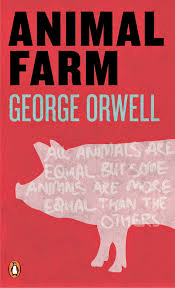
Animal Farm by George Orwell

Animal Farm

One of my MBA professors once said, ‘If I have to talk sense, I can make it even in five minutes; I don’t need a whole hour.’ Animal Farm by George Orwell is small book (a novella – 95 pages in Penguin Book that I read) that makes a lot of sense even though seventy years have passed since it was first published. The author wrote this fable/ allegory or fairy tale with Soviet Union under Stalin in mind and yet a vast majority of the situations and observations are applicable even today’s world, even to democracies like India.

Such is the brilliance of Orwell that while reading some of the lines in the book, I was reminded about news items that I have read in the recent past. Take for example this line from the book: ‘Two cows, enjoying a drink at the pool, would exclaim, “Thanks to the leadership of Comrade Napoleon, how excellent this water tastes!”’ On reading this line I was reminded of the umpteen number of times how the success of government schemes are attributed directly to the efforts of only the Chief Minister/ Prime Minister. Another one: ‘Squealer always spoke of it as a “readjustment,” never as a “reduction.” On reading this one I got reminded of how Hillary Clinton claimed on TV during a prime time interview that FBI Investigation against her is just a “Security Review” and “not an investigation.”’ Not to forget the barrage of ‘my statement was taken out of context’ or ‘my tweet was taken out of context’ statement that you get to hear these days.

Another brilliant line from the book, ‘Somehow it seemed as though the farm had grown richer without making the animals themselves richer – except, of course, for the pigs and the dogs.’ This line could just be an apt criticism against today’s Capitalism and Globalization. I was also reminded of the growing income inequality and the recent Bernie Sanders campaign which focused a lot on the income and wealth of the richest one-tenth of one percent of Americans.

A gem of a statement from the book, ‘All animals are equal. But some animals are more equal than others.’ On reading this I was reminded of how a loan defaulter billionaire was allowed to leave this country, how the hit and run case of a Bollywood super star has progressed nowhere in over a decade and how even a retired judge was also in favor of clemency for a Bollywood actor convicted of possessing a gun.

Or this wonderful line: ‘Throughout the whole period of his seeming friendship with Pilkington, Napoleon had been in secret agreement with Frederick.’ This line reminded me of how parties that competed against each other in assembly elections become allies by the time the Lok Sabha elections are around the corner, within just a few months.

In the end Animal Farm is about a few simple truths:

  1. No sooner than the objectives of a movement are achieved, the ideals behind the crusade are forgotten
  2. The leaders of the movement who get elevated to power centers soon forget the people and enforce policies that are beneficial only to themselves, which would aid in extend their reign.
  3. Without proper checks and balance any system would fail in the long run
  4. Blind faith and apathy of the people are as dangerous to the people and the country as nepotism, corruption or tyranny.

Animal Farm is a must read for anyone irrespective of their political ideology. It is a short but brilliant book. Hats Off to George Orwell for writing this timeless Classic.