A Time of Need and a Time for Greed

The world has enough for everyone’s need, but not enough for everyone’s greed.’ – Mahatma Gandhi

Neither a man nor a crowd nor a nation can be trusted to act humanely or to think sanely under the influence of a great fear.’ – Bertrand Russell, Unpopular Essays

As the rains receded on December 3rd, I and my brother in law ventured out to buy essential household items. It was around 11.30 AM and we had to go from one shop to another as there was stock out situation for some of the essential items. I had walk the entire Kottur area in search of Milk and Candles. Not a single candle was available in any of the stores. A solitary vendor was selling milk outside a big vegetable store in Kottur market. But instead of the usual Rs. 40 per liter he was charging Rs. 100 per liter, a full 150% mark-up to the usual price. Most people were buying multiple packets of milk from him and yet after walking a few feet from the shop complained that it was wrong on the part of the vendor to hike the price in that hour of distress.

After an extended period of incessant rains, the prices of some of the vegetables had reached the stratosphere. On this particular day these darlings of every household’s kitchen were not even available at even these extremely inflated prices. Bread and Rice were running out of stock too. A couple of days later as I was standing in line to buy milk at another milk depot, a woman was hoarding about hundreds of packets of milk in her tricycle. When one of the customers asked why the woman was siphoning off milk meant to be distributed through regular channel, she hurled abuses at the customer. The irony was that within a few minutes she was selling the same milk packets in a nearby street with a fat markup.

Though most of us complain about the greediness of opportunistic vendors, we are opportunistic and greedy too. A case in point was a trip a petrol pump on the same day. My brother in law’s two wheeler was almost at the verge of running out of petrol. By this time most petrol pumps were closing down as they had no more petrol or diesel to sell. The unending lines of people outside petrol pumps rivaled the queues outside places of worship on auspicious days. I went along with my nephew to one of the petrol pumps near Royapettah. Among the crowd to my disappointment and chagrin, there were a bunch of guys who had come with multiple 30 to 40 liter cans. Why would anybody need so much petrol or diesel? Clearly they were greedy arbitrageur who was planning to sell the fuel at much higher prices in suburban localities. Even people who were buying for their own use too were buying more than necessary.

Around the same time, another irrational phenomenon was unfolding across the city. There was a run on the banks, no actually there was a run on ATMs. With most of the bank branches in Chennai on leave due to rains, the cash balance in ATMs was already low. The situation was made even worse by a lot of anxious people (foreseeing more rain and bank holiday) each withdrawing up to their daily permissible limit. The anxious withdrawal pattern resulted in most ATMs going out of cash by afternoon that day and as result the entire city was indulging a real life treasure-hunt, running from one ATM to another. Only after bank branches opened the following day and some of the banks started operating mobile ATMs the situation limped back to normalcy.

While it is understandable that there were long queues at grocery stores, milk vending booths, ATMs and petrol pumps to everyone’s surprise there was queue in wine shops too. And contrary to ATMs and petrol pumps that ran out of stock, these wine shops were fully stocked and was buzzing with so much activity and life that one could have easily mistaken them for an ant colony or a beehive. It is billion dollar puzzle that how in a democratic country there is stock out for essential commodities but wine shops are fully stocked.

No amount of technology can serve as replacement for irrationality of human beings. No amount of rules and processes can check human greed. As I think back on the events that unfolded during the recent rainy spell, I get reminded of a dialogue from a recent movie: ‘By eating even a single mouthful of food after our hunger has been quenched, we are ensuring that another person remains hungry.’ This principle is very apt in situations of natural or man-made calamities like the recent rainy spell.

The Essentials in Life

What would I consider as luxury? What would I celebrate? What would I classify as a moment of great joy? What would call as a divine blessing? Today, my answers to these questions are completely different from the ones that I had in my mind until a few days ago.

A twenty four hour period of continuous and very heavy rains between December 1 and 2, created an urban deluge that started submerging one locality after another in Chennai. All my family had were just the essentials, the bare minimum to carry on with our day to day activities. And yet, this bare minimum seemed at that moment and even now like ultimate luxuries for which I am very grateful to God.

I do not remember previous instance when there was no power in my house for two days at a stretch. Yet I was grateful that the rain water had collected only in my street and did not enter my apartment complex. The excess water let out from one of Chennai’s reservoirs was causing havoc at localities barely a couple of kilometers from my house. Army and NDRF were using boats and every other possible means to evacuate people from these areas. Though there was no power in my street and the mosquitoes were troubling us, we were safe and had the luxury of a good night’s sleep.

There was no power, no TV, no internet and slowly the mobile battery too ran out. The waterlogging in my street made it nearly impossible to go outside. As a result I spent most of the two days playing and interacting with my daughter. In those two days I should have played and interacted with my daughter more than I would have done in an average fortnight. And my interaction level with my wife, parents and neighbors increased significantly during those two days.

In that time of despair, a bunch of kids in my apartment complex found reason to play and rejoice. When the rain stopped on the third morning and the common area in my apartment complex was dry enough, I and my daughter walked from one gate to another. I also saw my neighbors either interacting with or playing with their kids.

In a city where the weather is hot and humid for most of the year, I wouldn’t have ever dreamed of a day when I would rejoice at the sight of the sun. And yet when the rains stopped and the sun appeared only for a brief period, I expressed my joy by shouting like a child. Thankfully from that moment, though the sun has been playing hide and seek the rains have stopped.

By the third evening, with the power still not back, we left to my eldest sister’s house in another locality. It was still raining at the time of dinner and we were all sick and tired of seeing more than a month of rain breaking one record after another as well exposing the limits of our city’s infrastructure. Though the environment was pale and gloomy, my daughter on seeing her aunts, uncles, grandparents and cousin having dinner with her described, ‘I am very happy. We are all having dinner together.’ I guess she was absolutely right. What mattered was that we were all together and we were safe. Everything else that we counted as the necessities of modern life seemed superficial and redundant. I thank God for providing me this moment/ opportunity to reflect on what is important in life. I hope and pray that the people whose life had been thrown out of gear and traumatized by this monstrous downpour find the courage and help needed to reconstruct their life.

Rains in Chennai

I do not remember the last time when I saw so many helicopters fly. The incessant rains in December first week left my hometown Chennai as battered like a war-torn city. Unable to cope with unfolding disaster, the state government asked for center’s help which soon dispatched the army, navy, air force, the coast guards to join the NDRF which was already assisting the state government with rescue and relief operations.

Someone photographing the earth from several kilometers high in the sky would have been baffled at the sudden appearance of numerous islands in India’s South East. The railway tracks in the city, the major roads leading to and from the city, the roads linking different localities within the city were all under water. With the airport runway too submerged the geographic isolation of the city was complete. This is probably the first time in several years that train service from the three major railway stations in the city were stopped completely. And for the first time in several years that the airport operation in Chennai came to a grinding halt. And so many people in and around Chennai became aware of the names of all the rivers, canals and lakes in and around the city for the first time in their lives.

The photos that were being relayed across the globe of the devastation would have made everyone question, ‘Is this India’s fourth largest metropolitan city?’, ‘Is this the city whose name used to synonymous with South India until a few years ago?’, ‘Is this the same city that was so strategic to the British in India that it became the only Indian city that was bombed by the Germans in World War I?’ Every locality in the city was affected by the rains. Electricity and Telecommunication were completely cut-off. Instead of resembling a major metropolis, Chennai resembled a series of islands in distress and people were just castaway in their own homes.

The rainfall received in the month of November is the highest in nearly a hundred years. The rainfall received on December 1, is the second highest rainfall in day in the past one hundred years. In addition to Chennai, four other northern districts (Kancheepuram, Thiruvallur, Cuddalore and Villupuram) and the Union Territory of Pondicherry had to bear the brunt of the cloud’s fury. The endless streams of clouds resembled the unstoppable army of Anubis from ‘The Mummy II’: These streams of cloud unleased hell on Tamil Nadu’s northern districts and crippled normal life.

Nature became a neutralizing agent that made the young and the old, the rich and the poor, the well-connected and the not-so well-connected all equal in that moment of misery. While we cannot do much about the vagaries of nature, one should not forget the fact much of Chennai’s present problem is actually man-made. The steady disappearance of lakes and ground level tanks, the encroachment of canals and rivers, reckless urbanization, greed of the residents for cheaper real estate, toothless civil administration that that did not stand firm in instances where it should have been are all the pieces in the not-so difficult to understand puzzle that shamefully managed to convert the fourth largest city in India into a ‘DISASTER ZONE.’

Voting is both a right and a responsibility

With great power comes great responsibility.’ – Uncle Ben in Spiderman

Caveat Emptor (Let the buyer beware)’ – Ancient Maxim

For every public role that a man or woman would play there is a qualification. If we want to be doctor we have to undergo schooling, then enroll in medical school as an MBBS student. All along the away at every important milestone we have to appear for qualifying examination and then clear it to move to the next level and receive the qualification/ degree. The same applies for other professions like Engineer, Auditor or Lawyer, etc.

However for one of the most important public roles, that of being a CITIZEN of the country, there is no training or qualifying exam in our country. As a democracy, everyone above the age of 18 years has the right to vote. The problem is that people are willing to treat their power to VOTE as a RIGHT and an ENTITLEMENT but forget that the power to vote is equally a RESPONSIBILITY too. Are we exercising that responsibility well? Are electing the right candidates to represent us? Definitely not. We pass on the blame for all of our nation’s maladies on to our politicians but we are part of the problem too. In fact the problems starts with us. Our political class is nothing but symptoms of deep rooted problems in our society.

Every one of us dreams of India becoming a great nation; but we are personally not willing to incur the small but numerous everyday costs that would collectively enable this dream to become a reality. Some of the guidelines to be followed in choosing our representatives include (but not limited to):

  1. We need to make informed choices and choose our representatives based on weighing the pros and cons of his governance record
  2. We should never choose a candidate because he represents the party we support (if the candidate does not merit being elected)
  3. We should not blindly support a party because historically our family elders have voted for that party
  4. We should not cast our vote for someone just because he or she is related to the leader whom we like

We blame that there are not many good candidates contesting in elections. But can we tell the difference between a good candidate and bad candidate? Do we know what information to use to arrive at that decision? Do we know where to look for that information? Do we understand the consequences of sending the wrong candidates to represent us? When the government doles out freebies, what are the other important projects that are being shelved? Where is the government borrowing from and who will pay the principal and interest for these borrowings? What would ensure in long term social progression? Where does India as a whole and individual states within India stand on each and every one of the parameters of Human Development Index? What’s the progress been over the years on these parameters? The answer to all these questions would be an EMPHATIC NO.

The only way to ensure this situation changes for the better is to have systematic qualification exam for voters or voters who are due to be eligible to vote. Going forward, the Election Commission of India, instead of adding anyone above the age of 18 (based on the proof of Indian Citizenship) to the voters’ list, should also conduct a qualification exam to assess if they are aware of the rights and responsibilities of a voting citizen. People who do not clear the exam should be denied a voter’s ID card and a place in the voter’s list. Since the cut-off age for being eligible to vote in India is 18 years, the age around which most kids finish their higher secondary schooling, we can have a subject for 11th and 12th standards across all school boards that deal with various aspects of the rights and responsibilities of a voting citizen. The curriculum for this subject should be handled by a constitutional body like the Election Commission of India. For people who are not fortunate enough to be part of the schooling system, the Election Commission of India should have an independent certification process.

The topics to be covered should include (but not limited to): a brief overview the constitution of India, the electoral process, the powers of the Supreme Court of India, Lok Adalat system, The Right to Information Act, sources to look for unbiased information on the back ground information of contesting candidates, etc. In addition, we should it make it mandatory for people to read the following books or similar books that deal with topics covered in these books:

  1. Manufacturing Consent: The Political Economy of the Mass Media by Noam Chomsky and Edward Herman
  2. Basic Economics: A Citizen’s Guide to the Economy by Thomas Sowell
  3. Games Indians Play by V. Raghunathan (this book provides the Indian Context very well)
  4. Predictably Irrational: The Hidden Forces that Shape Our Decisions by Dan Ariely

Note: The above list is only indicative and not an exhaustive one. There can be other relevant topics and books as well. Also there might be books that deal with the Indian context better.
People might question why limit this exercise only to new voters. The costs, logistics and politics of doing this for existing voters are enormous to overcome. Over four or five iterations of this exercise, we will have significant number of voters who would have come through this filtering process. If you don’t believe, keep in mind that the number of first time voters in the 2014 National Elections was around 12 crores!!! In four iterations, at an average of 10 crore new voters per iteration, we can bring in 40 crore voters through this process, a voting block significant enough make a positive change. It is well known in social sciences circle that the minority influence can in fact bring about social change, so making a start which is directionally correct is more important. Also starting with the younger population provides the added advantage that the young are not as much influenced by the social prejudices prevalent in our society and will be more open to change. We can also hope that the awareness created by the process of implementing this new system would have a positive influence on existing voters as well. We should also create incentives for voters to put into use, the knowledge obtained through this system.
There will always be loopholes and we might not be able to create a completely foolproof system. However at this point in time we need to only worry about whether we are moving in the right direction. We should bear in mind that social as well as political change is a slow and evolutionary process and we should be patient enough to give this new system the right amount of time to flourish. Some people might ask why not a qualification system for contesting candidates as well. It is a much more difficult idea to implement. Also as more and more candidates with cleaner and better governance records get elected, political parties themselves will see the merit in fielding right candidates. After all, aren’t Indian political parties’ masters at playing vote bank politics?
A Visit to Muttukadu Backwaters

It’s been a year since I created a WordPress account and I thought I would celebrate this moment with a blog post. This weekend was particularly hectic for me (by my standards). I met a few of my college mates for lunch on Saturday. The planning for the meet went for more than a month (with a WhatsApp group exclusively created for the purpose). Since the restaurant was not crowded or cramped, we had a very relaxed and nice lunch. We were all trying to travel back in time by discussing about well-known as well as lesser known incidents from our college days.  I met one of classmates for the first time in thirteen years. Even more surprising was the fact that he is working in the same company for the past twelve years. In the evening I went for Deepavali purchase with my wife and daughter.

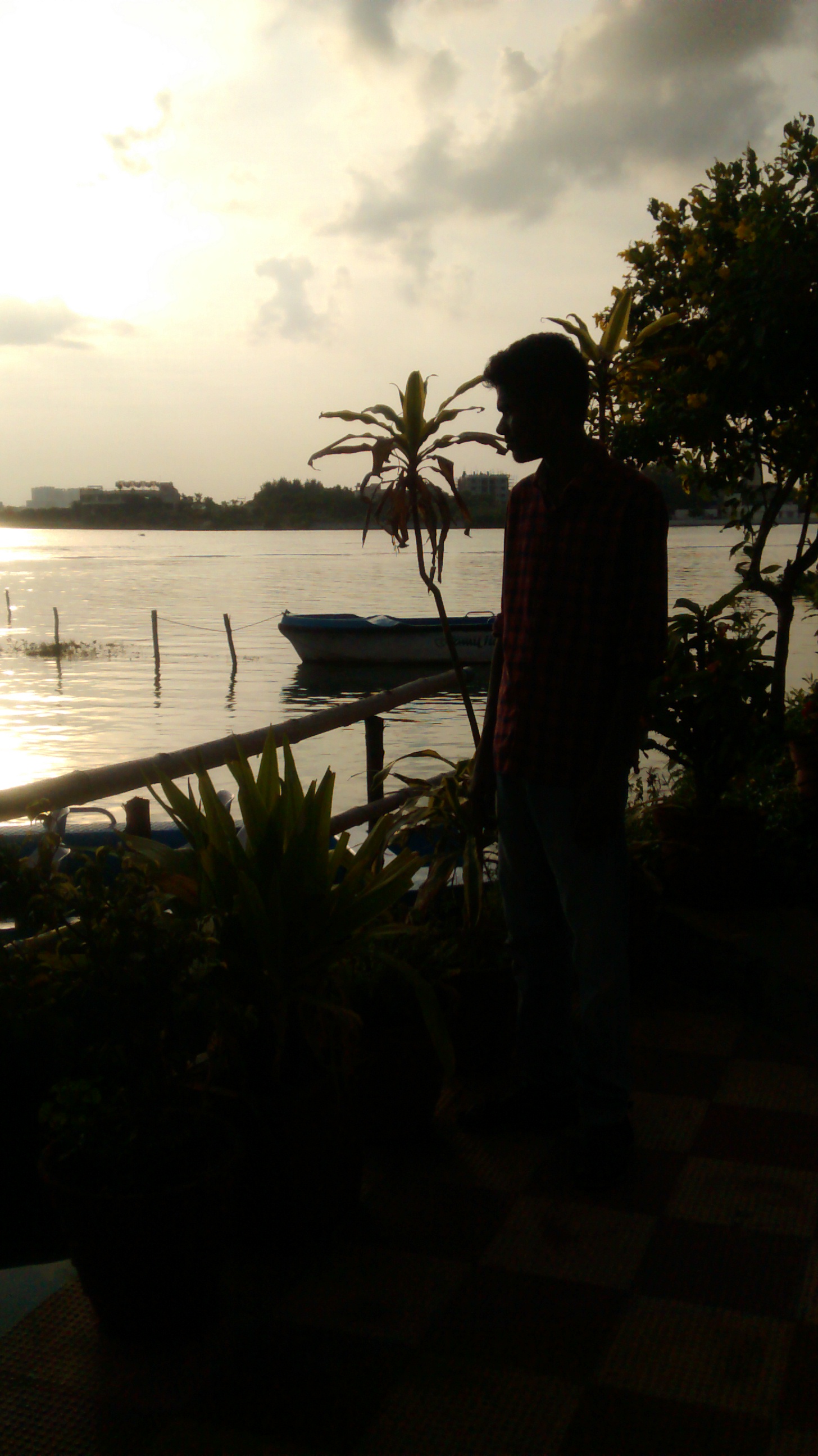
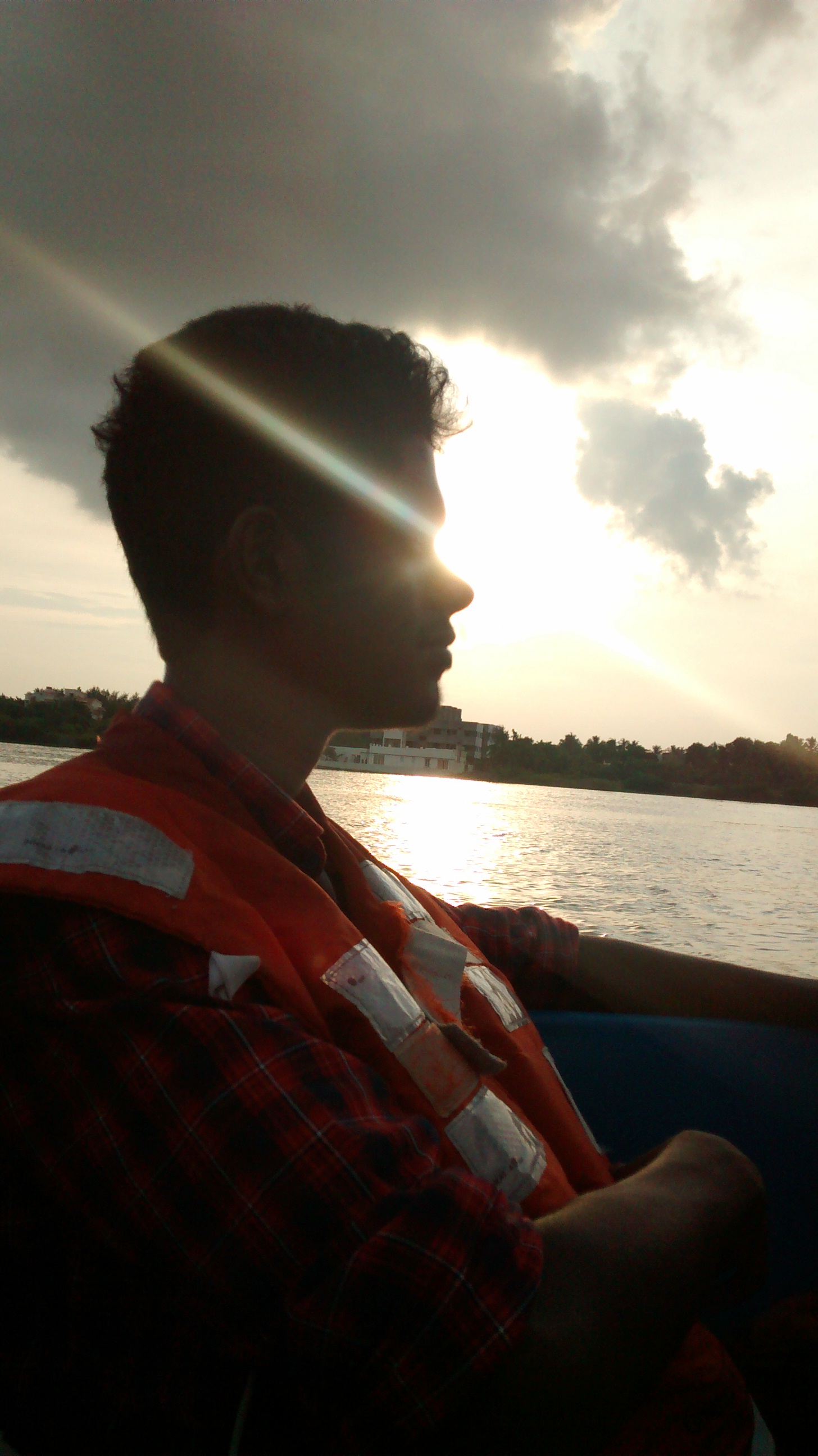
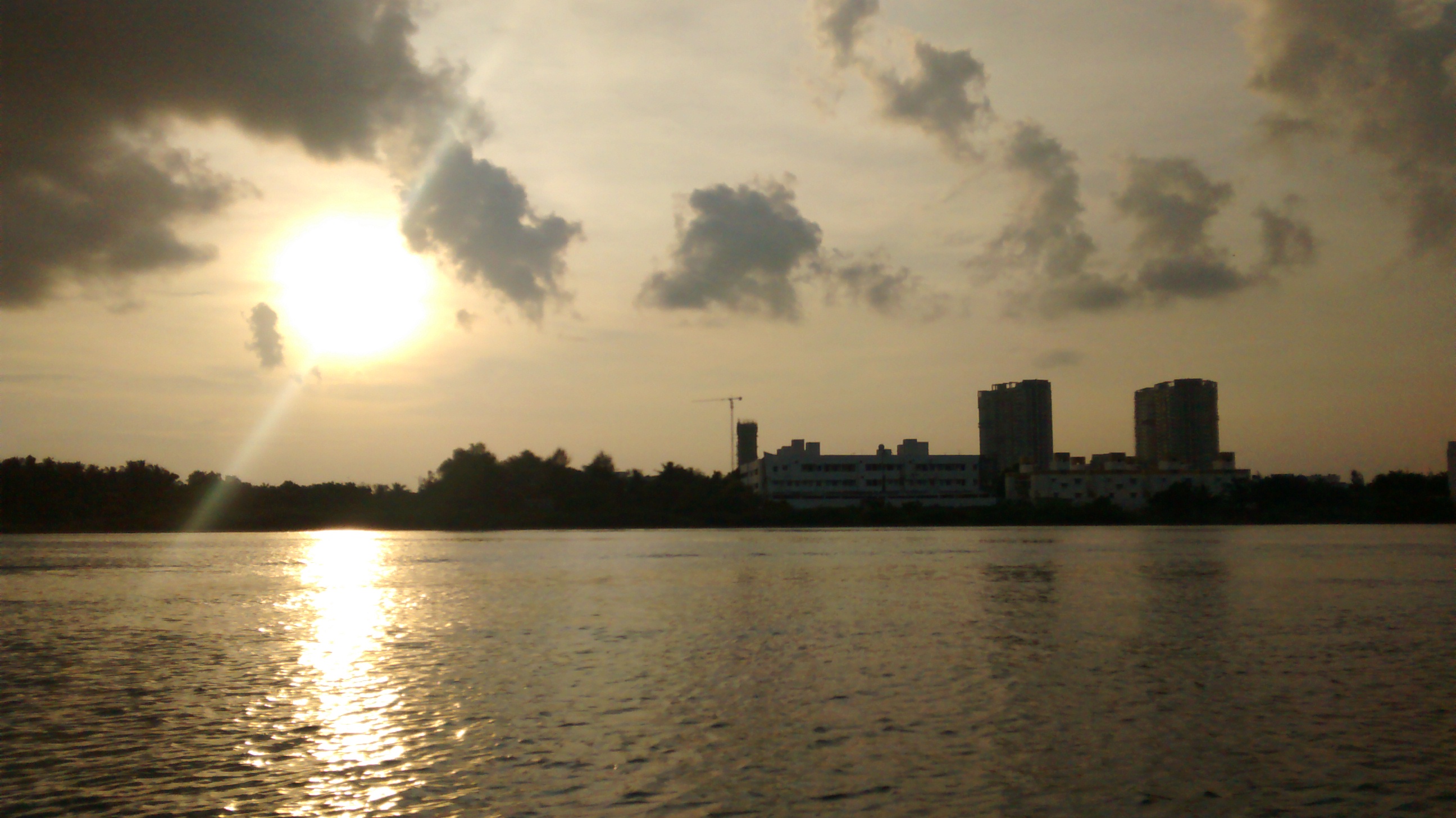
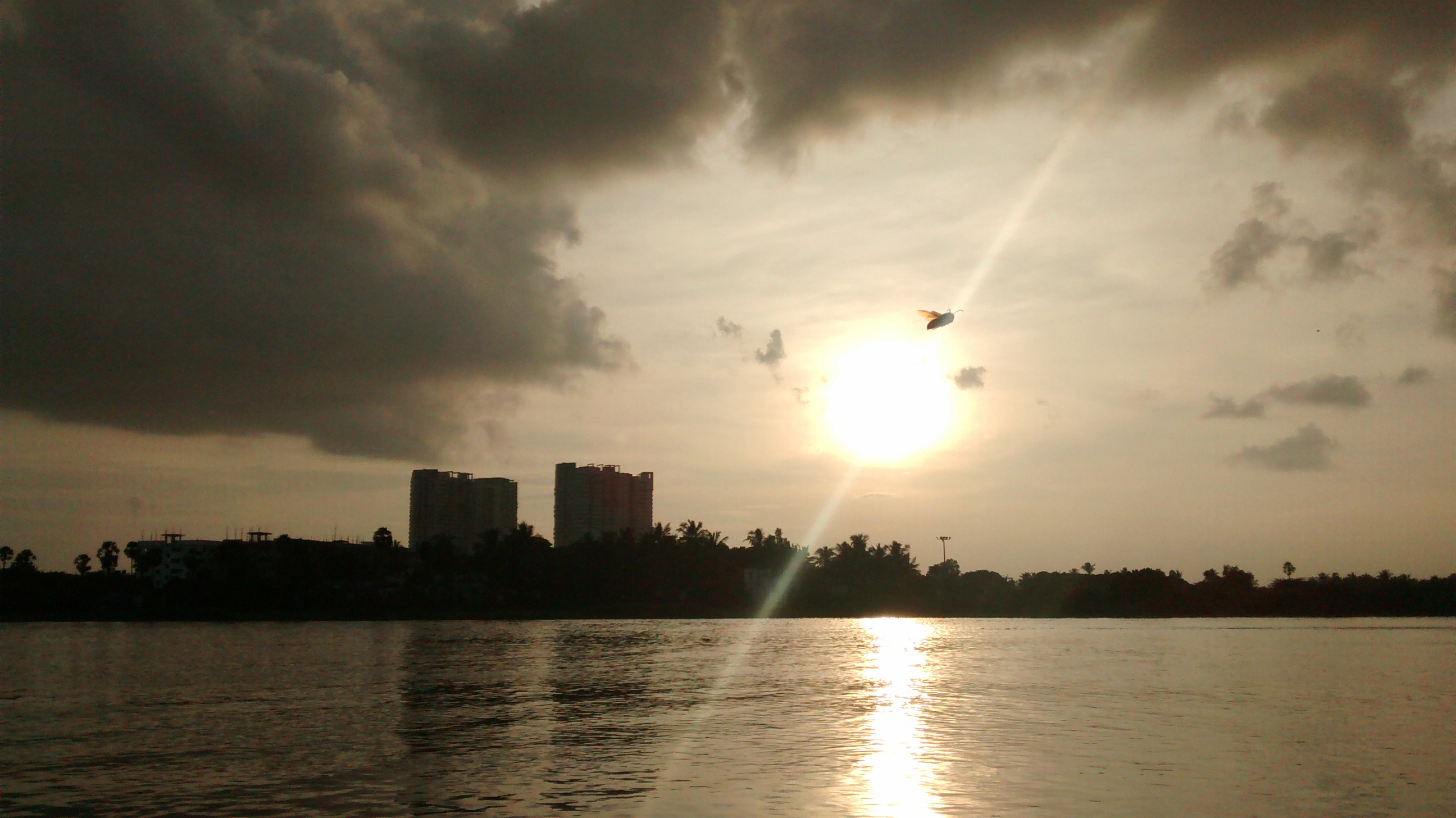
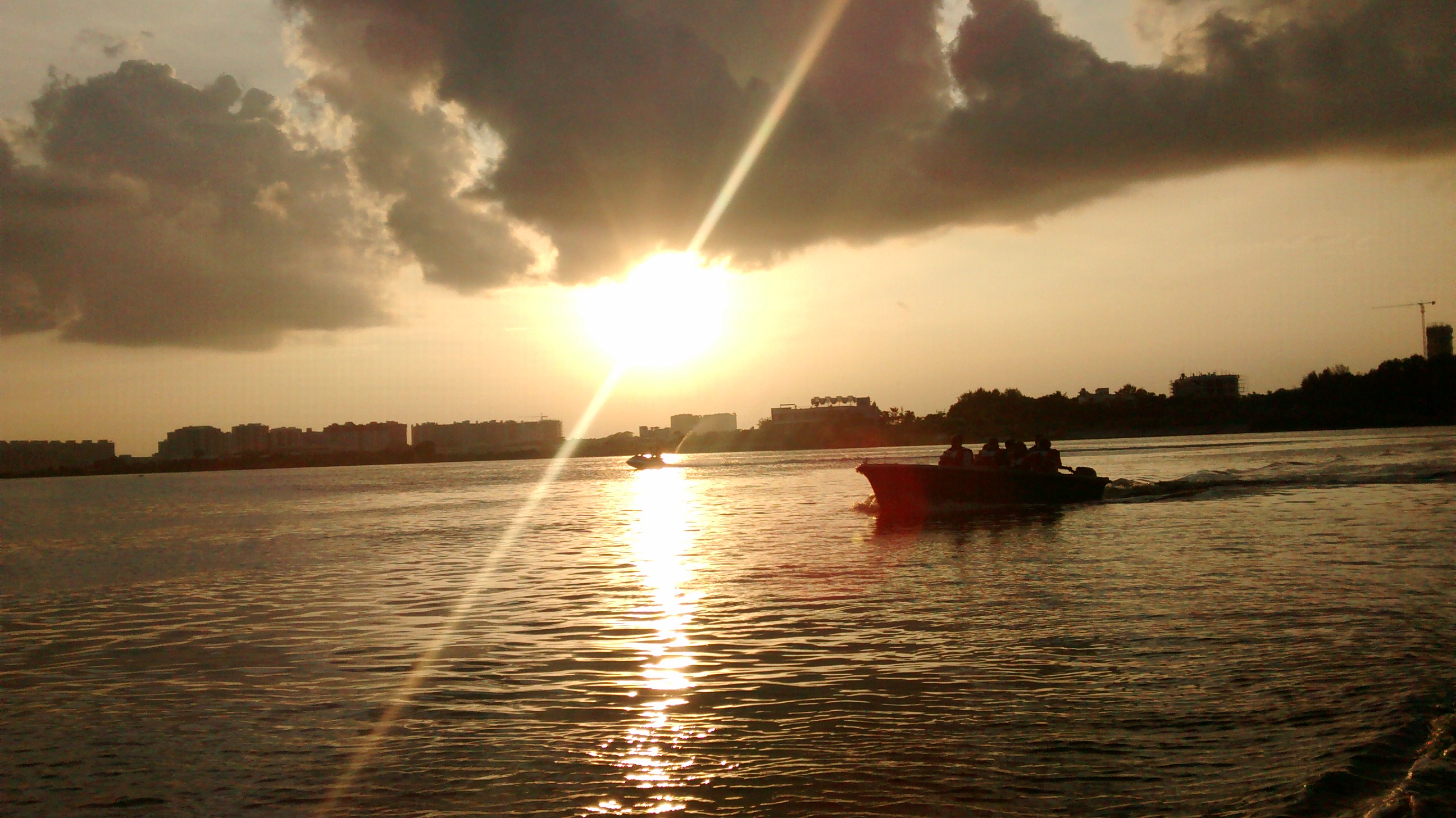
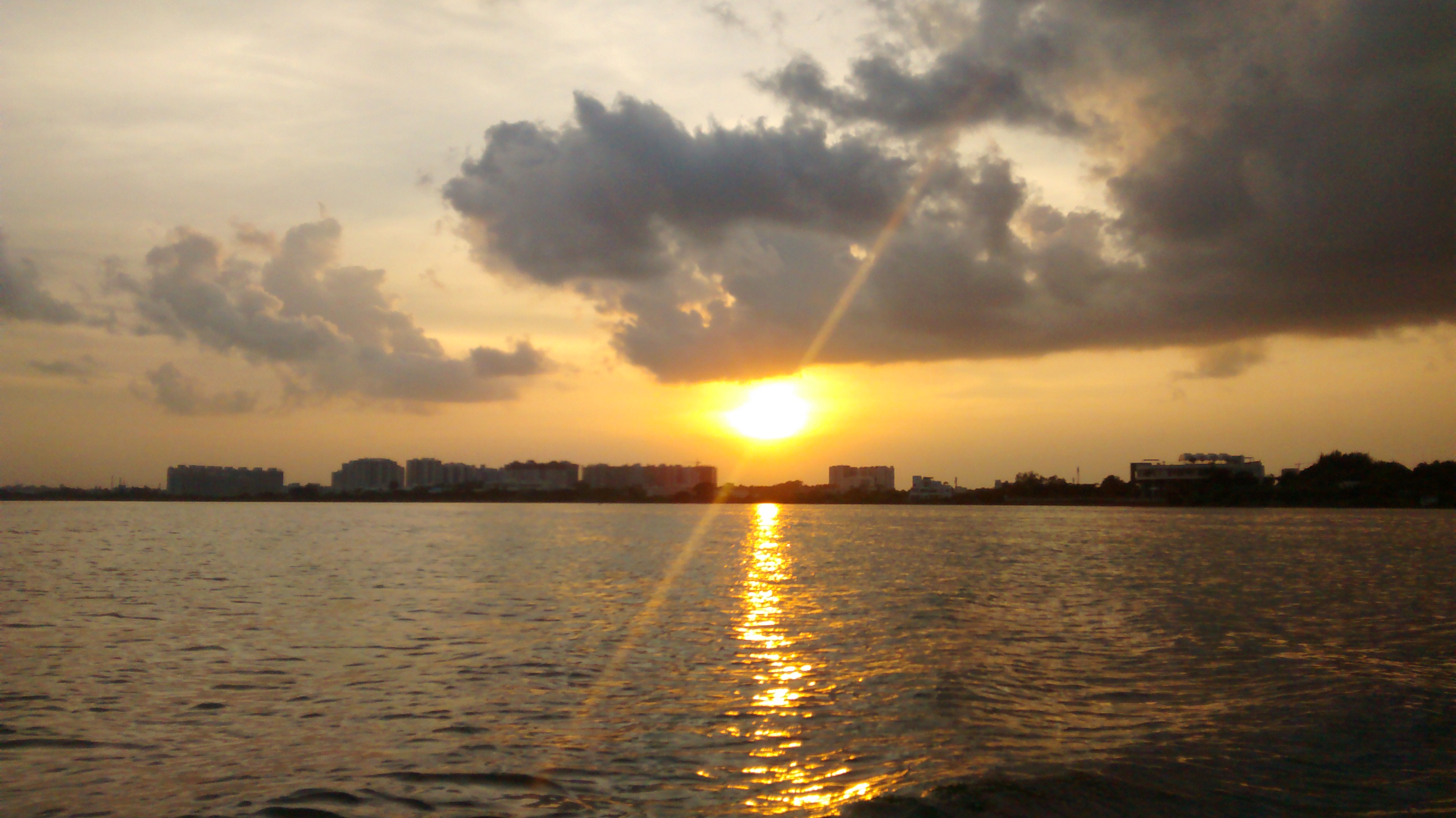
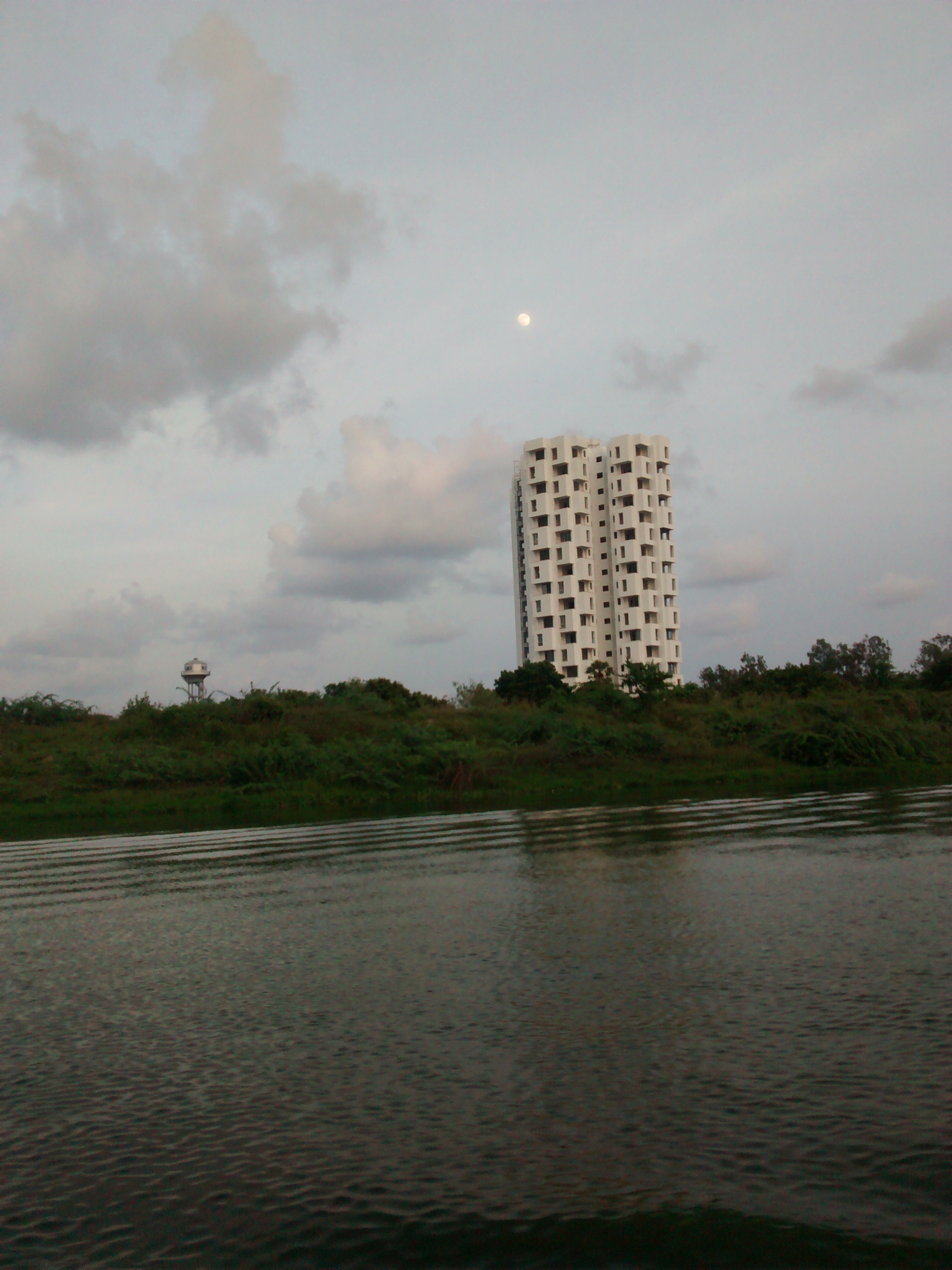
On Sunday, I went to “Pan’ with eight of my family members at ‘Maayajaal’ multiplex on ECR. Though I have been living in Chennai since 1994, this is my first visit to a rather well known hangout in Chennai. I found the atmosphere there a little chaotic. The original plan was to return home post the movie but we decided to go to Muttukadu Backwaters instead. The boat ride in the backwaters was a very enjoyable one. Some of the sights were amazing. The sight of birds perched on the shrubs on the banks, birds flying were close to the water, and the golden light from the setting sun on the backwaters were all awesome. I wish I had carried a good camera to capture all these beautiful moments.

IMG_20151025_165032937 IMG_20151025_170306268 IMG_20151025_170348577 IMG_20151025_170358269 IMG_20151025_170507065 IMG_20151025_170648535 IMG_20151025_170833816 IMG_20151025_170834545 IMG_20151025_171243889 IMG_20151025_171314714 IMG_20151025_171649988 IMG_20151025_171819051 IMG_20151025_171819311 IMG_20151025_172901929 IMG_20151025_173458055

A Random Walk Down North Mada Street, Mylapore

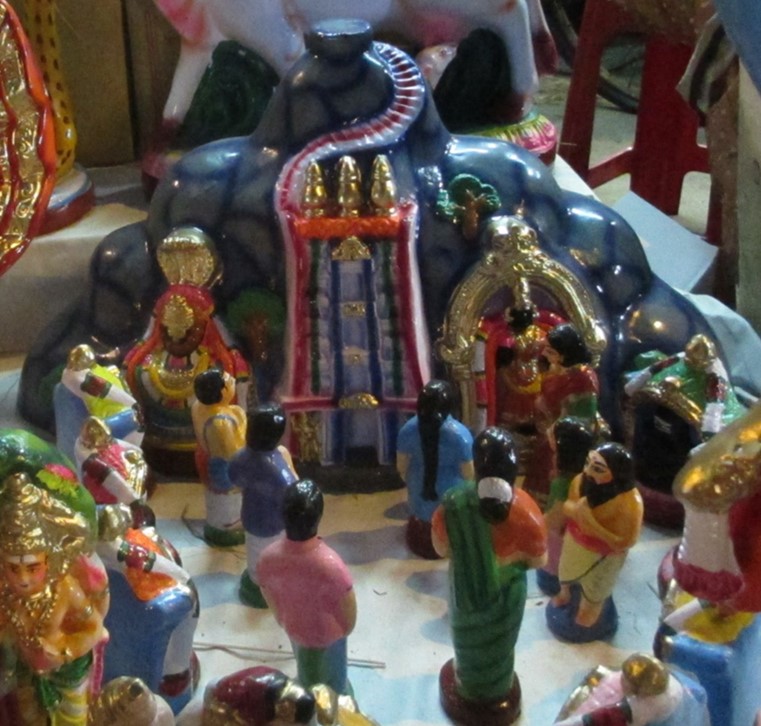
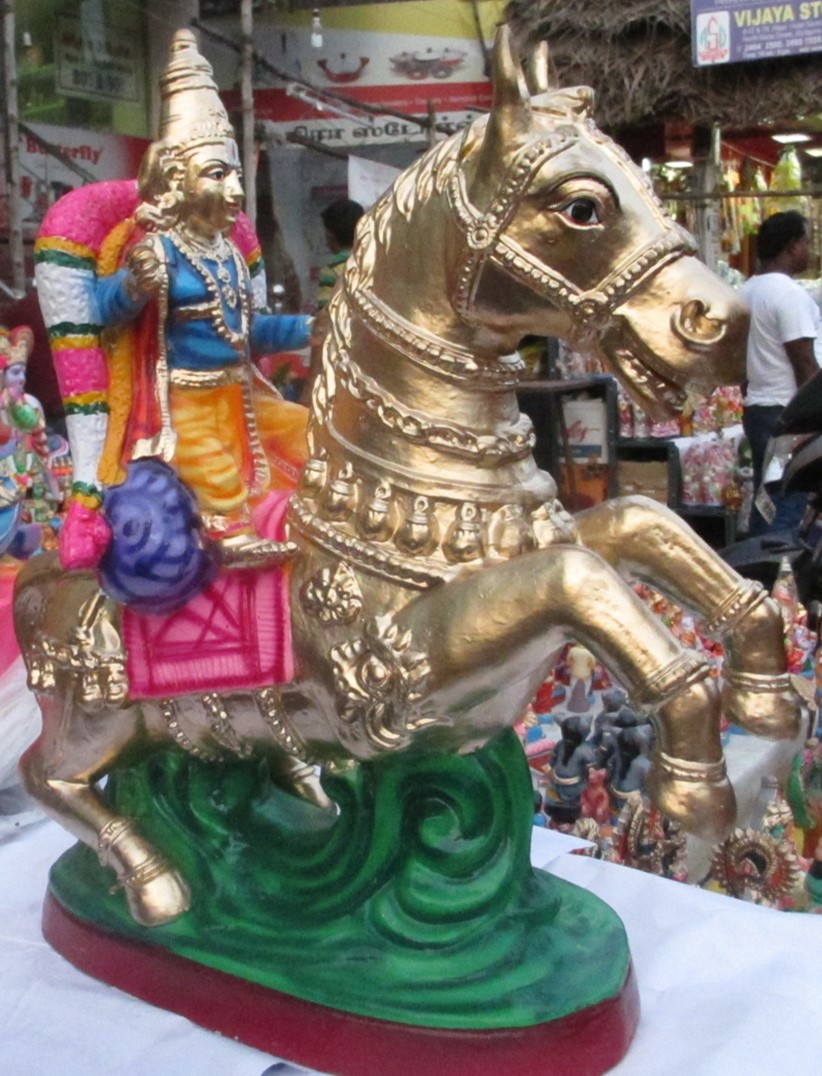
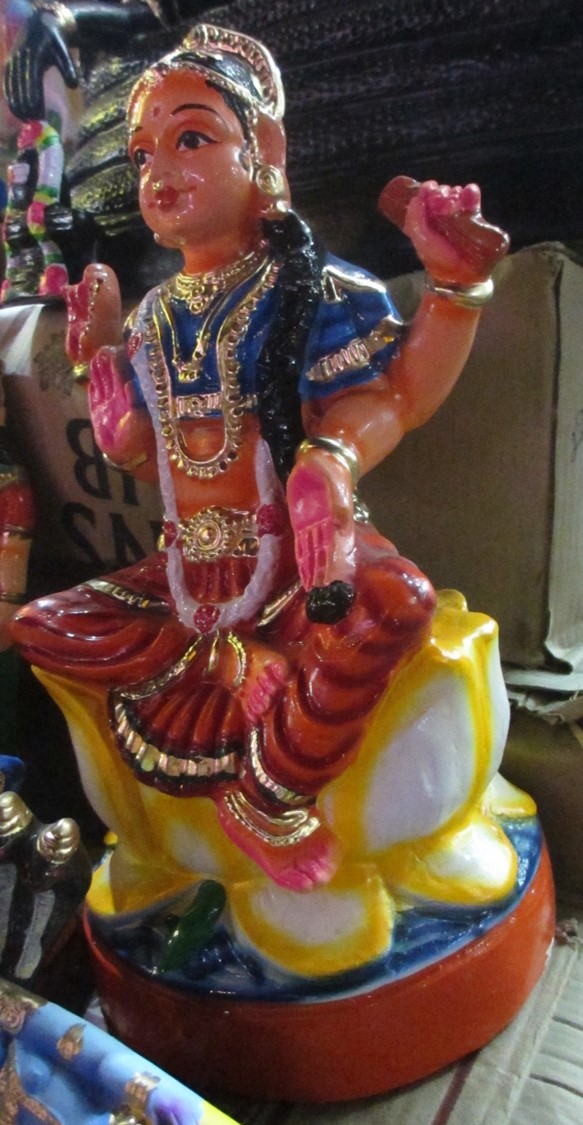
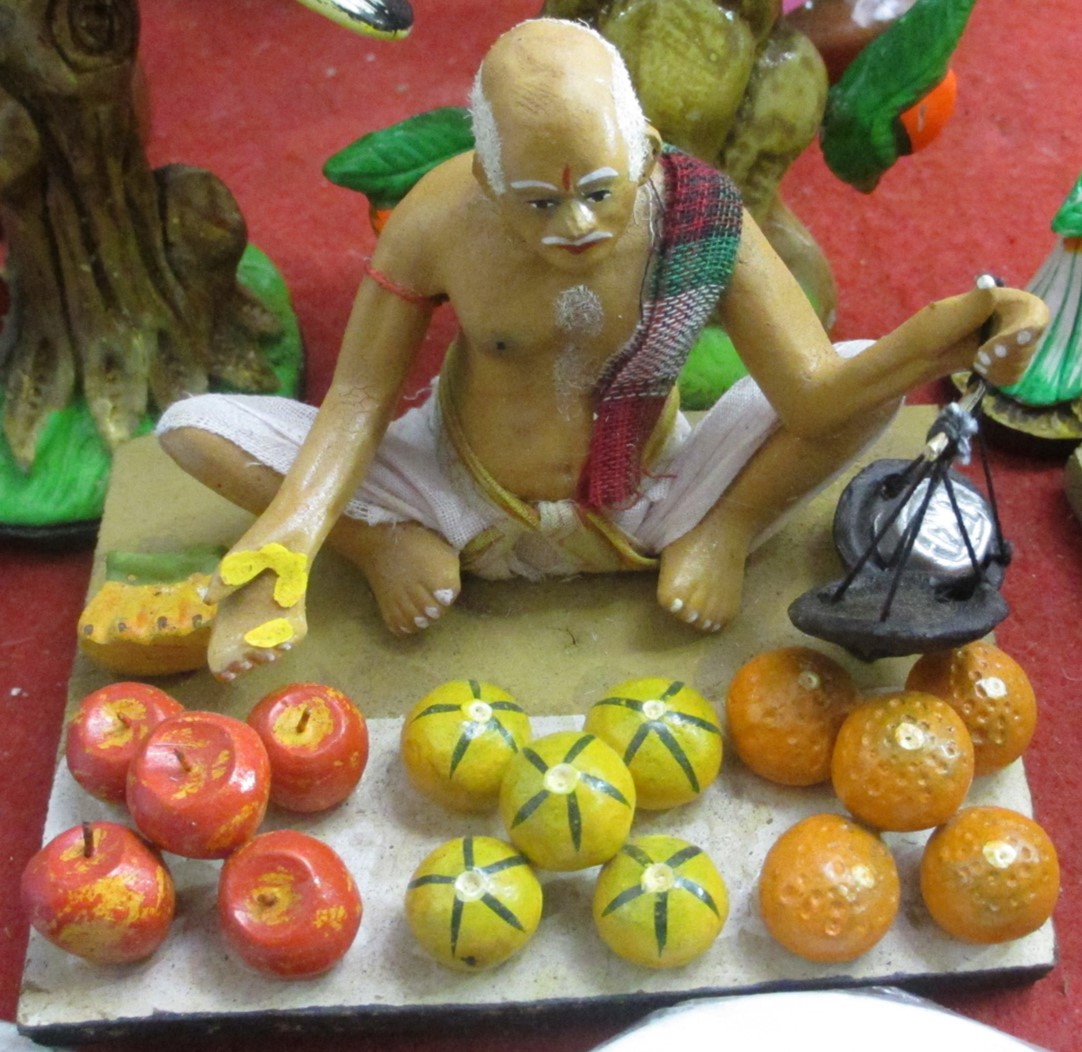
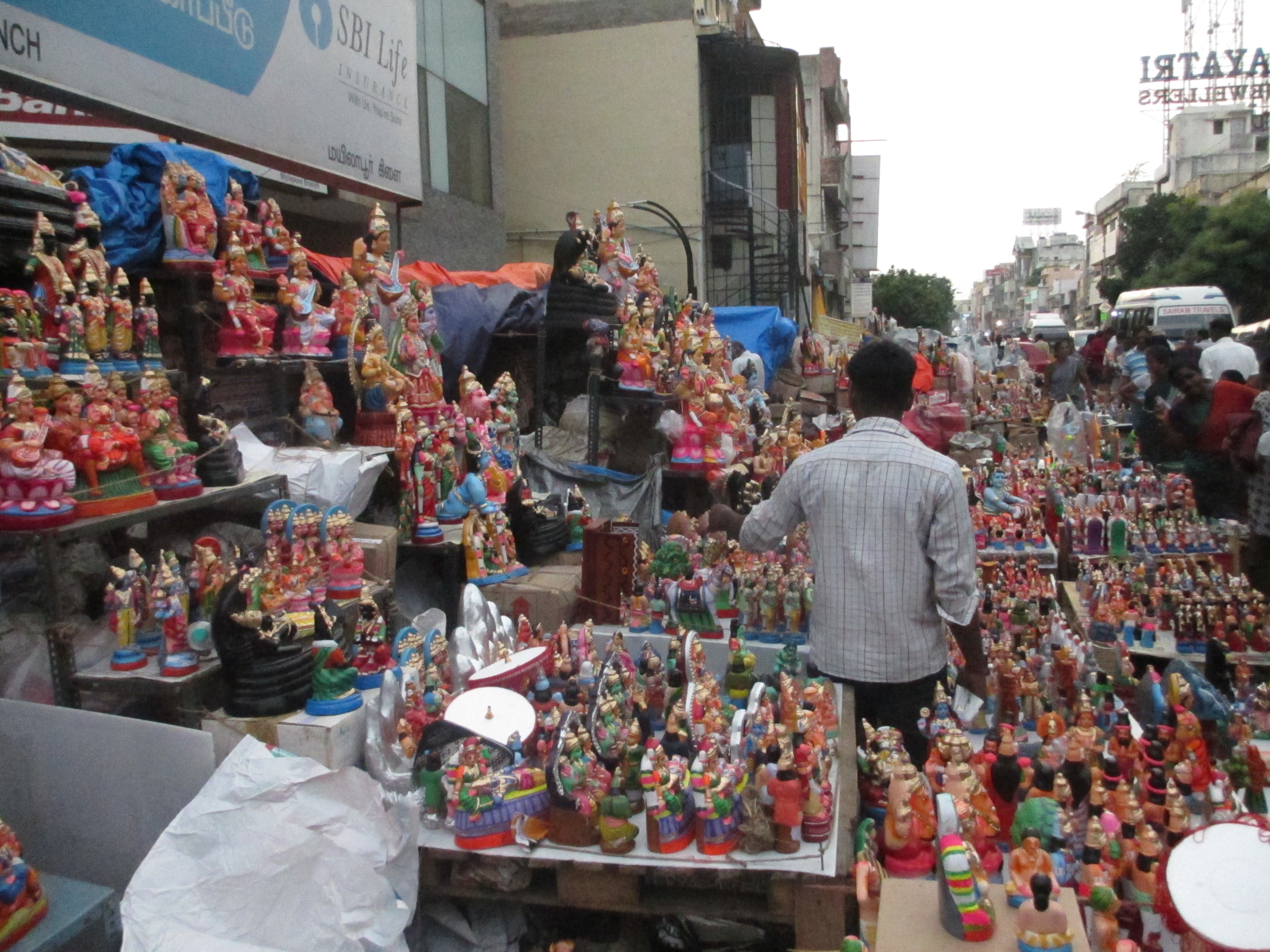
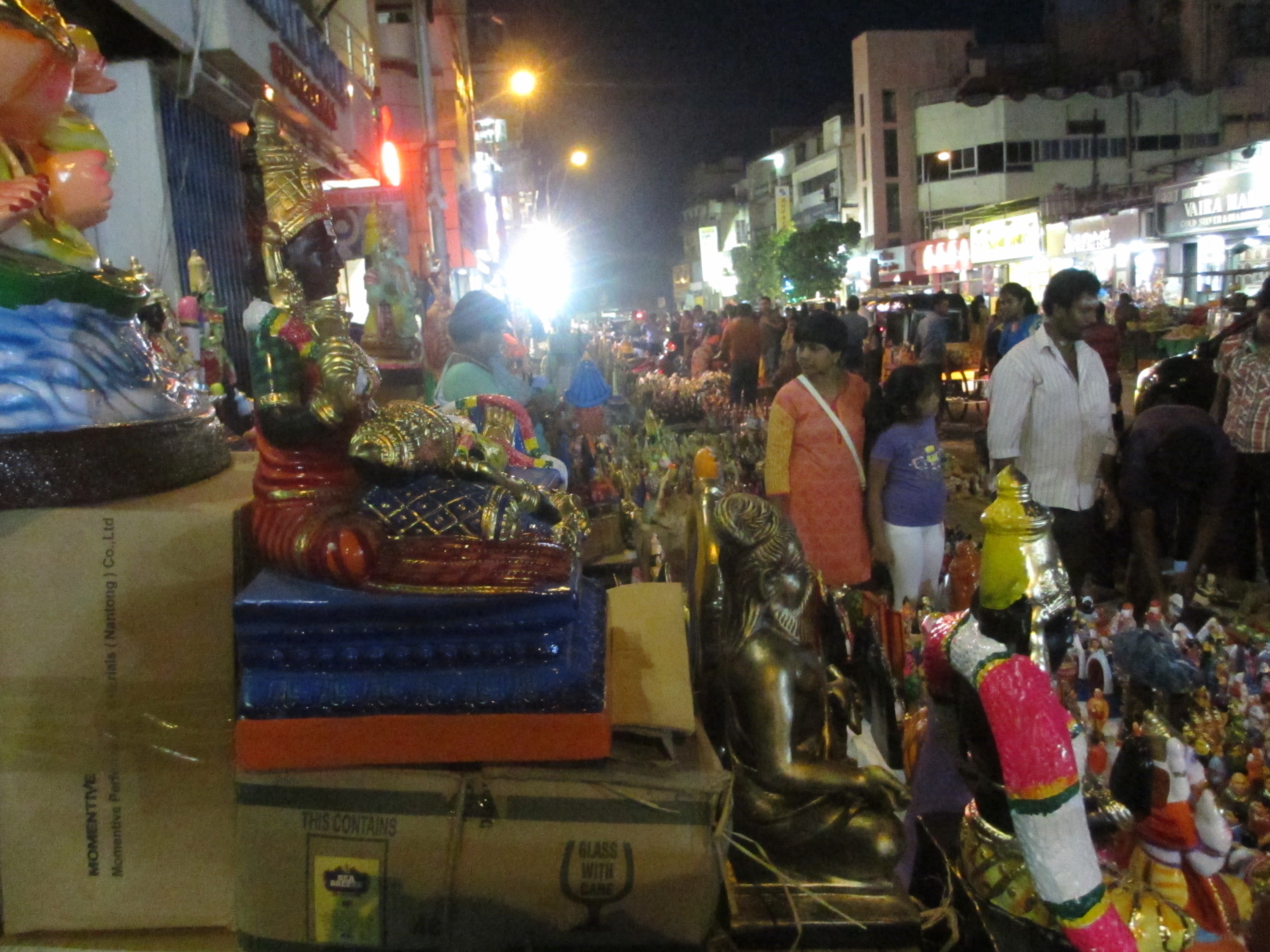
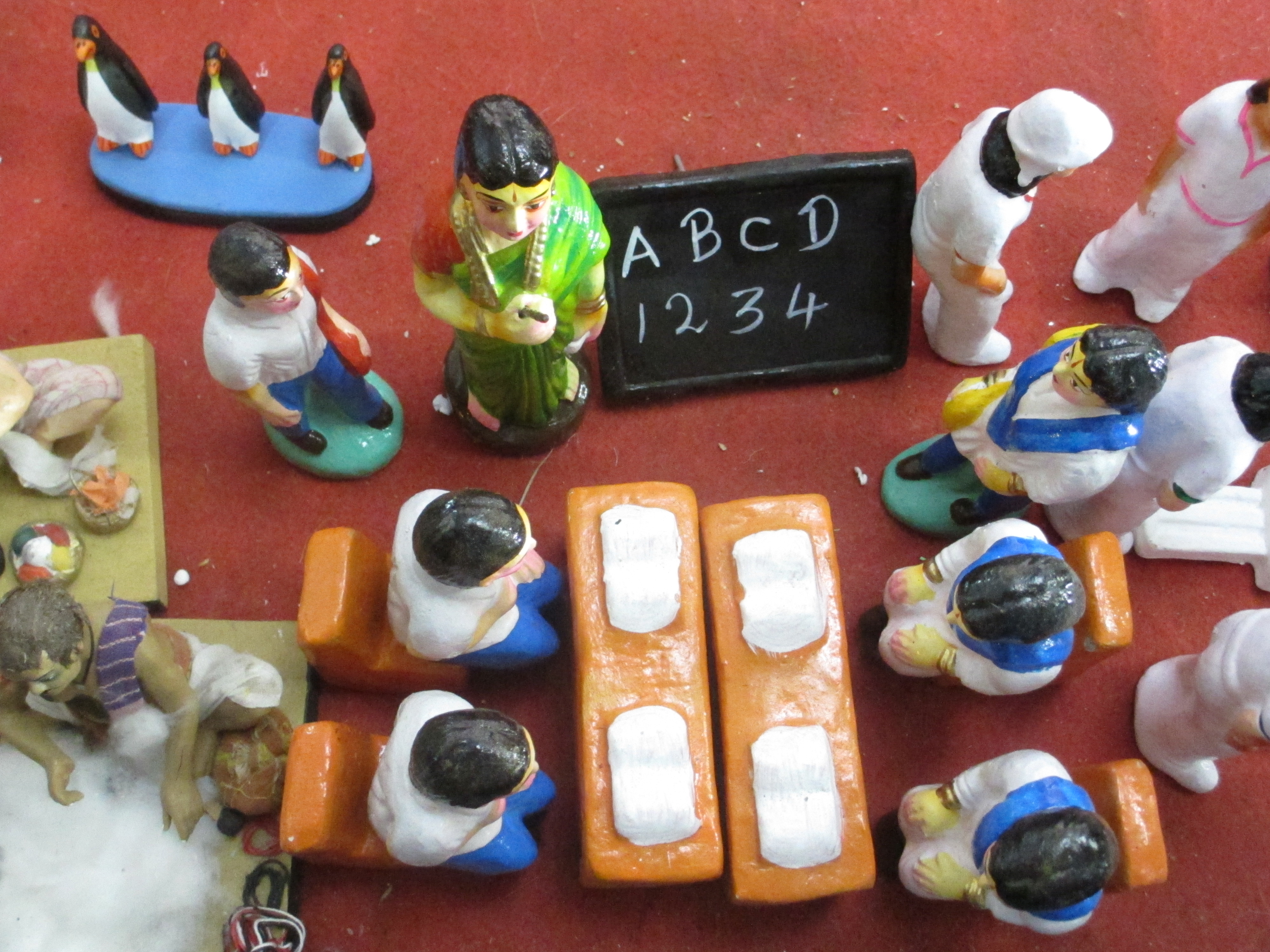
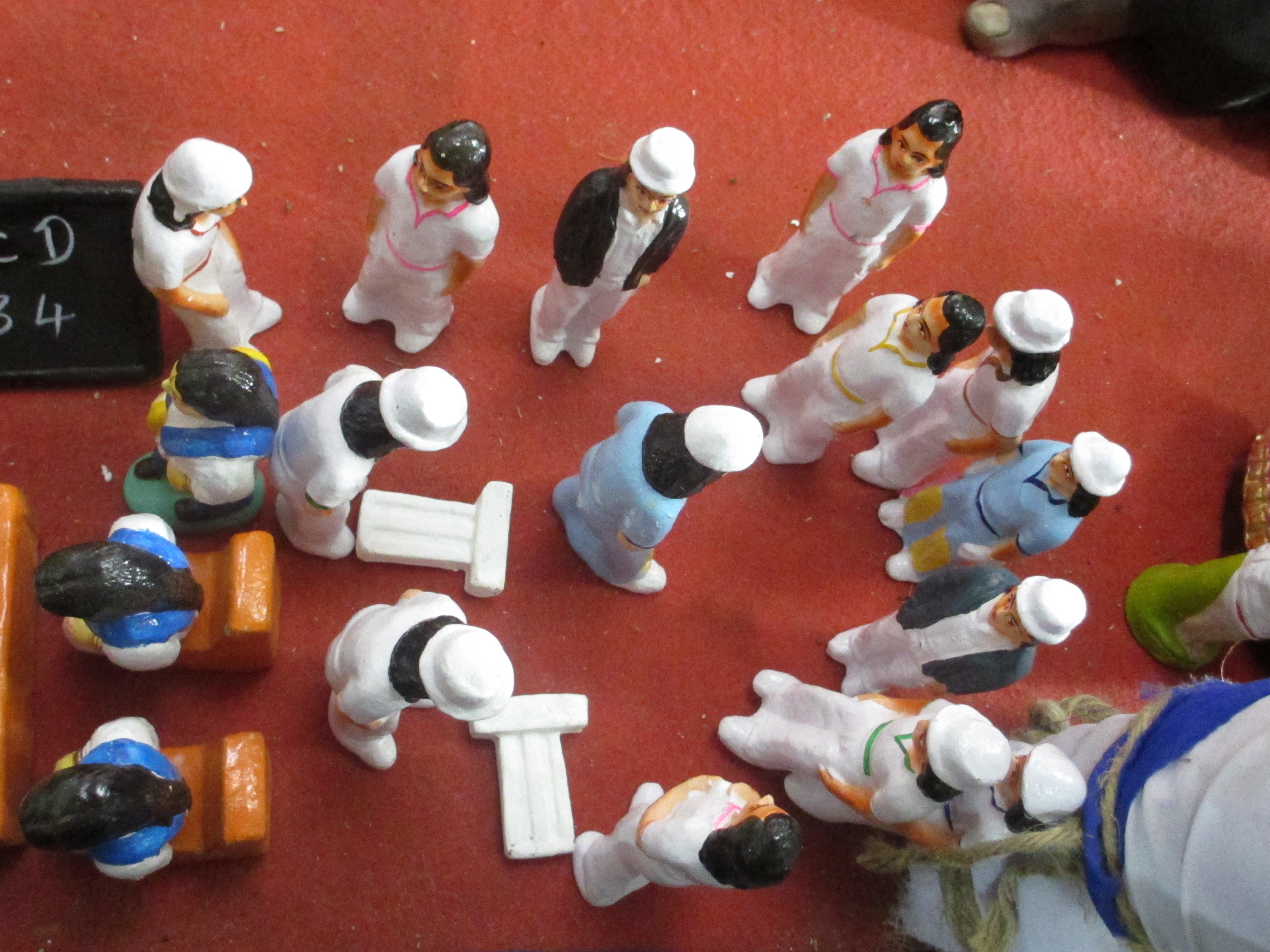
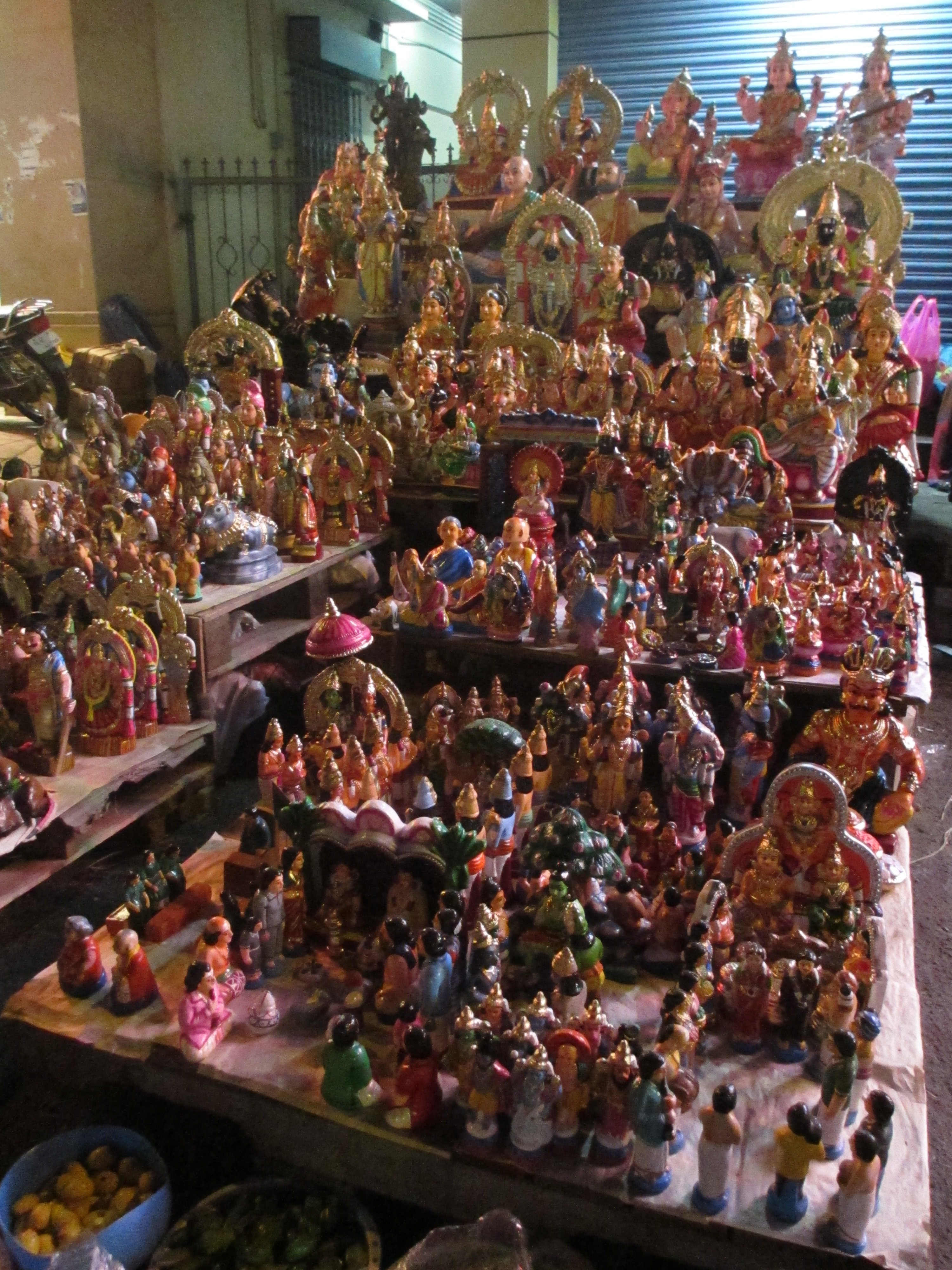
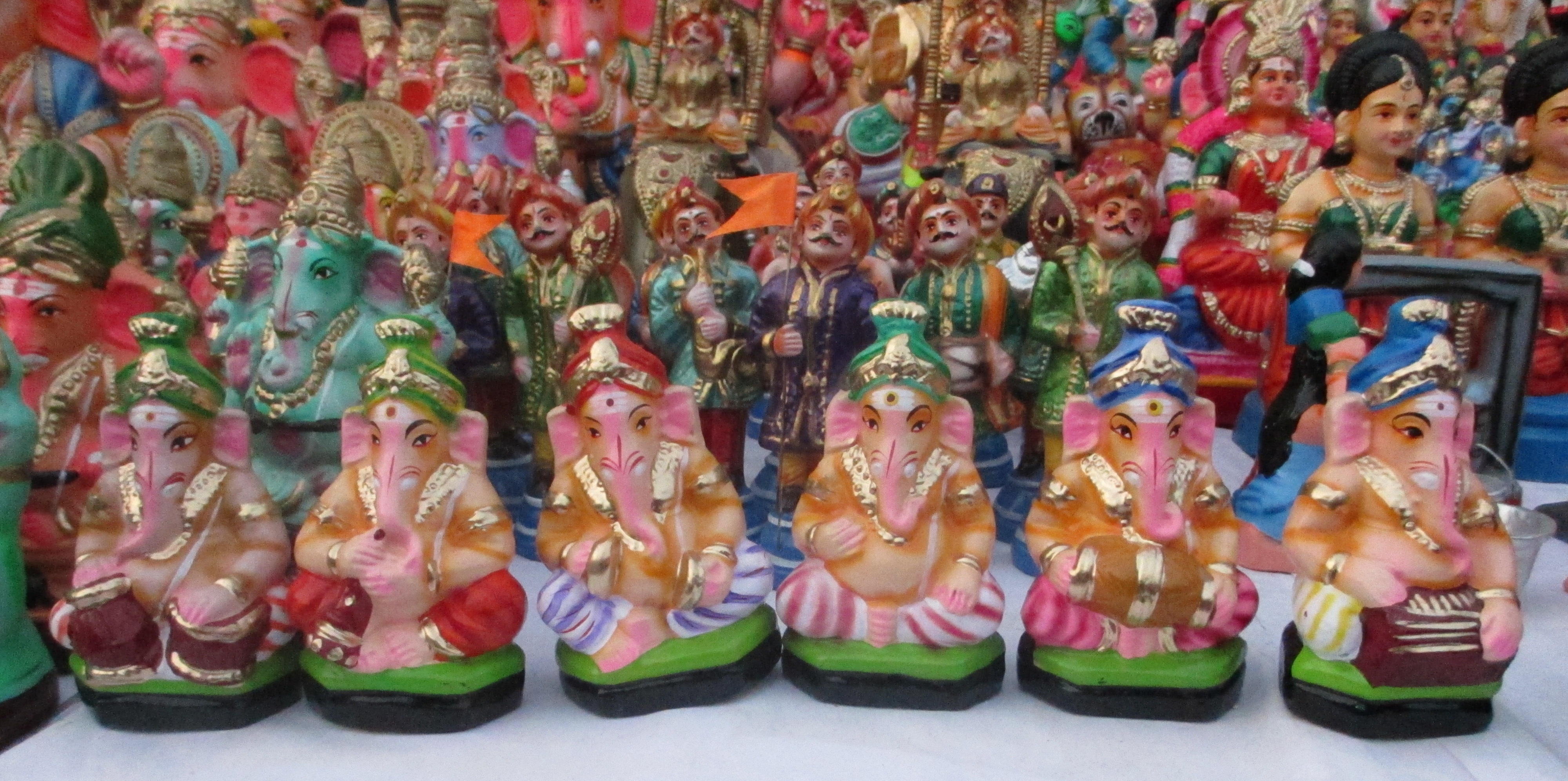
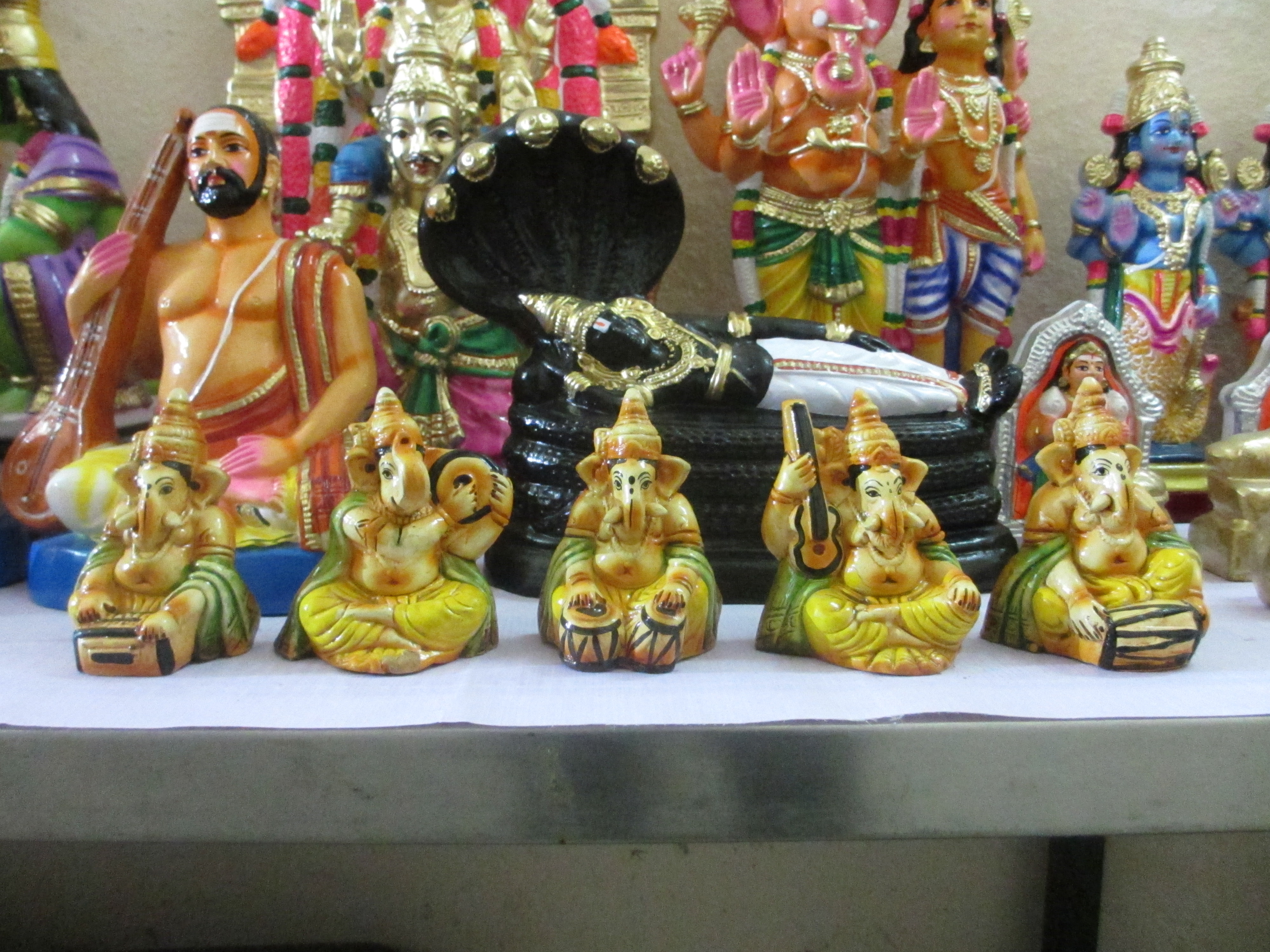
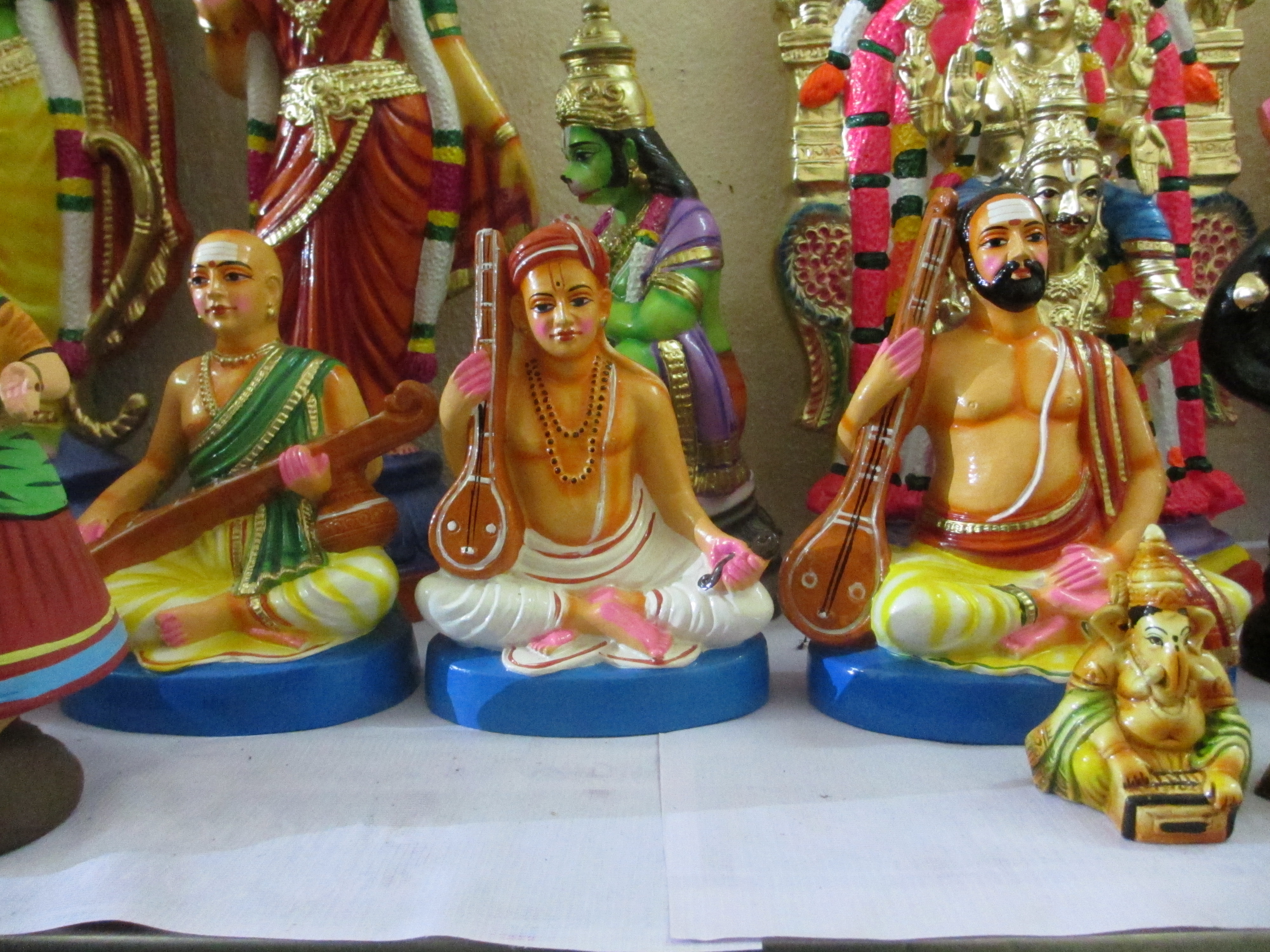
The Navratri Season is just round the corner. The appearance of host of roadside shops selling idols (Kolu Dolls) and various other items associated with Navratri serve as precursor and curtain raiser for the festivities to follow. For a first time observer North Mada Street in Mylapore (adjoining the Kapaleeswarar Temple) is a puzzle beyond comprehension. A casual glance at the street during the busy hours of the day will stun anyone with its chaos of several orders of magnitude and an order within all this chaos.

It’s my firm belief that Chennai’s Road Transport Offices should conduct all their driving tests in North and South Mada streets of Mylapore. If they find these street not to their liking then they should try North and South Mada streets of Triplicane. Anybody who passes this driving test in first attempt is an amalgamation of Superman, Spiderman, Batman and all the other Marvel Superheroes. There is so much economic activity happening in and around temples, I sometimes wonder if ancient kings had economic consideration in addition to the religious consideration in the building so many temples and places of worship.

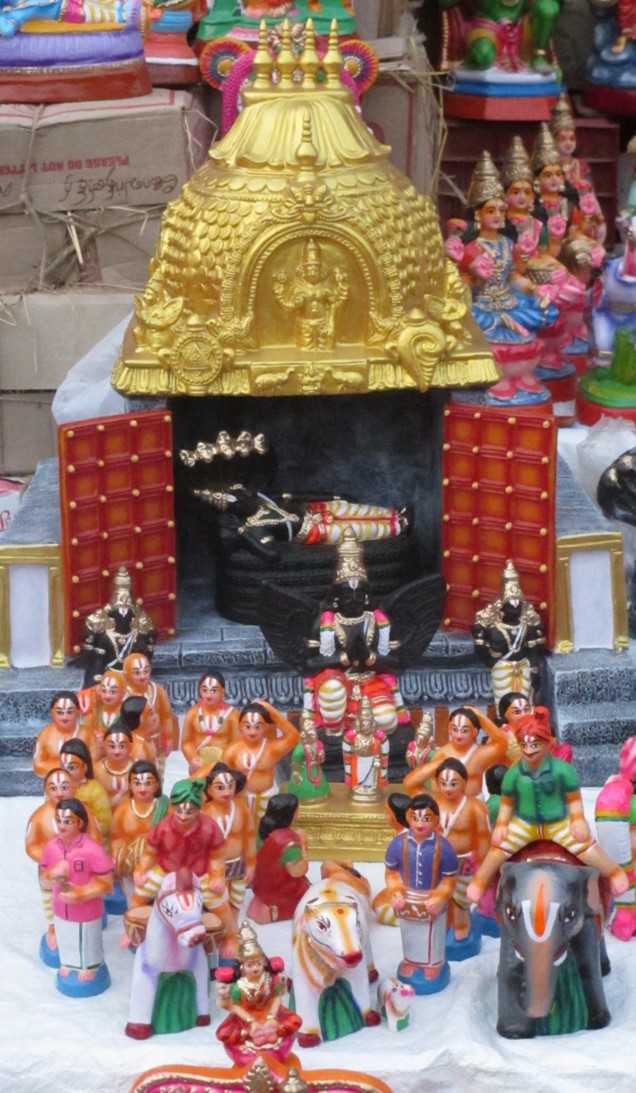
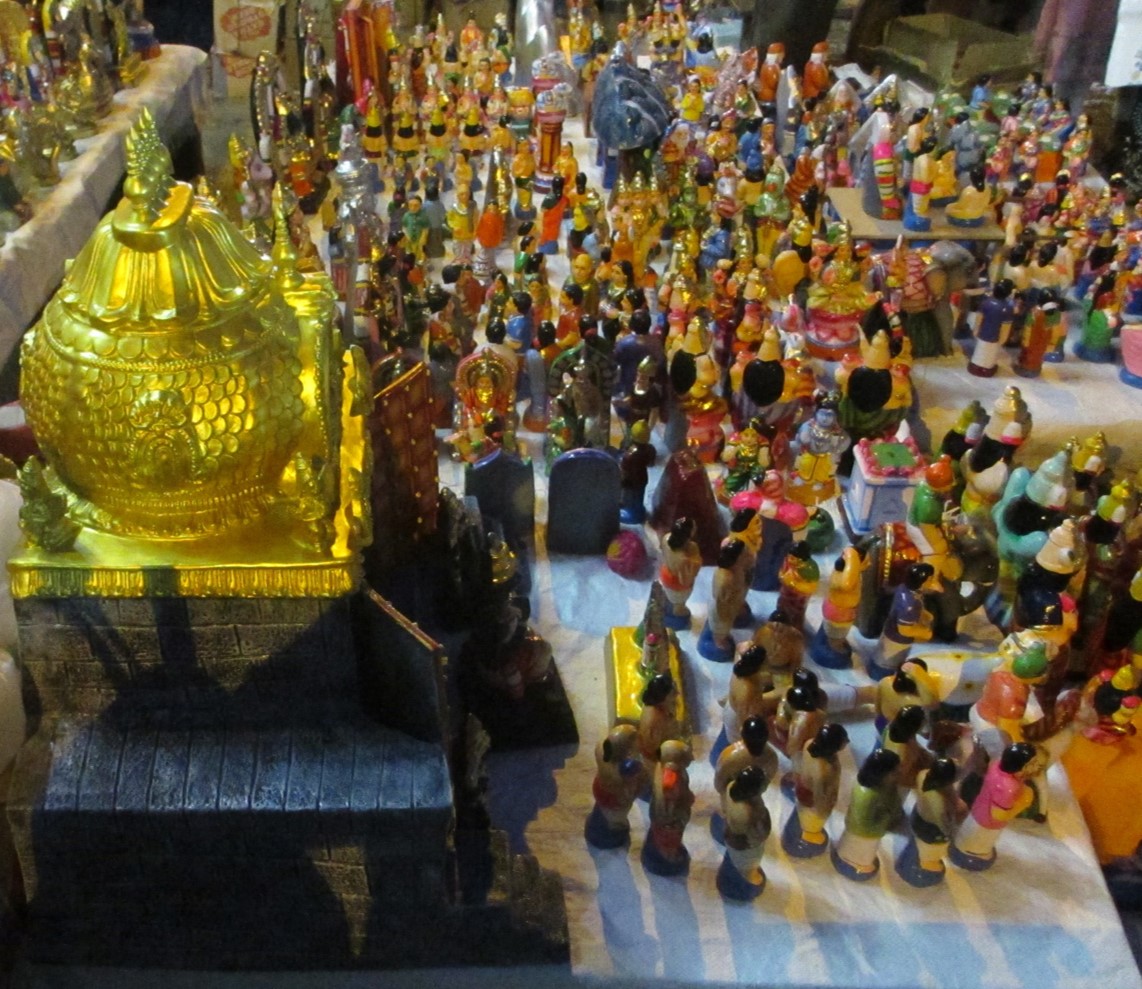
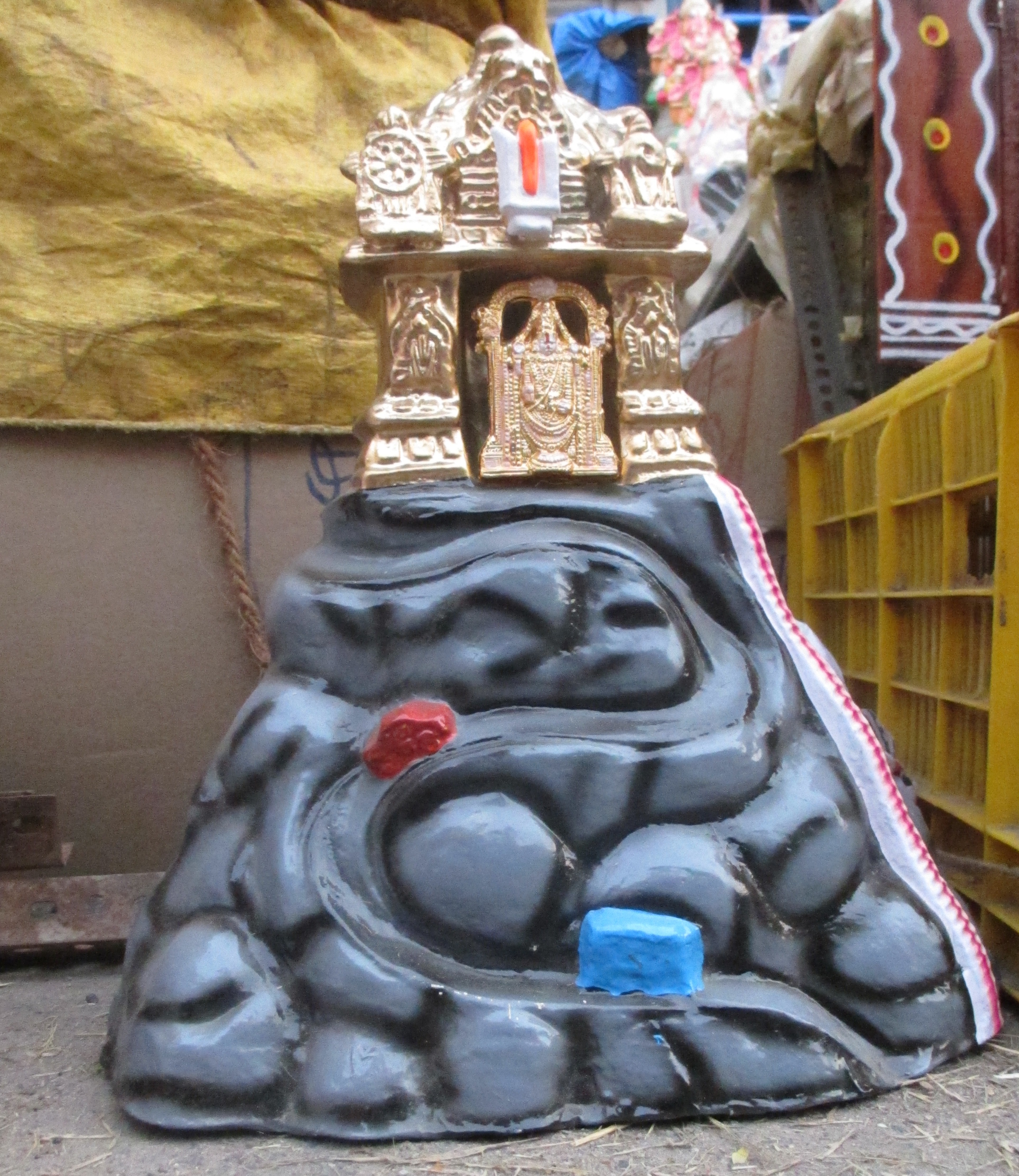
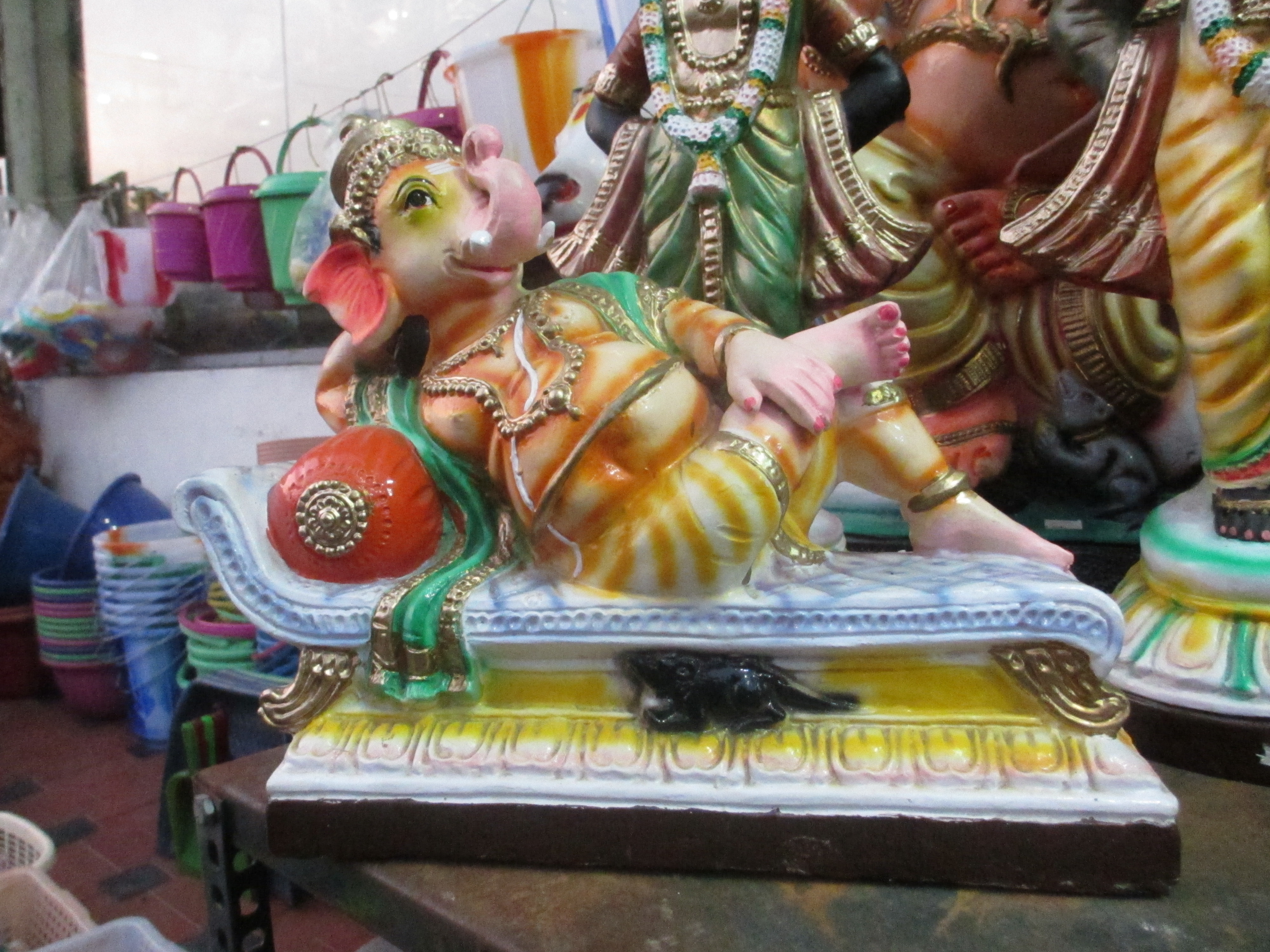
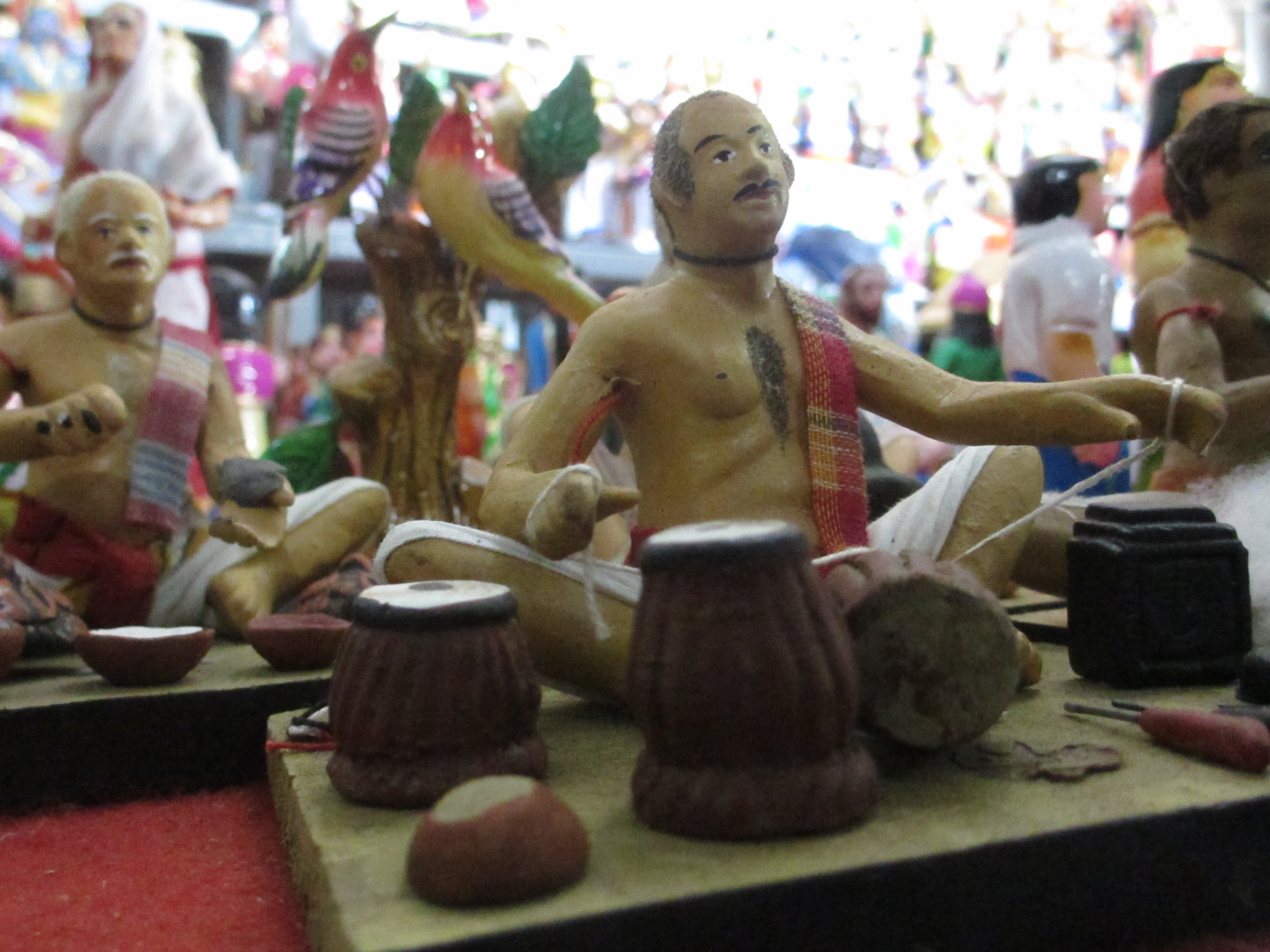
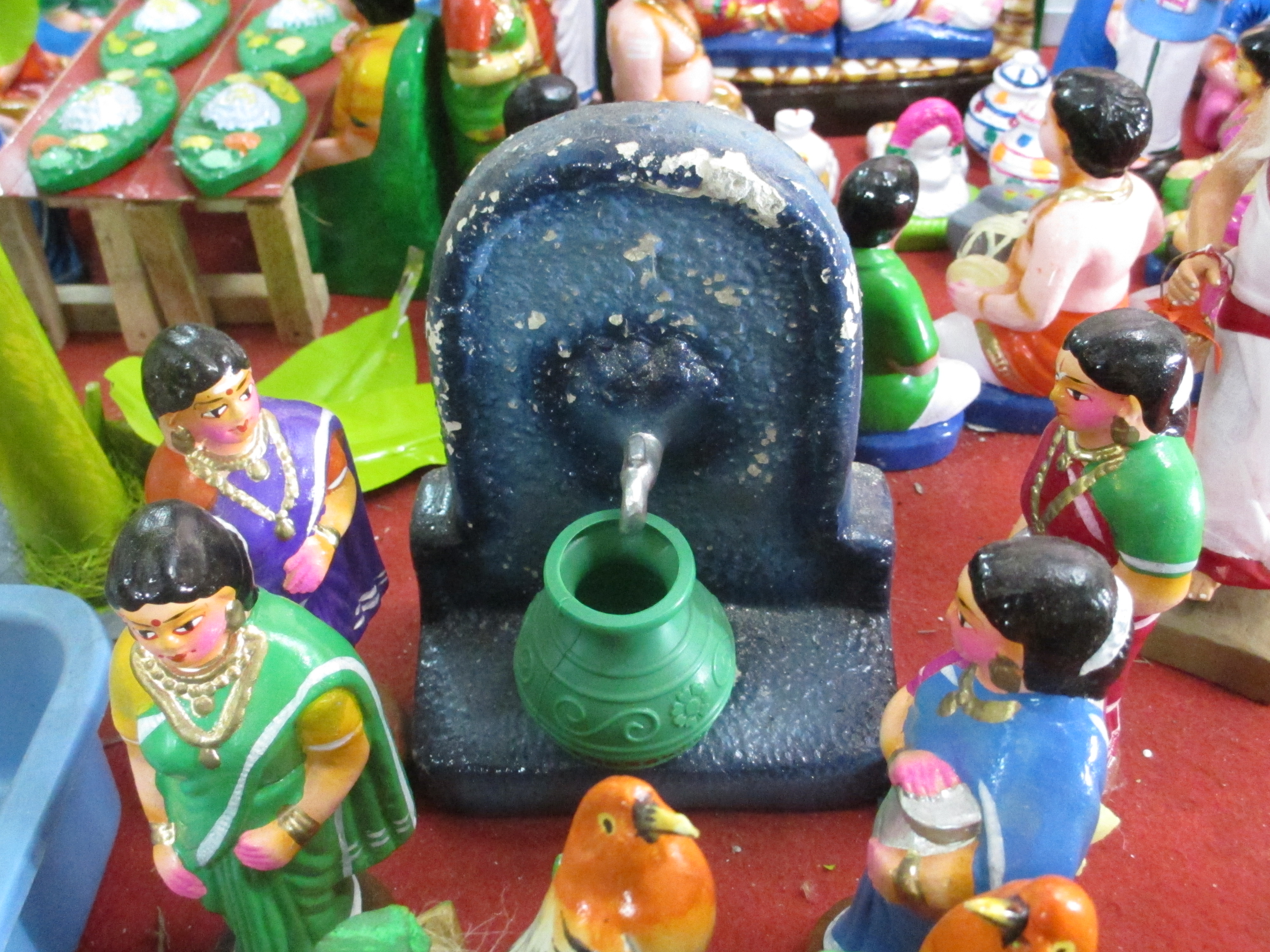
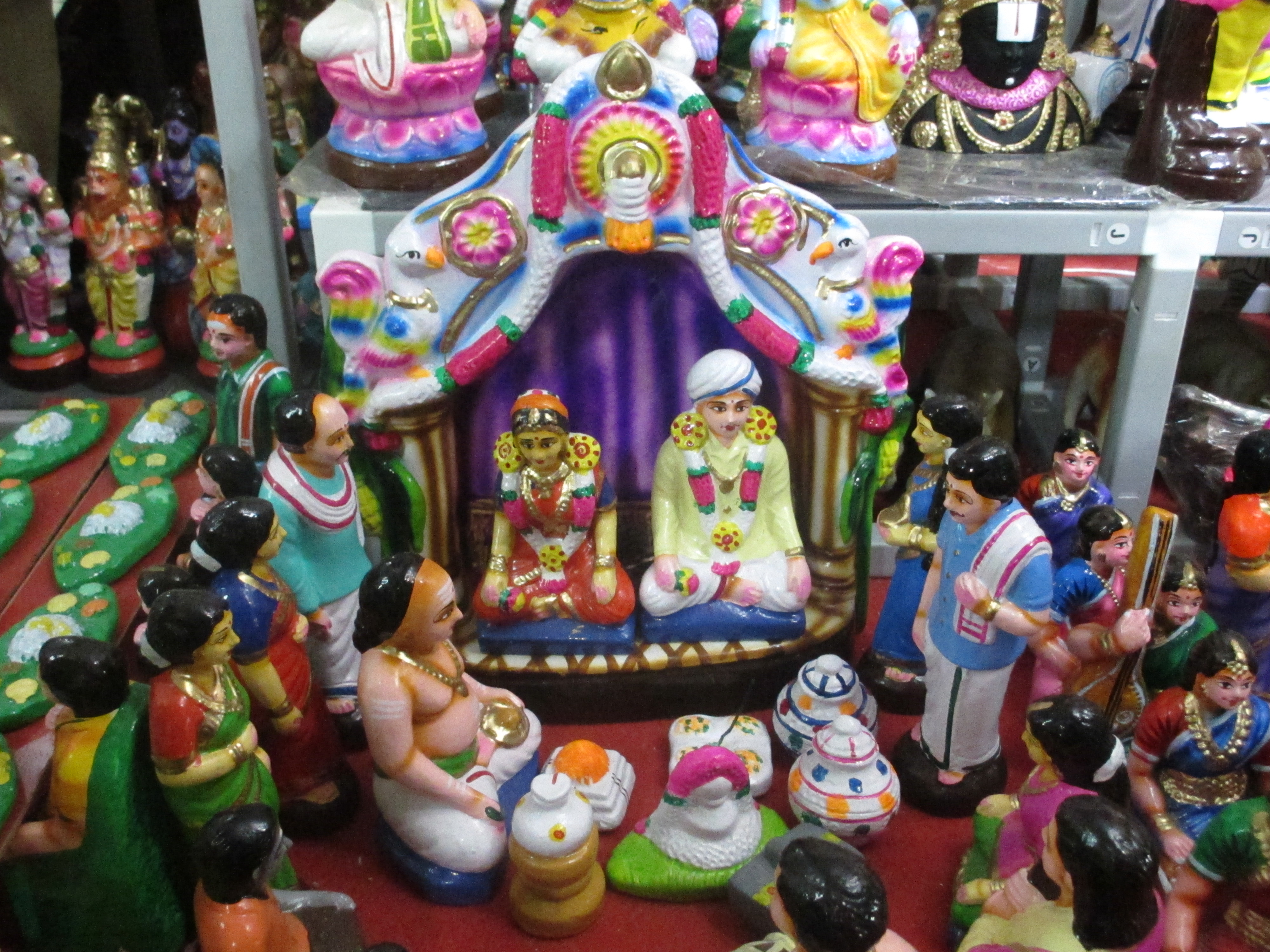
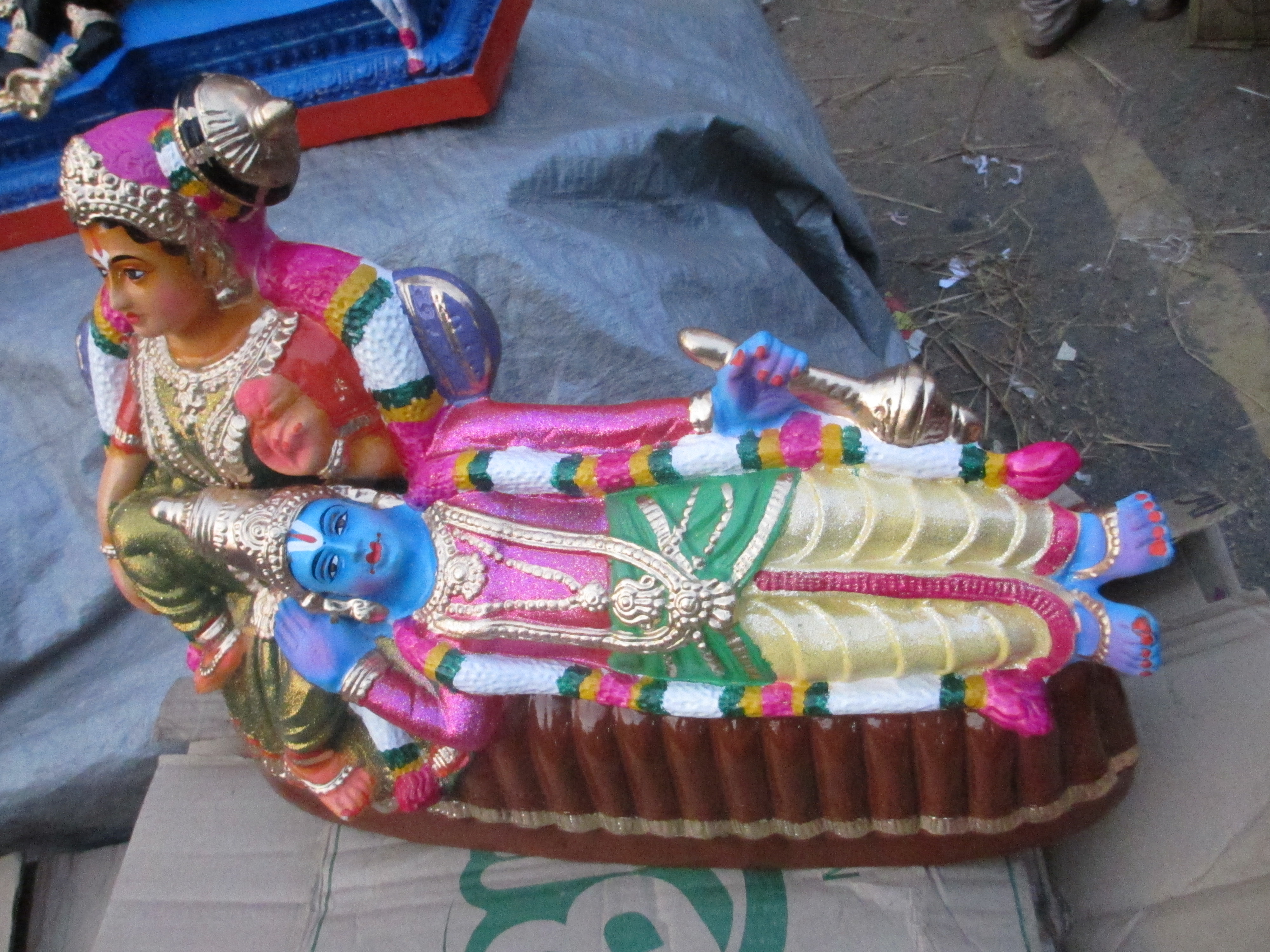
A walk down the North Mada Street during the busy hours before or during the Navratri season, despite all the discomforts is joy worth experiencing. We would be awestruck when we witness these endless shops selling dolls and idols in multiple permutation of size, color and material, to the same extent as walking into a colorful garden in the height of spring. Over the years, in addition to making generic idols the shop keepers have started making idols resembling deities of famous temples.

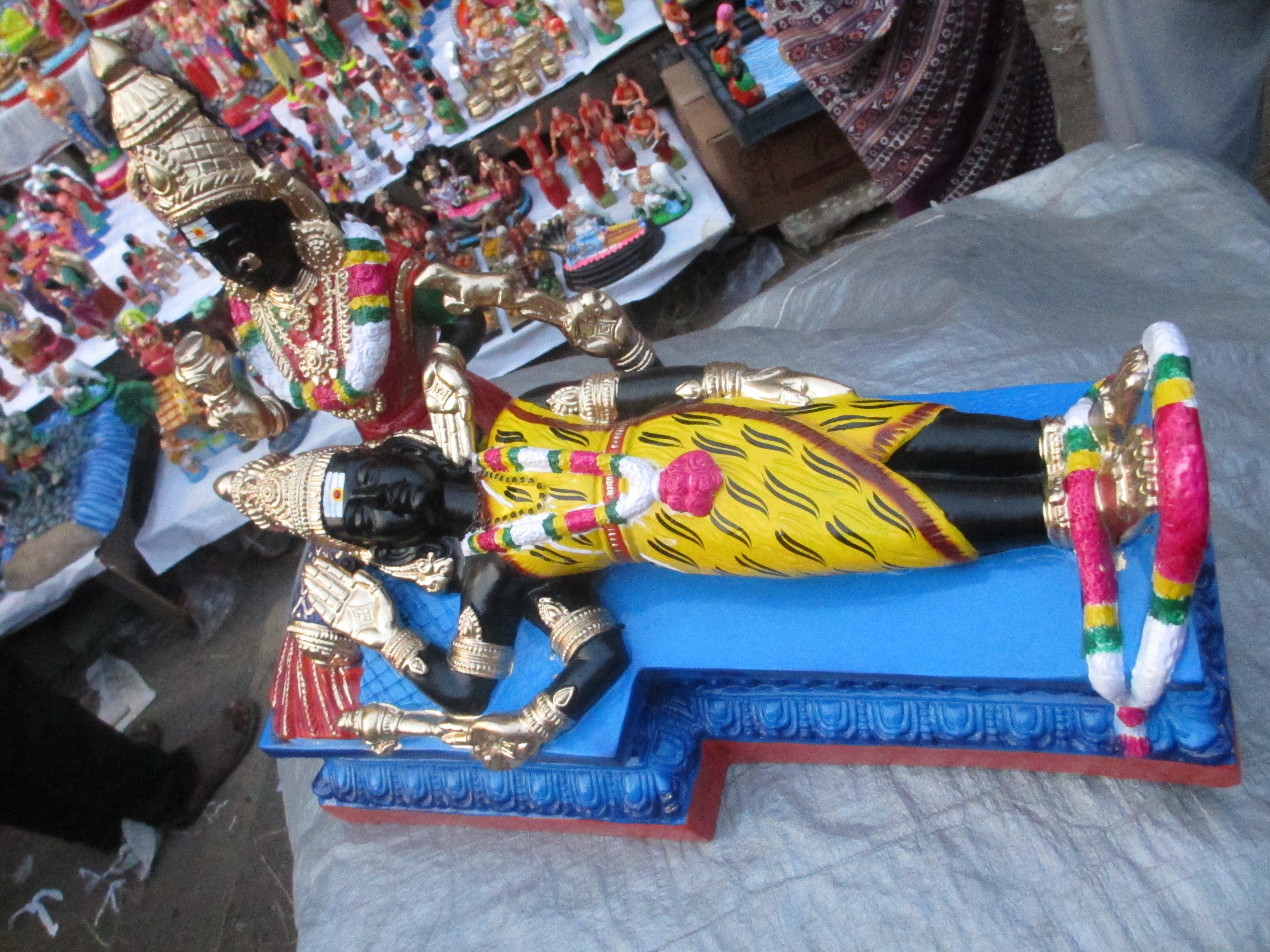
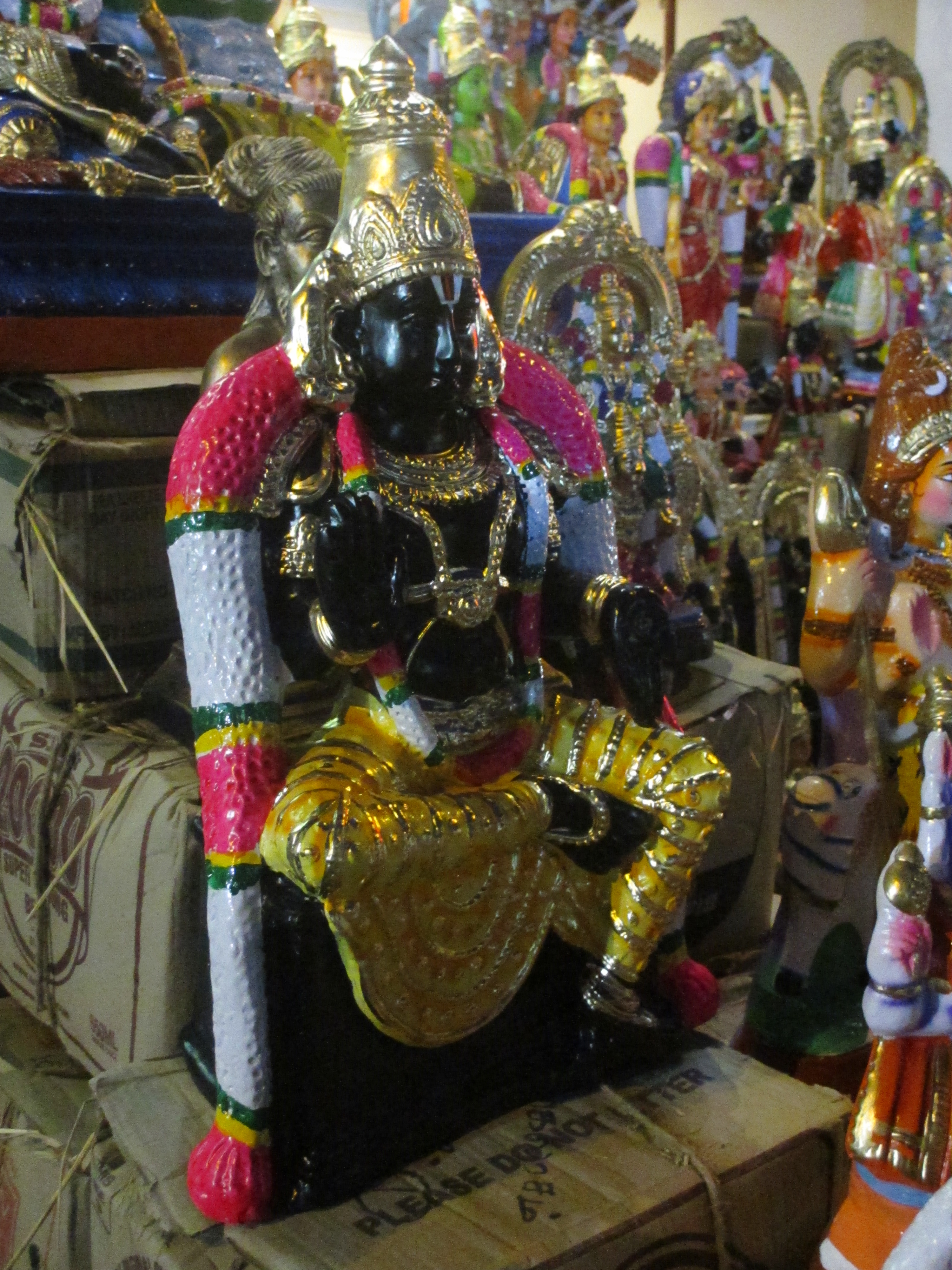
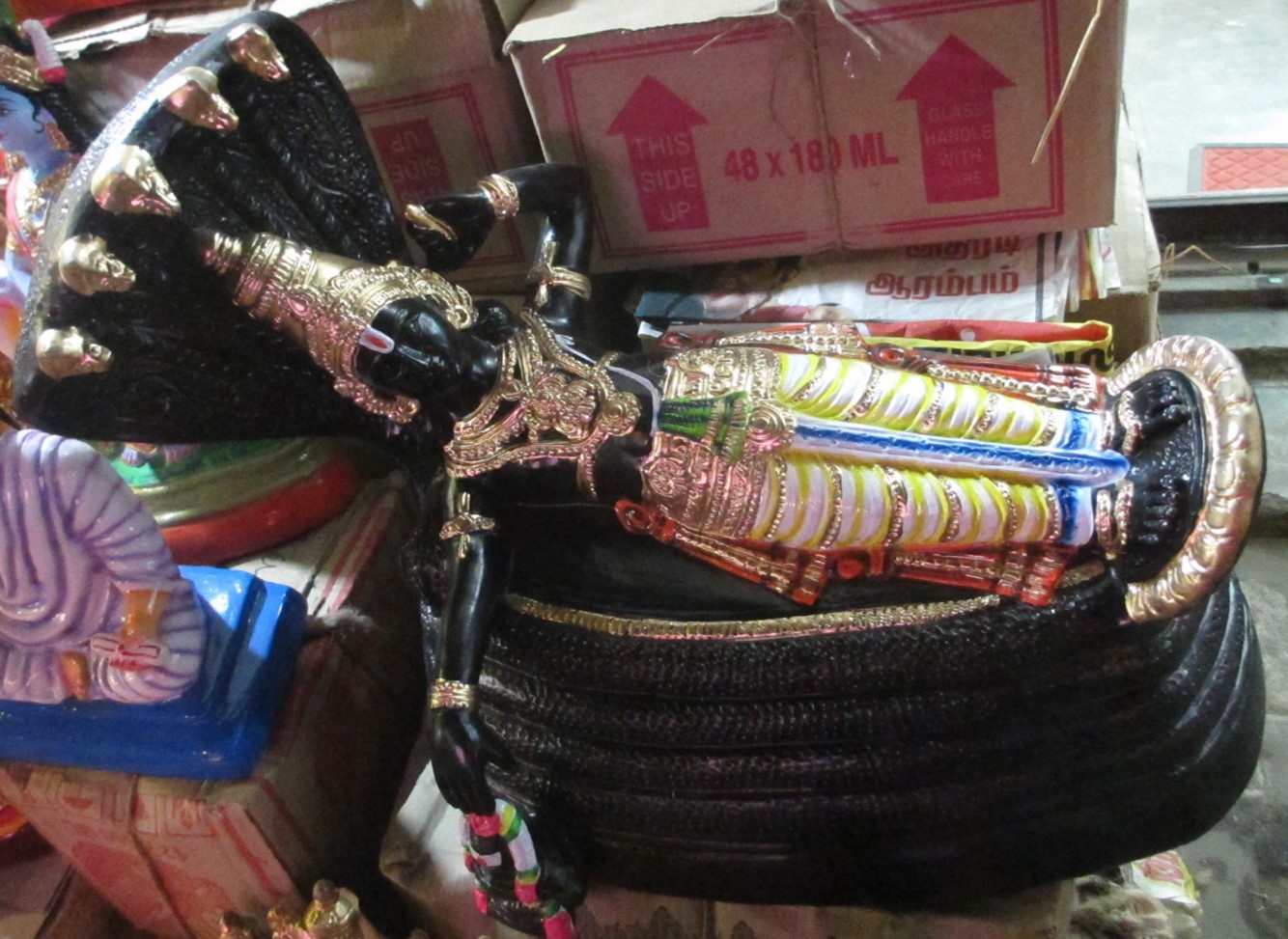
The highlight of this year is the ‘Srirangam Sorkavasal Idol Set’ which is quoted at Rupees Fifteen Thousand (!!!). By the way, negotiating for price with these street side vendors is an art form that even the best negotiation experts will not be able to teach us.  Yesterday I went to North Mada Street to look at these shops and take a few photos. As it was a Sunday, it was crowded than a usual. A couple of poor policemen who were on duty there were having hard time regulating the traffic. I had leave within an hour but I enjoyed every minute of my walk in that street.

Srirangam Temple Idol Set Srirangam Temple Idol Set - Side View

Tirumala Temple Thiruvannamali Temple

2 3  7  9 10 IMG_7766 IMG_7776  IMG_7791 IMG_7793 IMG_7800 IMG_7802 IMG_7810  IMG_7829 IMG_7833 IMG_7839  IMG_7856 IMG_7857 IMG_7858 IMG_7859 IMG_7860 IMG_7815

8 6

IMG_7861 IMG_7841

IMG_7787