Print Books vs. E-Books – Part 3

This is a follow up post to my previous post: Print Books VS. E-Books and Print Books VS E-Books – Part 2.

Amazon might promote Kindle E-Reader as device ‘for the love of reading.’ But we would get locked into Amazon’s system if we buy the Kindle E-reader. A friend of mine reads using his smart phone through Kindle e-Reading app as well as Flipkart’s e-reading app. He says he does comparison shopping and buys from the vendor who offers a book at the lowest price.

Reading only using e-reader also makes it difficult to come across interesting books other than what Amazon’s or other such vendors’s recommendation algorithm would suggest. In one particular instance, I was watching Barry Shwartz’s TED video on my laptop and then decided to buy his book, ‘The Paradox of Choice’. Using only the e-reader would rule out possibilities like these.

While most of the time we come across opinions that portray Social Media as unnecessary distraction, they can be useful too. Most non-fiction authors take between one year and three years to publish a new book. Following them on Social Media sites like Twitter would help us to find out about any follow up research or development after a book (on a particular topic) got published. Professors/Authors like Steven Pinker, Richard Thaler, Dan Ariely and Nassim Nicholas Taleb post about interesting ongoing academic research from their respective Twitter handles quiet often. Some of these ongoing research might act as supplement to the book that we might be reading. As is always the case with any social media we have to have the discipline to selectively browse and read, otherwise we will be wasting our time. This is where a general purpose device like a smartphone or a tablet might come in handy rather than a dedicated e-reader.

Having access social media tools like Facebook, Twitter and WhatsApp will also help us to share with our friends and acquaintances about what book we are reading. Rather than a way of just bragging, we can use these tools to share quotes, anecdotes, statistics, etc. from the book that we are reading. About a few days ago I was reading an article by James Altucher on Pope Francis. I found a quote by Pope Francis about the media very interesting and I shared it via my Twitter handle. What’s the fun of any activity including reading if we cannot assimilate (good) aspects of it into our personality and bring it to the fore in our social interactions? Reading from sources like blogs, forums and websites will also not be possible with a dedicated e-reader.

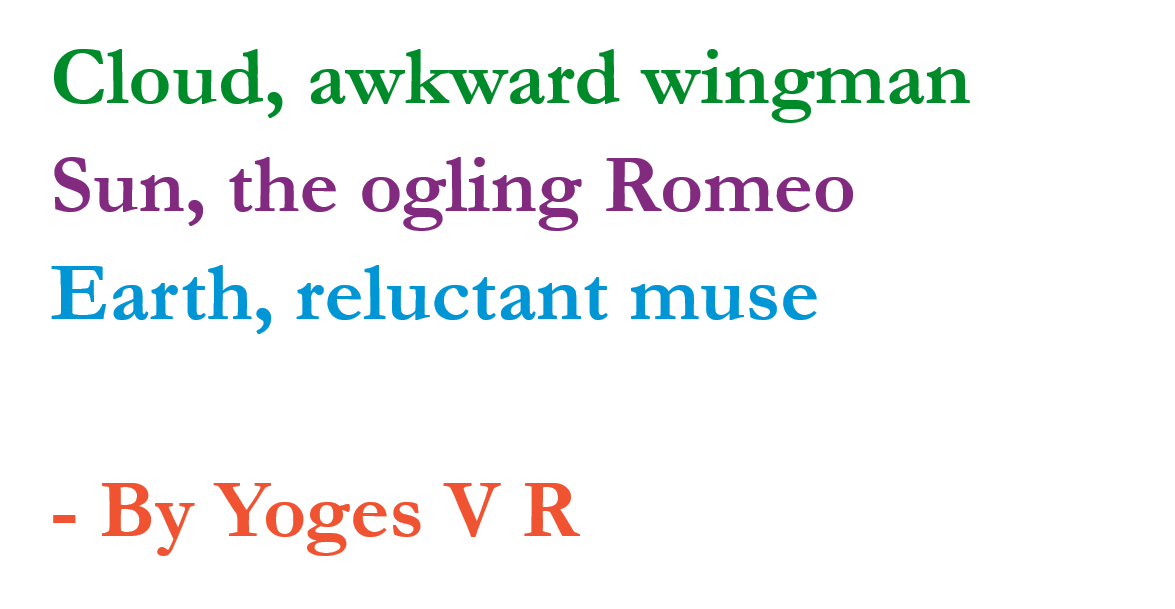
Having a general purpose device like a smartphone or tablet can be useful in other situations as well. On a couple of occasions, I have taken snaps at the most unlikeliest of places and times using my smartphone and used these snaps later to write blog posts (Examples: Urban Nomads, Free Bird Peeking at Caged Birds and Cloud – awkward wingman). There was another occasion when I was waiting in the reception of a dental clinic while my wife was getting her dental procedure done, I opened the Kindle e-reading app and read a book.

With passage time displays in smartphones and tablets might improve to negate some of the advantage enjoyed by e-readers. There might be some new development such as in spectacles and contact lens that can eliminate or at least drastically reduce the eye strain developed due to reading on smartphone or tablet displays.

Amazon markets its Kindle e-reader with the tagline: “For the love of reading.” In a way, we can assume, any e-reader carries a hidden tagline: ‘For the confinement of reading from e-books alone.”   While there is no doubt that e-books are superior to printed books on a number of utility factors, a dedicated e-reader is not absolutely necessary to enjoy these benefits. Ultimately buying and owning a dedicated e-reader is more a matter of affordability and preference than any technological requirement to enjoy e-books. A general purpose device like a smartphone or a tablet would allow us to read from a myriad sources in addition to e-books. We can actually use a smartphone or a tablet as a device to fulfil and enhance our ‘love for reading’ provided we only have the discipline to do so.

Print Books vs. E-Books – Part 2

This is a follow up post to my previous post: Print Books VS. E-Books.

A friend of mine introduced me to the idea of general reading during my MBA days. I wish I had picked up this wonderful habit much earlier. I generally used to read non-fiction books in paperback format. One of the problems I have encountered every now and then is that after starting a book and getting the basic message of the book, if the writing style is not to my liking, I tend to discontinue reading further. I also tend to get very restless in reading books that run beyond 300 to 350 pages. I have accumulated so many books over the course of the last ten years that managing them has become a problem (at least the ones that I have not finished reading and don’t foresee reading either). The problem is compounded by the fact that I have lived in four different cities over the course of the last ten years or so and moving and maintaining these books has been a problem.

So the last few books that I have bought have all been in e-book format. I do not own a Kindle e-book reader. I have been thinking about buying one for a long time now. Instead I have continued to read these e-books using the Kindle app in my smartphone or my laptop. The kind of money that I will have to shell out on a Kindle e-reader would transform my book reading experience from simple pleasure to a guilty pleasure. Let’s dig a little deeper in to this.

Amazon has been promoting Kindle e-readers in a big way in India these days. They have stepped up the print and television ads in the last few months. They are also sponsoring a short story writing contest in tie-up with The Times of India. The cheapest Kindle e-reader is INR 5,999, the Kindle Paperwhite is priced at INR 10,999 and the Kindle Voyage is priced at INR 16,499. Most of Amazon’s ads feature the Kindle Paperwhite and to enjoy most of the benefits that are being advertised, one would have to have at least the Kindle Paperwhite. Let’s take the case of Kindle Paperwhite for the sake of this post.

Amazon India sells E-books at a discount compared to paperback versions. The discount is not substantial but let’s assume that the average money saved by buying an e-book is INR 100. If I buy a Kindle Paperwhite, I would have to read at least 110 books to start accumulating actual savings in money when compared to buying all these books in paperback format. On an average I read about one book a month. At that rate it will take me 9 years to realize the above said savings. I am not sure if the e-reader will function fully well till that period (accounting for durability of the product as well as my own handling of it). Amazon itself gives only one year warranty for the product. It’s safe to say that like most gadgets these days it will reach end of life between third and fifth year.

We might argue, the cost benefit analysis is not the right way to look at the Kindle e-reader; it enhances the reading experience. But only as long as I am fine with reading books and/or magazines in black and white. Kindle e-reader is Henry Ford’s equivalent of a gadget: ‘We can read whatever we want to read on the Kindle e-reader as long as its BLACK and White.’ I went to Croma Retail store a couple of days back to check out the Kindle Paperwhite. The children’s magazine (cartoon) that was loaded in the demo version was in black and white. That same magazine (in colorful form) is available for INR 25 in print edition. I am not sure if I or my daughter would ever be interested in reading a cartoon strip in black and white. I can safely say never. If I have to pay INR 10,999 and still make a compromise with my reading experience (on some of the stuff that I would read) then I might as well make a compromise with my reading experience without spending INR 10,999 (by reading on the app on my mobile and laptop). As of now the only person in my circle who owns a Kindle e-reader (basic version) did not actually buy it; his friends gifted it to him!

Print Books vs. E-Books

On Thursday (September 24), I came across this Tweet by Professor Stew Friedman: “I love the smell of paper in the morning. E-book sales slip, print books alive & kicking! @xanalter @NYTimes http://nyti.ms/1KuGItp” I clicked on the link and landed on New York Times article titled: “The Plot Twist: E-Book Sales Slip, and Print Is Far From Dead.”

Some of the key points from the article are:

  • E-book sales fell by 10% in the first five months of this year (Source: Association of American Publishers)
  • While analysts once predicted that e-books would overtake print by 2015, digital sales have instead slowed sharply.
  • There are signs that some e-book adopters are returning to print, or becoming hybrid readers, who juggle devices and paper.
  • The article quotes a co-owner of a bookstore saying, “The e-book terror has kind of subsided.”
  • The double- and triple-digit growth rates in sales of e-reading devices have become thing of the past.
  • Around 12 million e-readers were sold last year, a steep drop from the nearly 20 million sold in 2011 (Source: Forrester Research).
  • The portion of people who read books primarily on e-readers fell to 32% in Q1 2015, from 50% in 2012 (Source: Nielsen survey).

As I was reading through this article I was reminded of an article about ‘climate change’ from nature.com that I read last year.  The key quote from the article from Nature.com that would serve as counter point to the New York Times article is: “If you are interested in global climate change, your main focus ought to be on timescales of 50 to 100 years.’ I guess the article in New York Times is getting the timescale wrong. Looking at what happened in the first five months of a year or in particular year might not serve as a good barometer for a long term trend. If we are interested in examining a business trend then we should be looking at least a ten year period. We might brush aside the comment from nature.com as a natural phenomenon and is not applicable to economic systems. Let’s take the example of the Dow Jones Industrial Average. In the long run it has been going up, but there have been short term reversals (during recessions). The dip in e-book sales could just be a short term reversal.

Another key aspect to keep in mind is that usually most analysts predict technological shifts to happen (using models) in much shorter time frame they actually take in the real world. Think of what analysts have written about adoption of cloud computing, etc. These technological shifts have taken longer than what the analysts had predicted. E.g. Oracle and many other technology companies had envisioned and were working on projects of what would eventually become cloud computing way back in the nineties and yet cloud computing is nowhere close to replacing legacy systems completely.

When analysts predict the adoption of new technologies, they place less weightage on how the players who benefit from the status-quo would retaliate. One of the reasons for the dip in e-book sales could be aggressive initiatives by print book publishers and distributors. Or it could be due to the fact that people are spending more and more time with electronic media and once in a while may return to non-electronic formats like print books. Also historically new technologies have not replaced old ones like an asteroid-strike wiping off dinosaurs from the face of the planet. There have been extended periods of time where the technology that is being replaced and the one that is replacing it have co-existed; examples: horse drawn coaches and motor cars, land-line phones and mobile phones, feature phones and smart phones, type writers and printers, etc.

Like the New York Times article rightly concludes, it’s too early in the day to conclude that print books have defended their turf against invading e-books. The trend of digitization is all around us and consuming books in electronic format is consistent with the way people consume other forms of media. There are multiple benefits of reading books in electronic format compared to print book format and in due course of time an entire generation that will find it very natural to read books in electronic form will form the bulk of the customer base. I guess eventually e-books will become the dominant form.