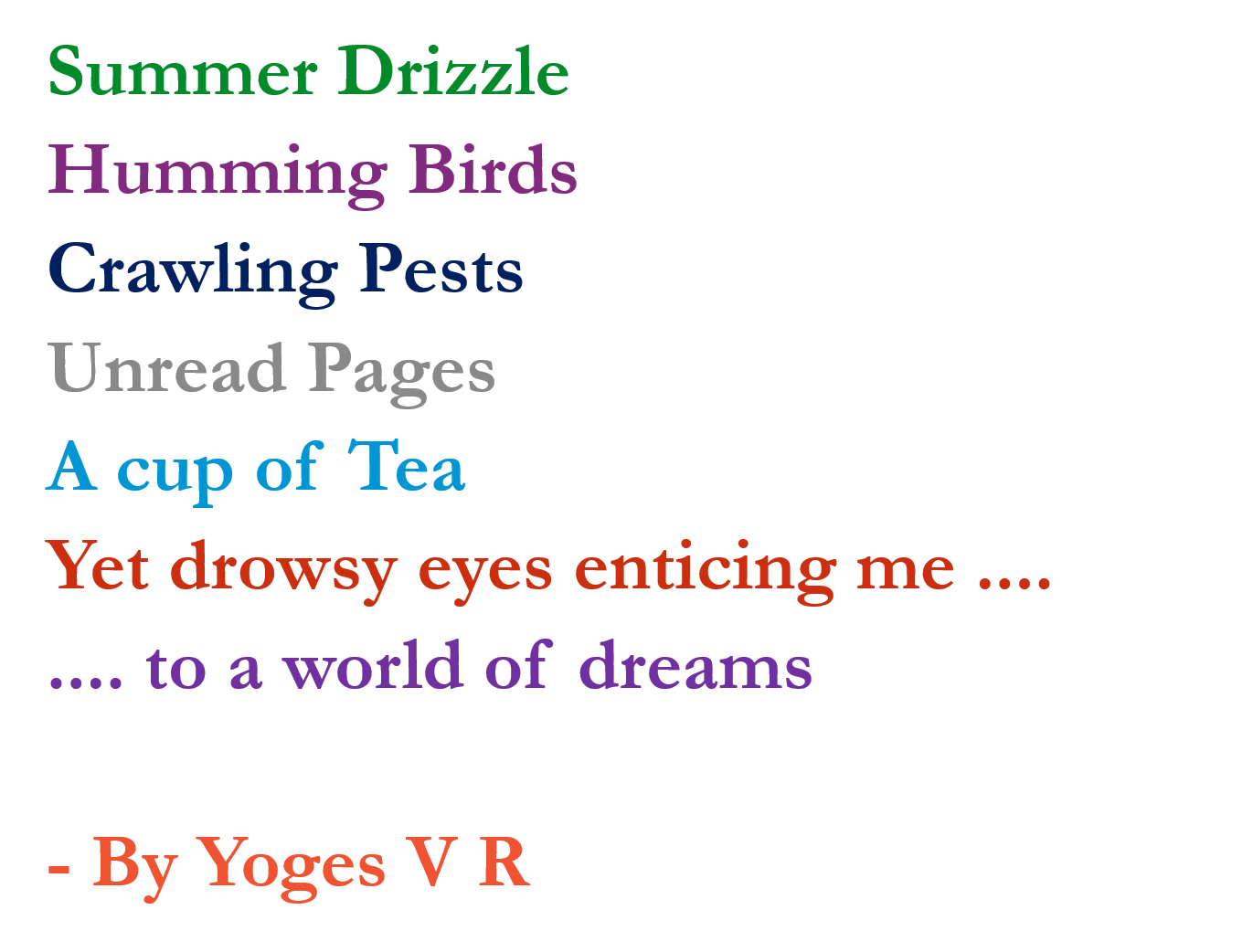
A World of Dreams
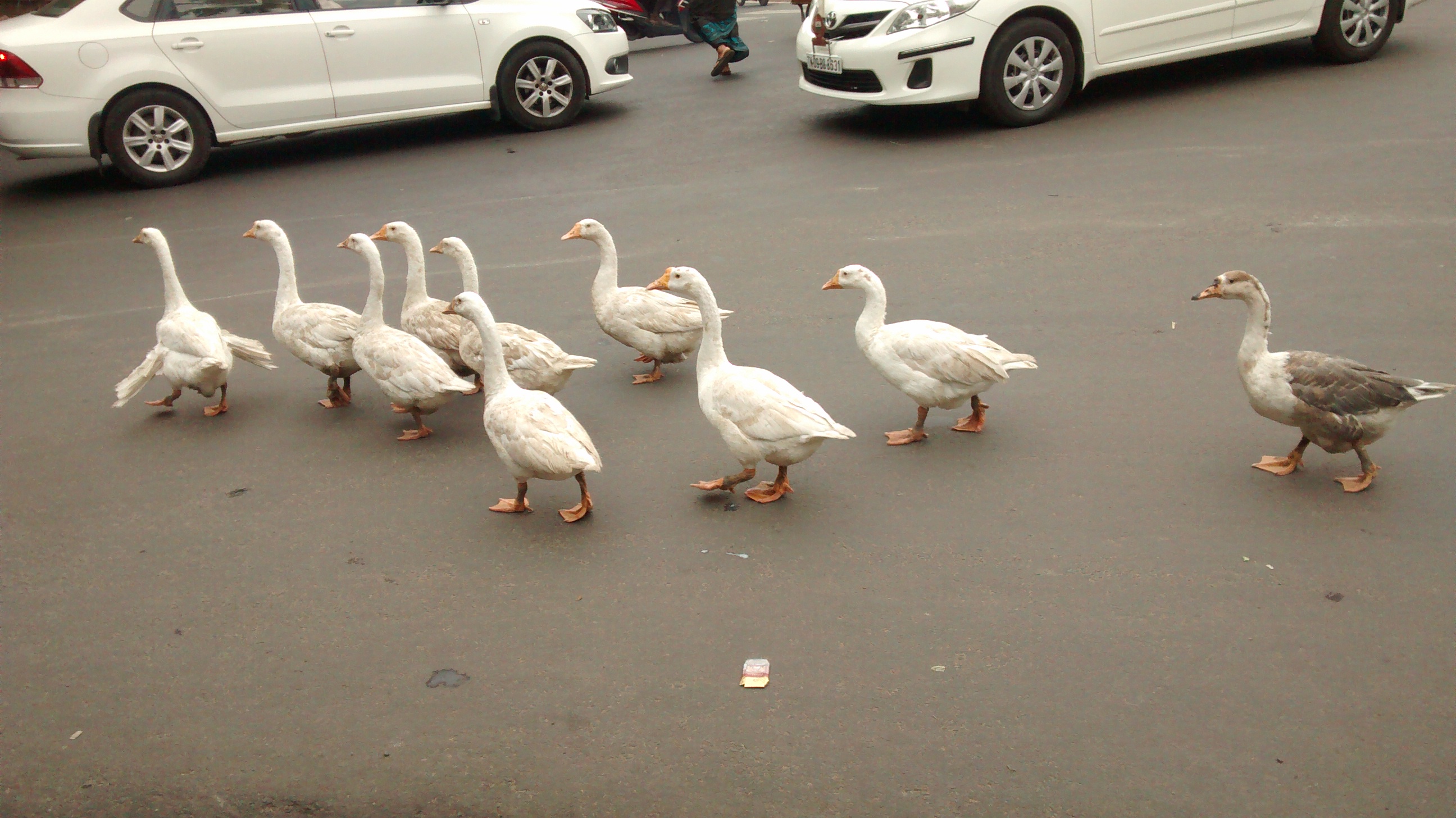
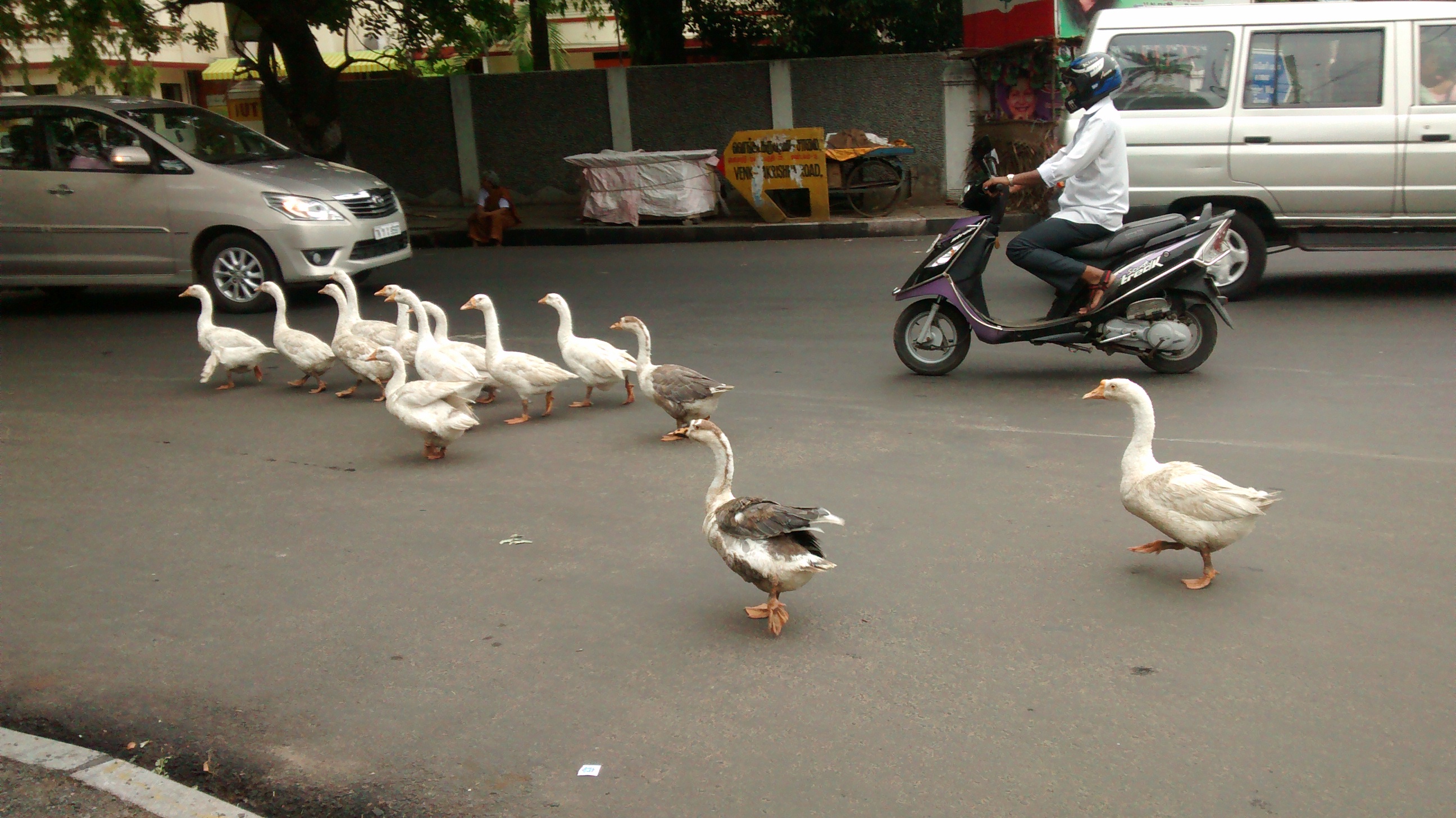
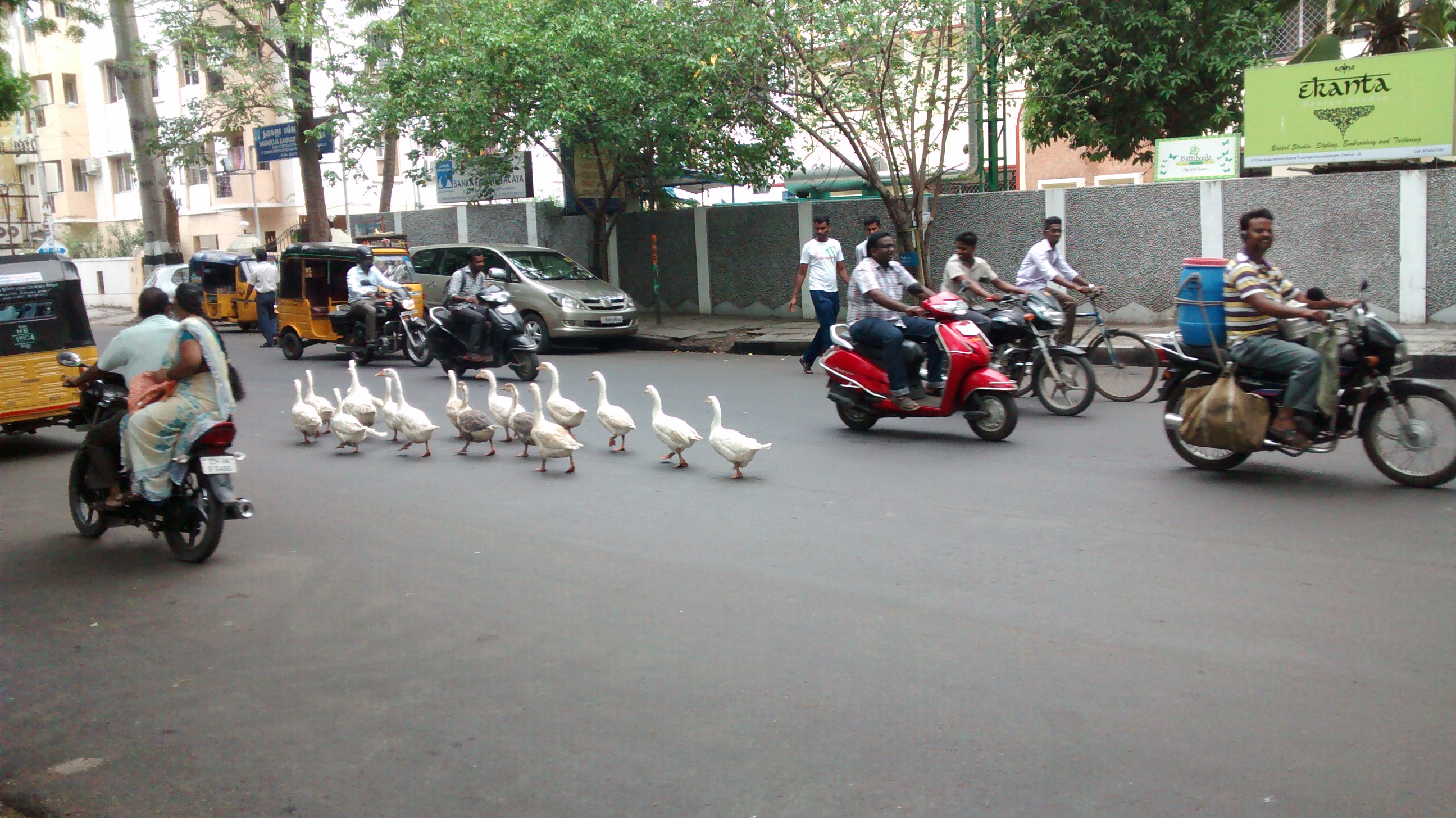
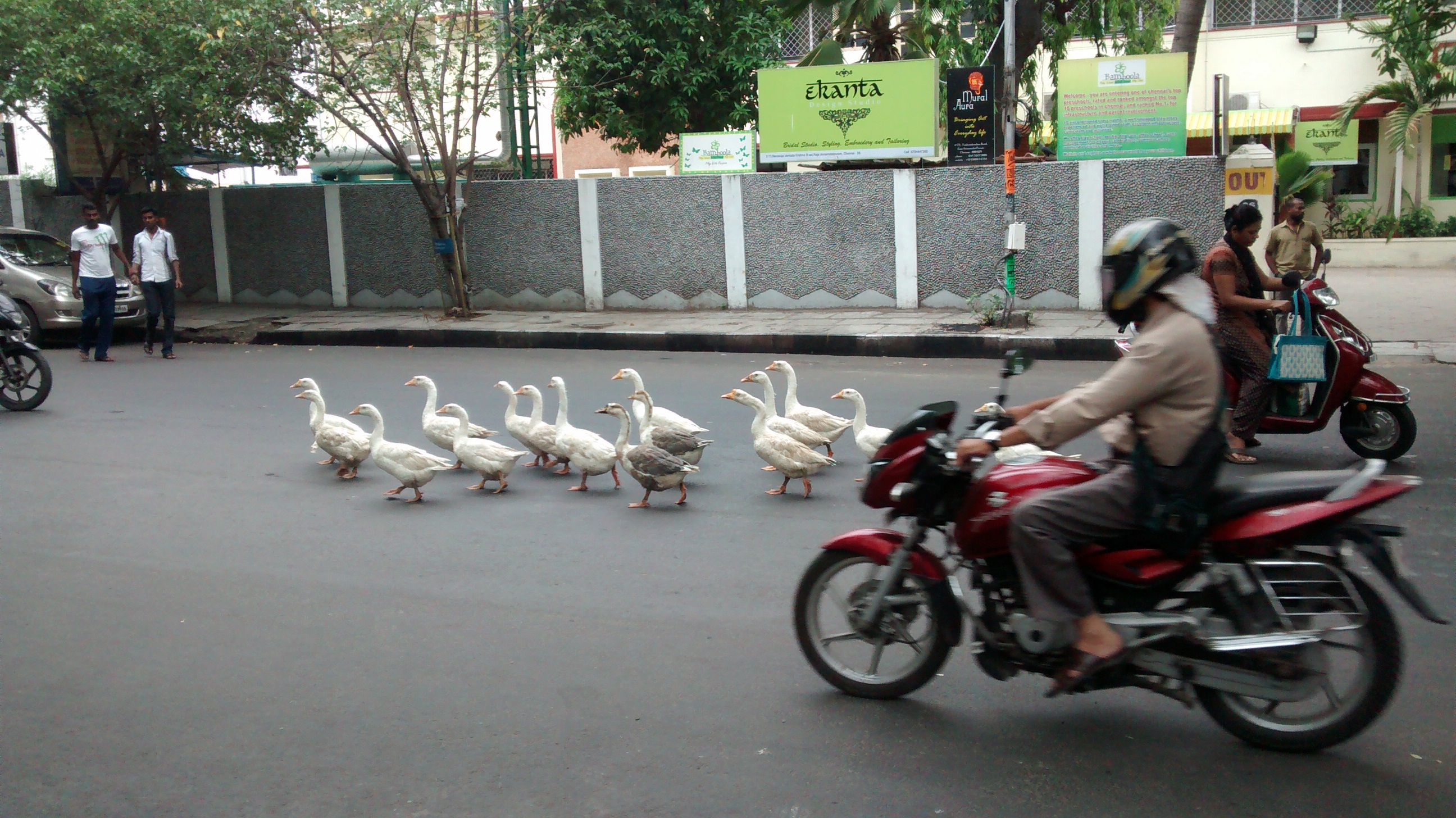
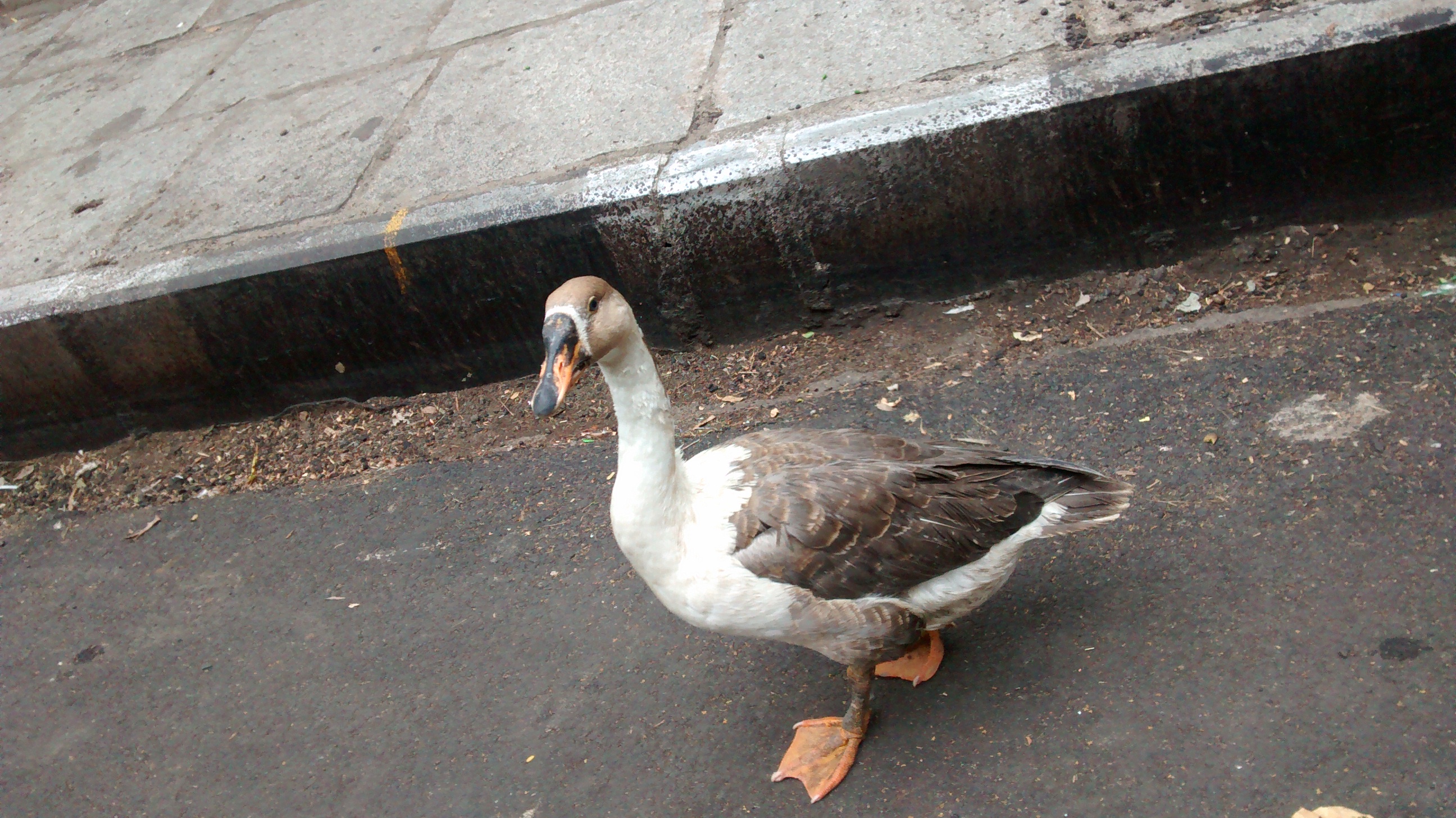
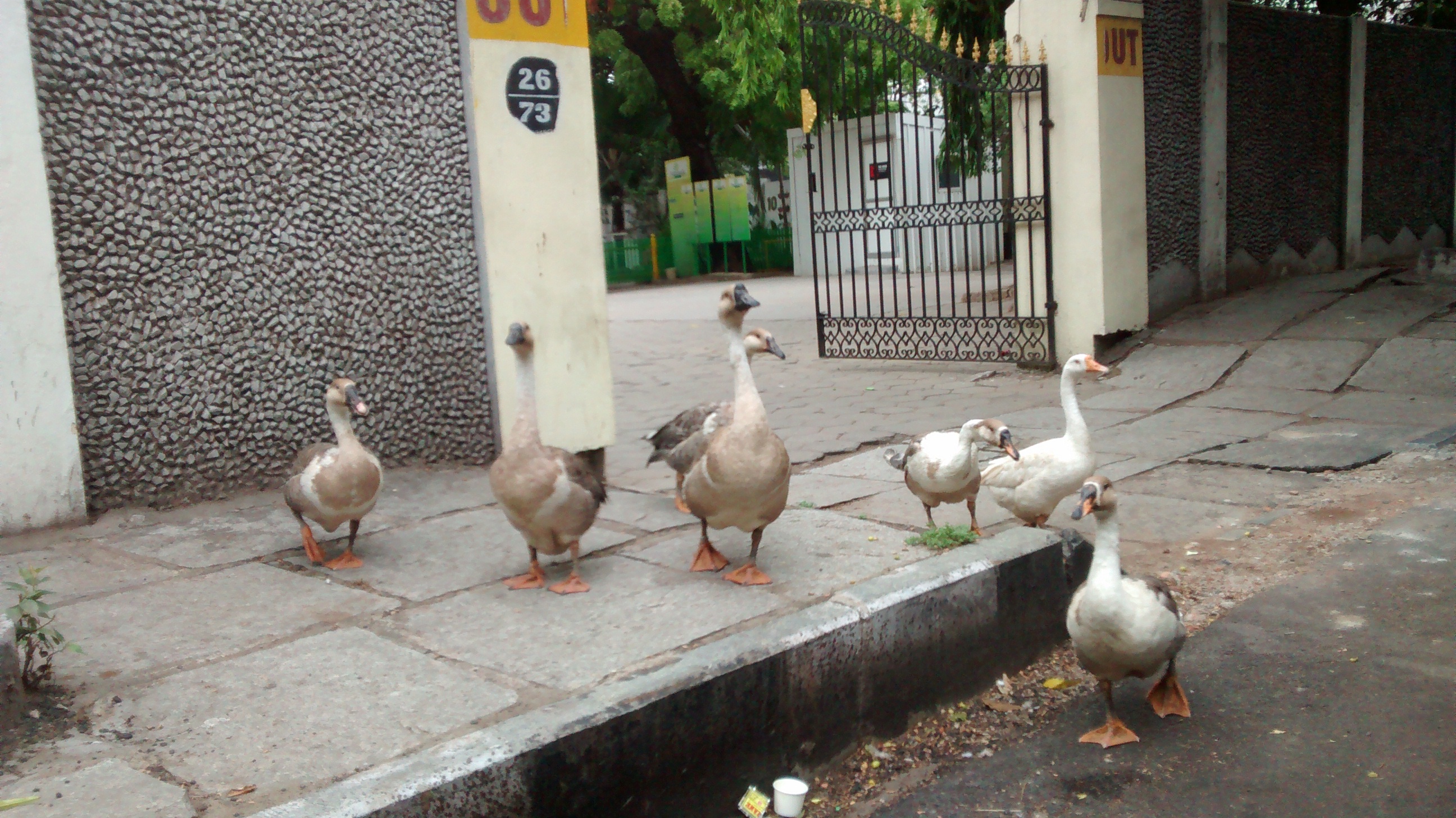
I was pleasantly surprised to spot a flock of geese just outside a restaurant at 9 AM today. A refreshing change compared to the vehicle infested roads that we come across everyday.
A few weeks back as I was talking to one of my college friends. He mentioned to me that he had visited our college the day before to attend the inaugural ceremony of an indoor stadium. Former Indian cricket great Sachin Tendulkar was the chief guest for the function. He had gone there with the hope of getting an autograph from and a photograph with Sachin. It seems that the organizers had arranged or rather hoped to have a breakout session with Sachin post the inaugural ceremony and had invited a lot of people including sponsors, executives from the companies that recruit from our college etc. for the inaugural ceremony.
However post inaugurating the stadium, Sachin left without taking part in the breakout session (Not sure whether Sachin was aware of the plan for a breakout session). A lot of people (including my friend) went back unhappy as they could not get to interact with and/or take a photograph with Sachin. I was wondering to myself as to why my friend and so many others like him would take the day off and travel long distances to get a glimpse of a person who has stopped playing cricket for more than two years now. Are they fans of the phenomenal cricketing skills of Sachin or just Sachin? If they admired the way Sachin played cricket, they would have been better off watching the recordings of many a blistering innings that Sachin had played in his long career than traveling to my alma mater.
If people had been inspired by the good qualities of Sachin (like focus, hard work and dedication to attaining mastery in one’s chosen field) and wanted to follow on his footsteps, they would have stayed focused on their work that day instead of going to the inaugural ceremony. I am confused as to whether people had chosen Sachin as role model to seek inspiration for attaining greatness in their own life or just as an entertainer. Why is that most of us decide to remain passive rather using our role models as inspirations in transforming our life?
When former World Chess Champion Grandmaster Viswanathan Anand was challenging reigning World Chess Champion Grandmaster Magnus Carlsen in November 2014, I had badly wanted Anand to win back the world crown. Anand hails from my hometown Chennai and I, like a lot of other Chennai folks was hoping that Anand will be able to avenge his defeat from the previous World Championship held in 2013. But Carlsen defended his title in style. During the course of a chat with a colleague I had mentioned how dejected I was because Anand had lost once again to Carlsen. My colleague mentioned that in the larger scheme of things, having a new and young world champion (Carlsen is much younger to Anand) would be good for the Chess World and a lot of youngsters would be inspired to take up Chess at a more serious level. Now that I think about the episode, I feel that my colleague is right. The better of the two players won the Championship, so why should I be unhappy about it. If appreciating a good chess player was all that mattered to me shouldn’t I be happy irrespective of who won?
We all have had or continue to have heroes/ role models in our lives. Initially we would start admiring a particular person (e.g. Rafael Nadal) because of one particular skill or characteristic. However with time we would be interested in all sorts of activities of our hero; from the kind of dresses he wears to his last vacation, etc. Most people would go to the level of spending day in and day about getting to know each and every piece of information about their favorite star; they would even take a hell a lot of pride in doing so. They will also start mimicking their favorite star by having the very same bandana or hair style like their favorite star. Worse still they might even start buying the brands endorsed by their favorite star despite realizing the fact that he or she might not be an expert in that product field and might also have a vested interest in endorsing a brand. Yet people assume that they have a divine obligation to follow whatever their favorite star says and does.
People have role models or heroes because understanding or following abstract concepts is difficult. Once we use someone as an example for that concept then we can easily grasp it. Understanding skill, discipline and hard work might be difficult without quoting an example of person who displays all these in a particular field, e.g. Rafael Nadal’s skill, discipline and hard work in the Tennis World. Having a hero or role model is not bad in and of itself. The problem arises when you lose sight of the fact you started admiring Rafael Nadal for his skill (that he displays on the field) and the discipline and hard work (that he puts into his trainings off the field) and instead make him your fashion guru, investment guru and social etiquette guru, etc..
Hero Worship is one of the many maladies affecting modern day. Does following superficial aspects about our favorite sport star or film star really help us in becoming a better people? More importantly does this celebrity culture help the society at large? Blind hero worship has several downsides: celebrity brand extensions (beneficial for the celebrity not for his or her fans), political dynasties (beneficial for the politician and his family and definitely bad for the society), acts of vandalism and violence, people being misled into doing things or buying stuff which might not have done without endorsement from their heroes and last but not the least herd mentality.
Whenever we decide to elevate someone to the pedestal of our personal hero or role model, it is very important to ask these questions to ourselves:
Why qualities that person makes you admire him/ her?
It is always better to remember why we started liking a person in the first place. And we should not try and translate the admiration for a particular characteristic of a person to admiration for that person as a whole. For e.g. we need to question ourselves: “How much ever I like and respect Anthony Robbins, does it make sense for me to accept financial advice from him?”
What do you do with that admiration?
Most of us express our admiration for our heroes in all sorts of wrong ways or rather in ways that are not beneficial to us individually or to the society as a whole. The manifestation of our admiration can take several forms: from the simple following of our heroes fashion statements to emotional and illogical Milk Abhishekams for our hero’s cut-outs to the very dangerous forms like vandalism and acts of violence (e.g. an obsessive Steffi Graff fan stabbing Monica Seles). I remember a scene from one of my favorite Tamil movies, where the hero’s teacher advises him. The teacher asks the hero not to blindly mimic him but to use the admiration for the teacher’s musical skills as a catalyst to grow and bring to fore the unique skills within the hero.
A couple of years back I was watching the video of Suki Sivam giving a talk on leadership qualities in a school function. During the course of the talk, Mr. Sivam mentioned that he generally dislikes signing autographs. During the Q&A session one of the students asked him why he dislikes signing autographs and shouldn’t he oblige and sign the autographs for his fans/ admirers. Mr. Sivam mentioned that rather than wishing to get autographs from their heroes/ role models, the students should aspire/ aim to become someone who would sign autographs for others. Meaning rather than hunting for others autographs the students should spend their energies in becoming an achiever themselves.
Does our hero still display/ espouse the very same qualities for which we started admiring in the first place?
This question becomes important so that we are actually following a person with the qualities that are desirable to us. It helps to prevent us from making emotional and illogical decisions like continuing to support a tainted celebrity (e.g. Lance Armstrong) or support a political dynasty in a democracy.
Taken in my office today 
Recently, I had volunteered in my company for ‘Stop Hunger Now’ event. My company had tied up with ‘Stop Hunger Now’, an international NGO that gets food and life-saving aid to the world’s most vulnerable people. The goal was to pack 100,000 packets of food items for the needy. Overall, there was a need for approximately 1000 volunteers, who will be working on the packing lines. For each of the packing line, there was a need for a total of 10 volunteers per line, working for 1 hour shift each. Our company’s social impact team was planning to have 12 packing lines, and approximately 8 – 9 shifts to complete packing of 100,000 meals (Uncooked, dry food and vegetables). Each person had to volunteer to work for one hour… just one hour for this cause. Part of our cafeteria was cordoned off for this activity. I had chosen 2 PM to 3 PM timeslot. I and a few of my colleagues reached the registration desk at the appointed hour.
At the registration desk, they had a paper to fill our details. We saw a lot of smiling, excited people curiously taking a peek at the packaging lines. At the registration desk, they distributed us a cap for covering our head and then a pair of polythene glows. Just behind that table there was a partition frame that was partially covering the 12 long tables arranged in 6 rows and 2 columns with aisles in between. Each table was kind of a mini packaging line. They were playing music through a stereo system to motivate the volunteers. The whole place was buzzing with activity. A few of the people were busy replenishing the packaging lines by fetching food items from the store room. From the registration desk a volunteer led us to the packaging area assigning us to different packaging lines that needed volunteers.
At each packaging line, One person was opening and handing over the packet/ cover in which the food items will be filled, the next person was filling the packet with a cup of rice and a cup of dhal, the next person was adding a small amount of dried vegetables and the next person was putting a small sachet of minerals and vitamins mix to the packet. On either side of the table there was one person who was weighing the packets to make sure if they were within the desired weight range; if not they will add a little bit of rice to the pack to meet the weight requirement. Finally one person on either side of the table would seal the packet using an electric sealer. It was at this sealing location that I was posted for an hour. Beside the sealing location, we had to arrange the sealed food packets which then will be packed into a carton at 36 packets per carton. As I was being assigned to this work, I assumed that if I could seal one packet per minute, it will be a significant personal achievement.
Initially when I was assigned to the table, the person who was helping to seal the food packets during the previous one hour taught me how to seal the packets. After ensuring that I was doing the task correctly (by observing me for about 5 minutes) he signed off. For about the next twenty minutes, I was sealing the covers frantically like a humanoid robot. I was counting the number of packets that I was sealing and how was kind of curious to predict the number of packets that I will seal in one hour at this rate. Well in these twenty minutes, I actually did not know the contents of the very packets that I was sealing!!! At this juncture curiosity took over me and I paused for a minute to investigate the contents of the packets; that’s when I figured out that the packet contained rice, dhal, dried vegetables and a sachets. Then for the first time in that 20 minutes, I looked to my left to see what was all happening in that table. It was strange, even while doing such a small and mundane task, I got lost into my own world. And I was lost in achieving some goal (number of packets to seal) that had little importance in the larger picture. Even at this moment I did not get introduced to any of the other folks who were working at that table. I also noticed there was hardly any interaction between the other people at that table as well.
With every passing minute, I got increasingly uncomfortable due to sweat in my palms. I also kept a count of the number of packets that I sealed. I also kept thinking how life would be on an actual packaging line/ assembly line within a factory. We were working in an air-conditioned cafeteria, they were playing music to motivate us, people were doing a little bit of stand-up comedy as well and they were announcing the progress made through a loud speaker. None of this would be present in an actual factory. Also we were going to do that work for only one hour plus an added incentive that we were doing it for a good cause. In a factory, people would be doing this kind of work for hour’s together day in and day out. Surely the mental agony of being transformed into a temporary humanoid robot without much interaction with colleagues would be more than the physical pain incurred through working long hours. I wonder if Henry Ford would have thought about the negative impact on the quality of human life that his invention, the assembly line would have for ages to follow.
As my thought kept slipping into these kinds of internal deliberations, I was pulled back into the real world by the loud announcements about the progress being made against the target of packing 100,000 food packets. At the end of one hour, another volunteer took over the task from me. In that one hour, I sealed 153 packets. I had to rework on 4 of the packets because, I did not seal them completely the first time. I looked around for my team members and once they were also finished, we took a few snaps and selfies and proceeded towards the exit. As we were walking back to our work desks, I was thinking about the missed networking opportunity due to lack of interactions at our assembly line. More importantly I was feeling bad for the millions of people who work in much tougher packing/ assembly lines across the globe for years together. An hour after we got back to work, we got a mail stating that the initiative had met its target a couple of hours before schedule. I felt happy for volunteering for that initiative even if it was for only one hour.
Everything made Art.
The goal of this blog is to create a list of super facts. Important facts that are true with very high certainty and yet surprising, misunderstood, or disputed by many. This blog aims to be challenging, educational, and fun, without it being clickbait. I determine veracity using evidence, data from reputable sources and longstanding scientific consensus. Prepare to be challenged (I am). Intentionally seek the truth not confirmation of your belief.
The musings and ramblings of a young poet.
Rhymes and Reasons for Every Season
words. hearts. humidity.
The Life & Ramblings Of A Zillennial
welcome to my paradoxes
where wellness meets authenticity.
Just Inked Thoughts- Poems, Quotes, and Reflections
Here's To Express.. :)
THIS SITE IS ABOUT ME, MY CREATIVITY, MY IMAGINATION AND MY FEELINGS.
Hi! my name is Sebastian (You can call me Seb!) ...welcome to my Blog. I'm a photographer from Worcester, Worcestershire, England. Thanks for dropping by! I hope you enjoy my work.
Open Your Mind
Epic fantasy & military sci-fi author.
An Independent Nondiscriminatory Platform With No Religious, Political, Financial, or Social Affiliations - FOUNDED 2014
Living slowly, adventuring often ✨️
Connecting Inner voice to External World
Gray clouds trail across the sky. In the pale winter sun a flock of geese (Ben Grafström--Akita, Japan)
This is Your Quest - Your Mission to Find Happiness
Tip Shack generates inspiring, positive, informative, entertaining and useful tips & guide, covering fast and fun gastronomy, movies, entertainment, sports, beauty, news, relationships and technology.
Climbing, Outdoors, Life!
Challenging and Supporting People to do the Most Important Work of their Lives
A Journey Through the Looking Glass - Views Expressed Are My Own


 Yogi's Blogosmos